

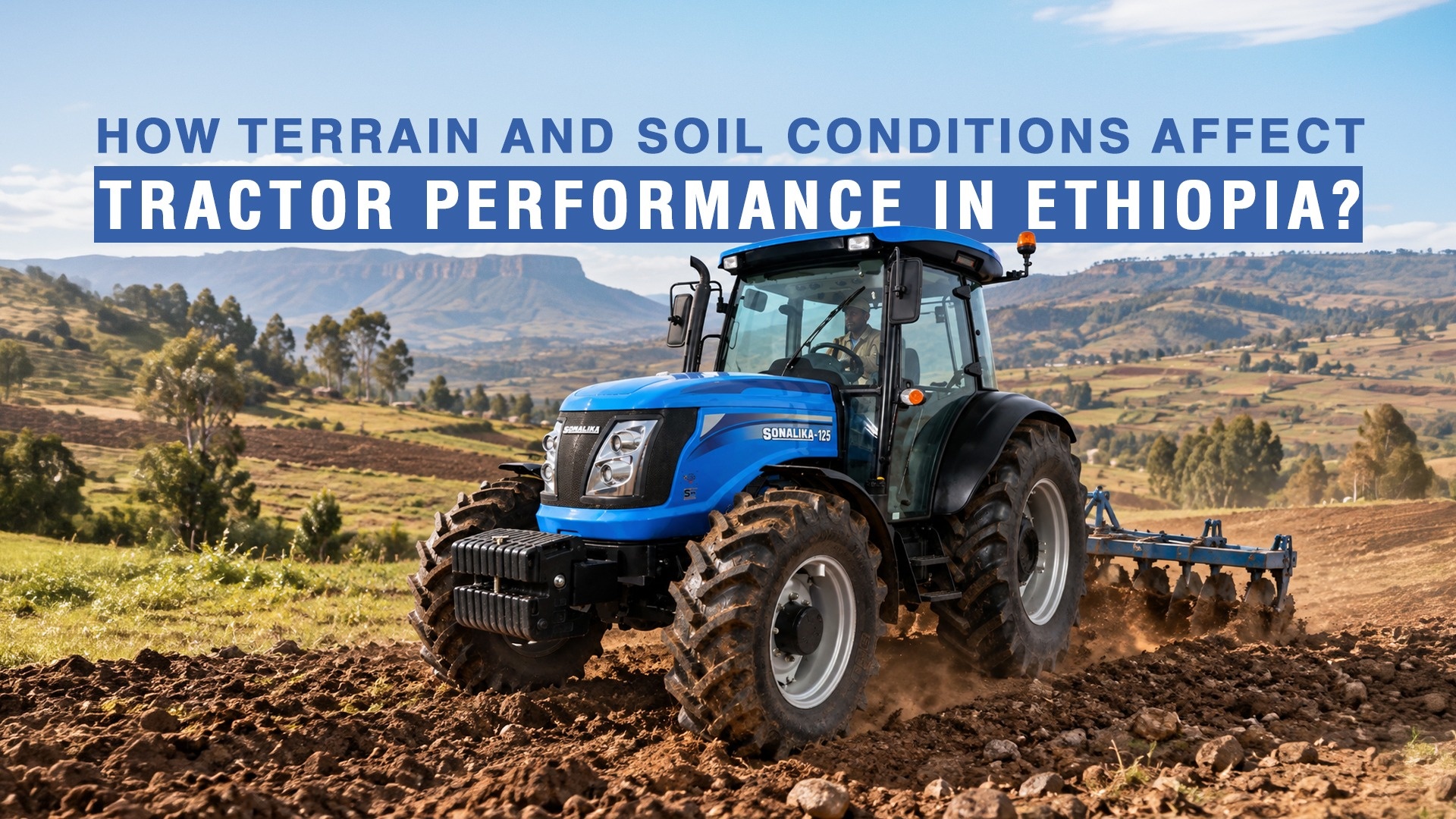
Ethiopia is dominated by several farming conditions, divided by altitude and rock. The black, compacted clay of the Rift Valley behaves differently than the shallow, stony ground you find in the highlands. Black clay soil dominates in areas near the valley. They turn muddy in the monsoon and compacts by November. That’s where tractors for hilly farms in Ethiopia earn their keep.
Once you go uphill, you hit thin and stony soil. They sit on rocks that never let a plough enter deep. What changes underfoot changes what happens at the drawbar. Fuel consumption changes and pulling power shifts; so do the operating dynamics.
This blog isn’t a sales pitch dressed up as science; we’re here to help farmers navigate which Sonalika setup fits which soil, and the importance of matching tractor ground clearance in Ethiopia. This is essential because choosing among tractors for different terrains in Ethiopia starts with knowing what’s under your tyres.

Ethiopia’s Soil Map: Why Soil Here Behaves So Differently
Dusty plains and damp western highlands place different demands on your tractor. Ethiopian geography divides your operations into zones where slopes, soil resistance or both affect how efficiently you work.
Medium and loamy soils are generally workable and offer decent drainage. Thin, stony soils hold less moisture and leave little room for deep tillage. Black clay behaves differently again. It becomes sticky after rain and hardens as it dries, changing the effort needed to pull an implement.
These conditions demand different approaches to traction, working depth and implement selection. If you farm across more than one zone, you already know your tractor doesn’t behave the same everywhere. Choosing the right tractor for Ethiopian terrain starts with understanding your fields, rather than comparing horsepower figures alone.
Cracked Clay To Rocky Highlands: What Changes Underfoot
A dry black clay field can look like a jigsaw puzzle, with deep cracks running across the surface. After heavy rain, that same ground becomes sticky and difficult to work. Your tractor needs a different operating approach as moisture conditions change.
Uphill, thin and stony soil leaves less room between the surface and bedrock. Loose stones and uneven ground make implement depth and underbody clearance important.
That’s where tractor ground clearance in Ethiopia becomes more than a specification. It helps you negotiate obstacles, but clearance alone doesn’t determine suitability. Your tractor’s stability, traction and implement setup also matter when working across rocky, sloping fields.
How Soil Resistance Changes Drawbar Pull & Fuel Consumption
Hard, dry clay can resist a plough and increase the pulling effort your tractor needs. You may hear the engine labour before noticing the extra fuel consumed. Selecting a suitable gear and reducing implement depth can help you manage that load without relying on higher revs.
Thin, stony soil creates a different problem. Buried rocks interrupt penetration and send sudden loads through the implement instead of allowing a steady pull.
When comparing 4WD tractors in Ethiopia, look beyond horsepower. Match traction and implement capacity to your working conditions. The goal is useful pulling power without excessive wheel slip, engine strain or unnecessary fuel consumption.
Sonalika engines sustain RPM levels under sudden loads, which prevents lugging in engines to keep fuel consumption in check when the ground behaves differently.
Matching Implements To Terrain
Steel striking highland rocks sends jolts through the implement and three-point linkage. The wrong tool or working depth can increase wear and strain your tractor. A lightweight rotavator may struggle with hard clay, while a deep-working plough can hit buried rock in shallow soil.
Running tractors for different terrains in Ethiopia means matching tools to each plot, not using one setup everywhere. Choose implements suited to soil moisture, stone content and the tractor’s capacity.
On thin, rocky ground, 4WD tractors in Ethiopia deliver extra traction. Keep working depth within the available soil layer. Check implement width and weight too. An oversized tool can reduce working speed and increase strain, even when your tractor has sufficient horsepower.
Gear, Ballast, & Tyre Pressure: Small Adjustments, Big Difference
Lower gears can help you maintain steady progress under heavy loads. Correctly selected ballast supports traction, but extra weight isn’t automatically useful. Match ballast to your tractor, implement and operating conditions rather than adding it by habit.
Tyre pressure deserves attention too. Use the manufacturer’s recommendations for your tyres, load and speed instead of simply lowering pressure for grip. These checks matter when operating tractors for hilly farms in Ethiopia. Choose a suitable gear before entering a slope, and avoid abrupt changes in speed or direction.
Gear selection, ballast placement and tyre settings work together, helping you manage traction and operating costs without treating extra horsepower as the answer. If you’re using tractors for different terrains in Ethiopia, these tweaks can keep you safe while using the tractor on sloping and uneven terrain.

Conclusion
Ethiopian surfaces don’t care about the lofty numbers on a spec sheet. It rewards tractors designed for its dynamic terrains and soil conditions. The soil decides more about tractor performance than the brochure. Drawbar pull, fuel consumption, and component wear all depend on the ground you’re treading on.
Choosing the right tractor for Ethiopian terrain helps you protect your investment and keep the operating costs predictable, not for a season, but for a long time. Visit your nearest Sonalika dealer today to buy highly durable tractors, designed for Ethiopia. Contact us today to learn more.