


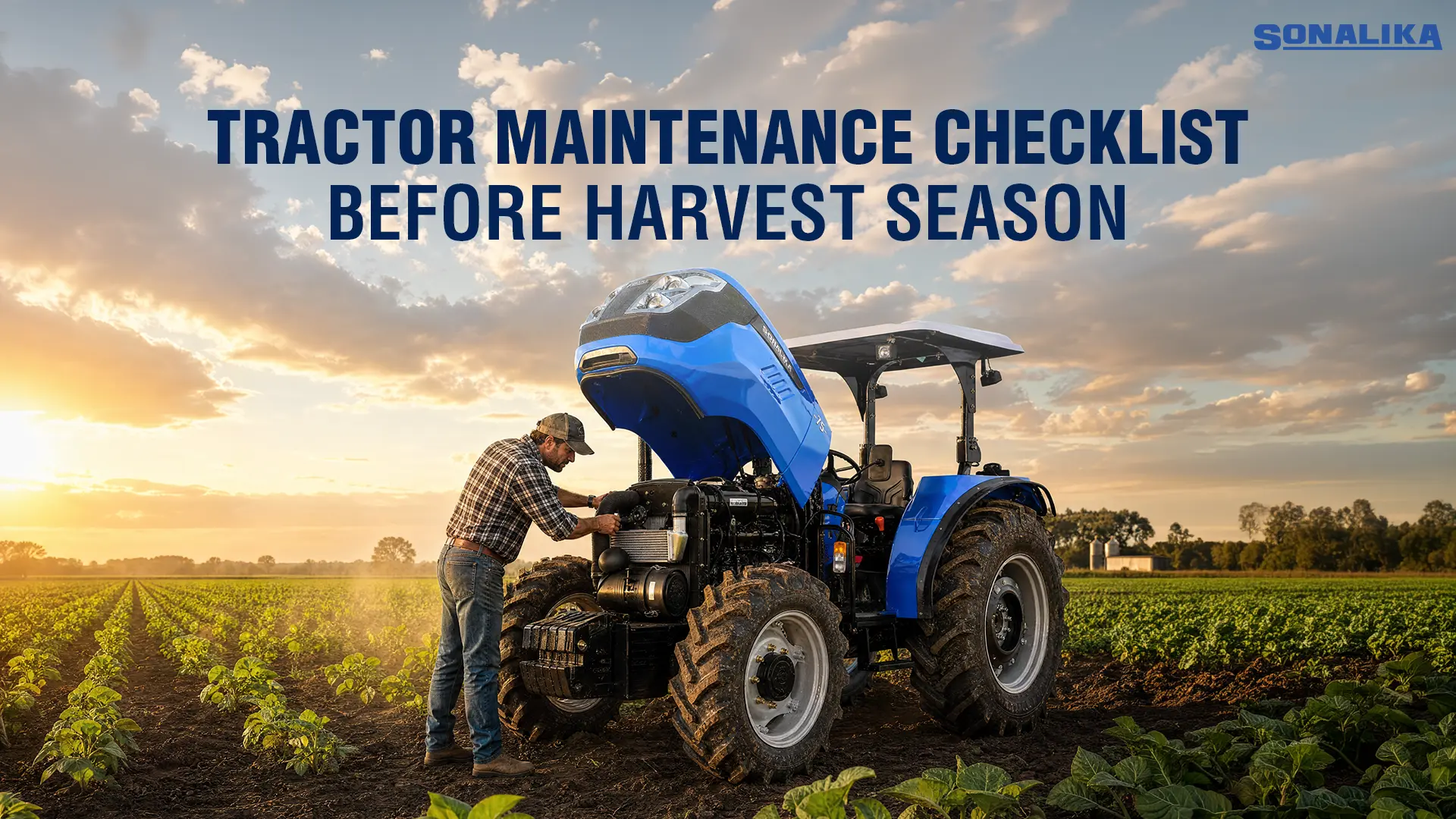
The harvest season in Tanzania brings tight schedules and puts immense pressure on farmers. This leaves no room for farming equipment failure, especially when crops are ready for collection. One of the most effective ways to keep your tractor prepared for harvesting and avoid unexpected and costly breakdowns is to be on top of tractor maintenance.
Regular, proper preventive tractor maintenance is the ultimate key to a profitable and successful yield. When you neglect warning signs, you’re inviting downtime, delays and unnecessary repair costs, all of which can severely affect your profits. Farmers globally following essential tractor care tips consistently benefit from minimal breakdowns, high performance and maximum ROI from their farming equipment.
Below, let’s have a look at the 10 most essential ways to prepare your tractor before the harvest season arrives.
Prepare Your Tractor For Harvest: 10 Essential Tractor Maintenance Tips
1. Conduct A Deep Visual Inspection
Before you start harvesting with your tractor, the first thing you must do is thoroughly check your tractor. Start by performing a full walk-around before using your tractor on the field. Look closely for oil leaks, worn belts, loose bolts, and cracked hoses. Dust and debris build-up is very common in regions like Tanzania, so clean all important components properly.
You can perform this process not only before harvest, but also weekly. This simple tractor maintenance tip helps you keep your tractor running smoothly and reveals early signs of failure.
2. Check & Change The Engine Oil
Inspecting the engine oil is one of the most commonly recommended tractor care tips. Since tractors often perform challenging tasks and pull heavy loads, their internal components are subjected to friction and heat buildup, which causes wear and tear. Maintaining engine oil at the recommended level and keeping it clean helps in reducing wear and tear.
Clean engine oil helps the engine deliver the best performance, efficiency and reduces wear during long harvest hours. Always use the recommended engine oil types and viscosity as recommended by your tractor manufacturer.
3. Inspect The Air Filter
Dusty farm conditions, especially in Tanzania, clog air filters quickly. This restricts the airflow to the engine, keeping air filter cleaning and replacement a critical part of preventive tractor maintenance. Before you start the harvest season, check the air filter in your tractor. Clean or replace the air filter to help the engine maintain optimal combustion and fuel efficiency.
Ignoring this basic tip often results in power loss and increased fuel consumption. Additionally, for farmers using tractors in high-altitude areas, cleaning and replacing air filters can result in better performance. Here is a DIY video for helping you clean your tractor’s air filter.
4. Examine The Tractor’s Cooling System
Tractor overheating is a common issue faced by Tanzanian farmers during the harvest season. To make sure your tractor doesn’t overheat during long operations and face increased wear and tear, check the coolant level, radiator blockages, and if the hoses are intact. Clean the radiator fins to allow optimal airflow. Properly maintaining the cooling system is one of the most commonly recommended tractor care tips and can fetch great results.
5. Check The Clutch & Transmission
The transmission is one of the most critical and costly parts of your tractor. The condition of the transmission and how well it has been maintained plays an important role in operator comfort, power delivery, fuel efficiency and reliability. Smooth gear shifting is essential for ensuring field productivity.
Inspect the transmission oil level and make sure the clutch works without slipping. Adjust if there is any free play to avoid operator fatigue. Adding this to the tractor care tips you already follow and maintaining the clutch helps you eliminate chances of downtime, allows for smoother gear changes for better performance and fuel efficiency.
Here is a DIY video to help you replace the transmission oil.
6. Keep The Brakes In Good Condition
Brakes are extremely important when you’re working on farms. They are critical for offering safety, especially when you’re transporting bulky loads or working with implements. Therefore, inspect your tractor’s brake response, look out for uneven braking and adjust as needed. Worn brake parts lead to weaker braking and increase stopping distances, which is a major risk. Checking the brakes is a must for pre-harvest preventive tractor maintenance.
7. Check Battery Health & The Electrical System
In rural storage conditions, especially in Tanzanian farms, rodents are common, and they often damage electrical lines. This can be a reason for downtime and even accidents during the harvest season. That said, always check the battery charge, inspect the wires for damage and clean terminals.
Make sure the lights and indicators work properly for early morning or late evening tasks. You can check the electricals and the battery before harvest, and also on every tractor repair and maintenance visit.
8. Lubricate The Moving Parts
Tractors are work machines with essential moving parts. These moving points go through extreme stress at work, leading to high friction, heat and wear and tear. Lubricating all moving joints, linkages, and bearings is non-negotiable during tractor repair and maintenance before the harvest season. Also, focus on high-movement areas like steering joints and PTO shafts for easier operation.
9. Evaluate The Implements & Attachments
Tractor implements and attachments play a huge role in determining productivity. Thus, inspecting the implements is often considered important among essential tractor care tips. Examine the condition of the implements you’ll use during harvest, like ploughs, trailers, and harvesters. Check the mounting points, linkage systems and PTO connections. Look for wear and looseness. Faulty attachments can damage the crops and your tractor.
10. Examine The Tyres
Imagine you’re working during the harvest season and suddenly one of the tyres loses pressure. You find a deep cut that caused the tyre to puncture. This could have been avoided if you had checked the tyres before the harvest began or during your recent tractor repair and maintenance visit. Check the tyre pressure based on load and field conditions, and ensure they are properly inflated.
Look for cracks, cuts, and tread wear, which can lead to lower traction. Poor tyre condition can reduce fuel efficiency, cause safety issues and lead to reduced performance.
Conclusion
The harvest season leaves no margin for equipment failure. For farmers, tractor maintenance is a top priority. Adhering to these tips in your pre-harvest tractor repair and maintenance routine can help you lower downtime, reduce repair costs, and get better fuel efficiency, safety, and performance.
Sonalika International is the leading tractor manufacturer in Tanzania and globally. We offer various classes of tractors, each designed carefully and with expertise to meet daily farming challenges with ease. Our tractors are cost-effective, reliable, fuel-efficient and powerful enough to help you easily glide through demanding tasks. Contact us today for more information.