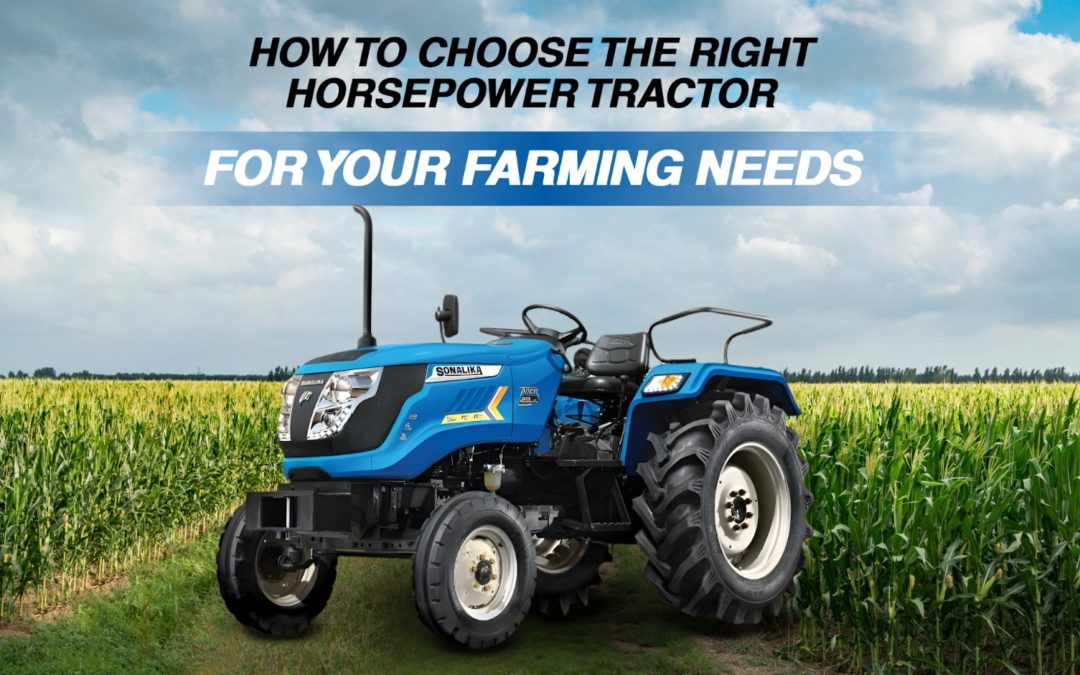
Agriculture remains one of the important aspects of Tanzania’s economy. According to the World Bank estimates, this sector accounts for roughly a quarter of the country’s overall GDP and employs almost two-thirds of the workforce.One of the key questions many farmers ask when transitioning into a mechanised mode of farming is: “How much horsepower tractor do I need?” Selecting the right tractor does not mean buying the largest horsepower tractor available.An underpowered tractor may not pull the heavy implements, which raises the fuel usage and maintenance costs. On the contrary, a big tractor may need higher investments & operational costs. This tractor horsepower guide will help farmers in Tanzania to know the appropriate tractor power depending on the actual farming circumstances.
Importance of Tractor Horsepower in Farming
Horsepower (HP) is used to measure the ability of an engine to perform operations. In farming, it dictates the efficiency of a tractor pulling a plough, operating attachments, and in fieldwork in general. The right horsepower can impact:
- Field productivity
- Capacity to use heavy implements.
- Fuel efficiency
- Long-term operating costs
An engine with adequate power translates to smoother operation & reduces excessive fuel consumption. This is the reason why farmers must select the right tractor size for farming needs to optimise the efficiency of the farm in the long run.
Tanzania Farm Mechanisation
The agricultural environment in Tanzania is quite different with respect to location and type of crop.
For example:
- Maize production has over 4 million hectares across the nation.
- The coffee plantations are prevalent in areas such as Arusha and Kilimanjaro.
- In Shinyanga and Mwanza, production of cotton & sunflowers is common.
- Morogoro has Sugarcane farming.
All the crop systems demand different mechanisation and tractor power requirements. Choosing the right horsepower enables farmers to finish their field work effectively with lower labour reliance.
Tractor Horsepower Guide According to the Farm Size
Farm size is one of the simplest methods of estimating tractor requirements. The following is a realistic guide to the horsepower of a tractor in various farming activities.
Small Farms (Up to 5 Acres)
Recommended range: 20-40 HP
Tanzanian agriculture is constituted by smallholder farms. Crops that are commonly found in these farms are vegetables, maize or cassava, and those that need to be operated by a tractor when working in light fields.
- Light tilling
- Spraying and fertilisers
- Transport of produce
- Orchard work
Tractors falling under the 20-40 HP category are relatively cost-effective, fuel-efficient and can be used on smaller fields easily.
Medium Farms (5–20 Acres)
Recommended range: 45-75 HP
Medium-sized farms need a tractor that can perform various agricultural duties.
Common activities include:
- Primary tillage
- Secondary cultivation
- Seeding and planting
- Transporting crops
For crops like maize, sunflower, rice, and wheat, tractors with a power rating of 50-75 HP are the ones that offer an appropriate power and fuel efficiency ratio. This part is generally regarded as the most flexible group to African farm conditions.
Large Farms (Above 20 Acres)
Recommended range: 75-125 HP
Commercial farms would need more horsepower to work on larger areas.
Typical operations include:
- Deep ploughing
- Heavy disc harrowing
- Operating large implements
- Transporting heavy loads
This is where farmers usually seek the best tractor horsepower for large farm operations. The 80-120 HP tractors can use a broader range of implements and offer a high field coverage rate.
Factors Determining Tractor Horsepower
The right power of the tractor is not dependent on the size of the farm alone. There are other factors that are to be taken into consideration.
The performance of tractors is highly influenced by soil composition. Soil types like heavy clay need more pulling power than sandy soils. Under this condition, tractors with less torque and horsepower cannot get traction and cause engine strain.
Various farming products have horsepower requirements.
- Rotary tillers generally need 30-50 HP.
- Ploughs often require 40-60 HP
- Harrows and cultivators could need 50-75 HP.
In an ideal scenario, farmers are supposed to select 15-20% more horsepower for the implement requirement to have smooth work with a tractor.
Terrain and Farm Conditions
Hilly areas, like Mbeya or Kilimanjaro, need more traction and horsepower from the tractor. The higher pulling capacity of tractors is also advantageous to farms that have a large frequency of transportation of crops or fertilisers.
Learning the Highest Horsepower Tractor
Contemporary tractors can generate higher power. Nevertheless, these machines are designed to work on farms with thousands of hectares. In most farms in Tanzania, the highest horsepower tractor range needed is between 90 Hp and 110 Hp, which will have good performance with no unnecessary expenditure.
Sonalika Tractors Tanzanian Conditions
Trustworthiness, fuel efficiency, and after-sales service should also be part of the concerns of the farmers when choosing a tractor.Sonalika is a major tractor manufacturer in the world that also exports its machines to more than 150 countries. Sonalika tractor models available in Tanzania are between 26 and 125HP, which means that they can work in various types of farming activities.Key advantages include:
Engines with high torque are used in tough field conditions.
Long working hours and fuel-efficient working capacity.
High hydraulic lifting power of heavy implements.
Durable build to withstand African farming conditions.Tractor models like the Sonalika 26 HP tractor are good for medium farms, whereas bigger models like the Sonalika 125 HP tractor are ideal for commercial farming.
A Simple Rule of Thumb
One of the most common regulations proposes that one horsepower per acre of agricultural land should be taken as a starting point in the calculation of tractor power.
Nevertheless, this regulation is only to be a point of departure. The type of soil, terrain, and implement requirements must always be considered.Putting these in combination with an effective tractor horsepower guide will assist farmers in making better purchases.
Final Thoughts
The question; how much horsepower tractor do I need, depends on several factors such as the size of the farm, soil conditions, terrain, and equipment required.
- 20-40 HP: light operations and small farms.
- 45-75 HP: medium farms and mix farming.
- 80-120 HP: big farms and commercial farming
Proper selection of tractor power results in high productivity, better fuel efficiency and enhanced long-term reliability.Are you interested in high-quality tractors tailored to your farming needs? Explore the entire Sonalika tractor lineup today. Sonalika offers solutions to all the farming requirements, starting with small utility tractors and ending with powerful tractors for large-scale farming. Explore the range here or get in touch with your local Sonalika dealer today.