by admin | Oct 19, 2026 | Blog
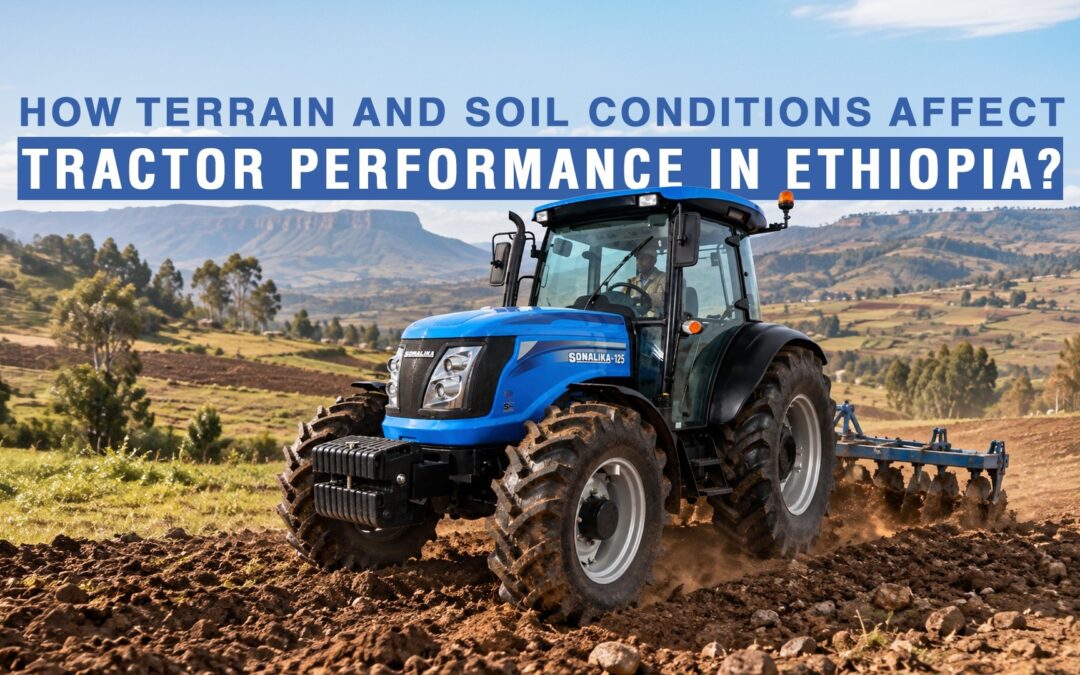
Ethiopia is dominated by several farming conditions, divided by altitude and rock. The black, compacted clay of the Rift Valley behaves differently than the shallow, stony ground you find in the highlands. Black clay soil dominates in areas near the valley. They turn muddy in the monsoon and compacts by November. That’s where tractors for hilly farms in Ethiopia earn their keep.
Once you go uphill, you hit thin and stony soil. They sit on rocks that never let a plough enter deep. What changes underfoot changes what happens at the drawbar. Fuel consumption changes and pulling power shifts; so do the operating dynamics.
This blog isn’t a sales pitch dressed up as science; we’re here to help farmers navigate which Sonalika setup fits which soil, and the importance of matching tractor ground clearance in Ethiopia. This is essential because choosing among tractors for different terrains in Ethiopia starts with knowing what’s under your tyres.
Ethiopia’s Soil Map: Why Soil Here Behaves So Differently
Dusty plains and damp western highlands place different demands on your tractor. Ethiopian geography divides your operations into zones where slopes, soil resistance or both affect how efficiently you work.
Medium and loamy soils are generally workable and offer decent drainage. Thin, stony soils hold less moisture and leave little room for deep tillage. Black clay behaves differently again. It becomes sticky after rain and hardens as it dries, changing the effort needed to pull an implement.
These conditions demand different approaches to traction, working depth and implement selection. If you farm across more than one zone, you already know your tractor doesn’t behave the same everywhere. Choosing the right tractor for Ethiopian terrain starts with understanding your fields, rather than comparing horsepower figures alone.
Cracked Clay To Rocky Highlands: What Changes Underfoot
A dry black clay field can look like a jigsaw puzzle, with deep cracks running across the surface. After heavy rain, that same ground becomes sticky and difficult to work. Your tractor needs a different operating approach as moisture conditions change.
Uphill, thin and stony soil leaves less room between the surface and bedrock. Loose stones and uneven ground make implement depth and underbody clearance important.
That’s where tractor ground clearance in Ethiopia becomes more than a specification. It helps you negotiate obstacles, but clearance alone doesn’t determine suitability. Your tractor’s stability, traction and implement setup also matter when working across rocky, sloping fields.
How Soil Resistance Changes Drawbar Pull & Fuel Consumption
Hard, dry clay can resist a plough and increase the pulling effort your tractor needs. You may hear the engine labour before noticing the extra fuel consumed. Selecting a suitable gear and reducing implement depth can help you manage that load without relying on higher revs.
Thin, stony soil creates a different problem. Buried rocks interrupt penetration and send sudden loads through the implement instead of allowing a steady pull.
When comparing 4WD tractors in Ethiopia, look beyond horsepower. Match traction and implement capacity to your working conditions. The goal is useful pulling power without excessive wheel slip, engine strain or unnecessary fuel consumption.
Sonalika engines sustain RPM levels under sudden loads, which prevents lugging in engines to keep fuel consumption in check when the ground behaves differently.
Matching Implements To Terrain
Steel striking highland rocks sends jolts through the implement and three-point linkage. The wrong tool or working depth can increase wear and strain your tractor. A lightweight rotavator may struggle with hard clay, while a deep-working plough can hit buried rock in shallow soil.
Running tractors for different terrains in Ethiopia means matching tools to each plot, not using one setup everywhere. Choose implements suited to soil moisture, stone content and the tractor’s capacity.
On thin, rocky ground, 4WD tractors in Ethiopia deliver extra traction. Keep working depth within the available soil layer. Check implement width and weight too. An oversized tool can reduce working speed and increase strain, even when your tractor has sufficient horsepower.
Gear, Ballast, & Tyre Pressure: Small Adjustments, Big Difference
Lower gears can help you maintain steady progress under heavy loads. Correctly selected ballast supports traction, but extra weight isn’t automatically useful. Match ballast to your tractor, implement and operating conditions rather than adding it by habit.
Tyre pressure deserves attention too. Use the manufacturer’s recommendations for your tyres, load and speed instead of simply lowering pressure for grip. These checks matter when operating tractors for hilly farms in Ethiopia. Choose a suitable gear before entering a slope, and avoid abrupt changes in speed or direction.
Gear selection, ballast placement and tyre settings work together, helping you manage traction and operating costs without treating extra horsepower as the answer. If you’re using tractors for different terrains in Ethiopia, these tweaks can keep you safe while using the tractor on sloping and uneven terrain.
Conclusion
Ethiopian surfaces don’t care about the lofty numbers on a spec sheet. It rewards tractors designed for its dynamic terrains and soil conditions. The soil decides more about tractor performance than the brochure. Drawbar pull, fuel consumption, and component wear all depend on the ground you’re treading on.
Choosing the right tractor for Ethiopian terrain helps you protect your investment and keep the operating costs predictable, not for a season, but for a long time. Visit your nearest Sonalika dealer today to buy highly durable tractors, designed for Ethiopia. Contact us today to learn more.
by admin | Sep 9, 2026 | Blog
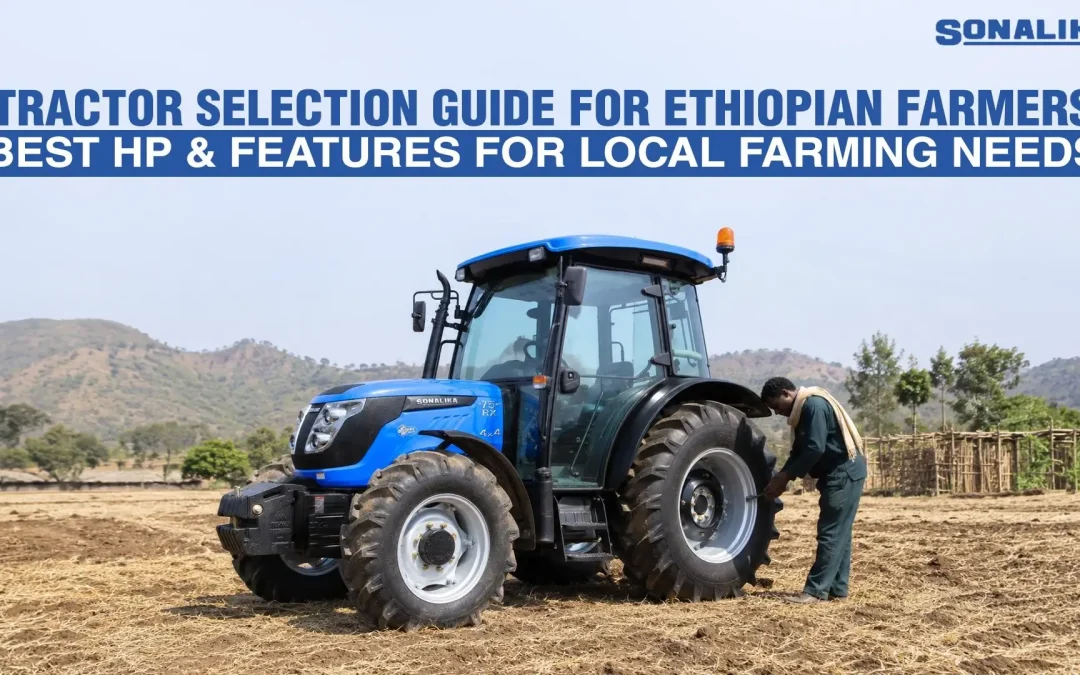
How much horsepower do you actually need for your farms? Buying the best tractor for farmers in Ethiopia requires looking beyond merely the engine size. You may own a powerful tractor, but without the proper gear, like a 4WD unit, PTO, hydraulics, and implements, the tractor will underperform. In Ethiopia, local lands vary from compact orchards to uneven terrains and compacted soils.
Ethiopia’s farms aren’t predictable. You might be working with a compact plot in the highlands, or an orchard with a tight turning space, or an uneven field with compacted soil. An engine with the same HP won’t perform the same way across all these conditions unless you match the machine to the requirements.
Get these calculations wrong, and the cost will show up quickly. Your agricultural tractors in Ethiopia may face wheel slip, high fuel consumption, and reduced performance. To address this, we have prepared a tractor buying guide for Ethiopia to help you find the right tractor for your requirements.
What Actually Determines The Best Tractor For Farmers In Ethiopia?
- Farm Size: Your farm’s acreage directly determines the engine power you need. A 2-acre plot and a 60-acre commercial farm won’t solve the same problem. Buying beyond the actual land size adds cost without any output.
- Terrain & Slope: Highland fields with uneven ground/terrain behave differently from flat lowland plots. Areas with slopes and rough terrain need better traction and stability, not just power.
- Soil Type: Clay soils and compacted soils need more pulling force while ploughing compared to light and sandy soils. The type of soil determines the amount of torque you need, not just HP.
- Primary Task: Tillage, planting, spraying, threshing, and transporting all have different demands on a tractor. Agricultural tractors in Ethiopia are designed mainly for haulage and will underperform on challenging tasks.
- Implement Plans: If you already have or plan to buy a rotavator, planter, or trailer, the PTO speed, hydraulic lift, and linkage category need to match the implement from the get-go.
- Budget & Running Costs: The purchase price is just the tip of the iceberg. Fuel consumption, maintenance costs and frequency, and spare part availability dictate the real cost of ownership.
Know Your Farm First: Answering Three Primary Questions
Before you peek at the brochure of a tractor or are fixated on a model, answer these questions honestly to buy the best tractor for farmers in Ethiopia.
- How many acres do you farm today, and how many will you farm in the next 3-5 years?
- What does your land look like, and what are its surface conditions? Flat and dry, hilly and wet, or heavy clay?
- What are the tasks your tractor will handle? Tillage, planting, transportation, or a mix of all?
Tractor Horsepower In Ethiopia Matched To Each Farm Type
- Below 20 HP: Best for small gardens, nurseries, and very small plots (under 2 acres). Can handle applications like light tillage and basic mowing. Not ideal for plouging compared soil or pulling larger implements.
- 20-30 HP: Better suited for small farms and orchards up to 5 acres. Good for small plots, vineyards, and tight areas where agility matters more than raw power. Handles light rotavation and basic haulage.
- 30-50 HP: Ideal for mixed smallholder farms between 5 and 15 acres. Can manage slightly heavier tasks like tilling, seeding, and general-purpose implementation work.
- 50-70 HP: Designed for medium commercial farms, or plots sized between 15 to 30 acres. Highly capable of handling heavier tillage, rotavators and trailer operations. A common choice for farmers using multiple implements in a season.
- 70-90 HP: Made for larger farms and commercial or mixed operations, best for plots spanning 30-50 acres. Highly capable of delivering the torque needed for heavier soil and larger implements, alongside stronger transport capacity for moving materials.
- Above 100 HP: The best choice if you’re looking for agricultural equipment for large-scale commercial farms and agribusinesses on plots above 50 acres. Can easily do heavy tillage, bulk transport and work with multiple attachments and implements.
Features That Actually Matter:
- 4WD System: Farming tractors in Ethiopia with a 4WD system prevent wheel slip in muddy conditions and terrain. This system transfers power to all four wheels for better grip and pulling power. It is essential if you’re operating heavy implements on wet or uneven ground.
- High Torque Engine: Buy tractors with engines that deliver high torque at lower RPMs to pull heavy loads through thick layers or soil without struggling. High torque directly reduces fuel usage and prevents unwanted wear.
- PTO Speed & Type: The PTO (power take-off) function drives implements and attachments. You need dual- or multi-speed PTO options to manage different types of implements.
- Lifting Capacity: A high hydraulic lifting capacity determines the size of implements you can use. If your hydraulic isn’t capable enough, you cannot operate heavy harrows or large planters. Always choose a lifting capacity that exceeds your heaviest implement’s weight for peace of mind.
- 3-Point Linkage Category: The 3-point linkage is used to connect the tractor to your tools. Category-I is for lighter tools, while Category-II is for medium-duty tools, and Category-III is for heavy-duty implements.
- After-Sales Service: Machine downtime is one of the major reasons behind lost productivity and profits. It often leads to missed planting or sowing windows. Therefore, it’s non-negotiable to keep your tractor ready to hit the ground. Fast access to spare parts and maintenance expertise ensures your machine is always available for work.
Why Choose Sonalika Farming Tractors In Ethiopia?
- Wide range of tractor choices, covering 20 to 130 hp
- Compact tractors available from 16 hp to 26 hp
- Wide range of medium tractors, from 30 hp to 60 hp
- Variety of heavy-duty tractors: 75 to 130 hp
- Class-leading performance with high-torque turbocharged engines
- Latest technologies for enhanced efficiency
- Operator-friendly cab design with ROPS certification
- Promising after-sales support in Ethiopia
- Rugged build for long-lasting and pleasant ownership
With this tractor buying guide for Ethiopia, you can get the best farming tractors in Ethiopia.
Ready to buy the best tractor for your farms in Ethiopia? Explore Sonalika International Tractors today and buy the right tractor for your farms. Contact us today for your purchases.
by admin | Jul 31, 2026 | Blog
A tractor breakdown in the middle of the harvest season can quickly result in lost time, higher repair bills, downtime and most importantly, missed planting windows. If you own a tractor, the difference between smooth and productive fieldwork and unwanted downtime often comes down to one simple thing: consistent care.
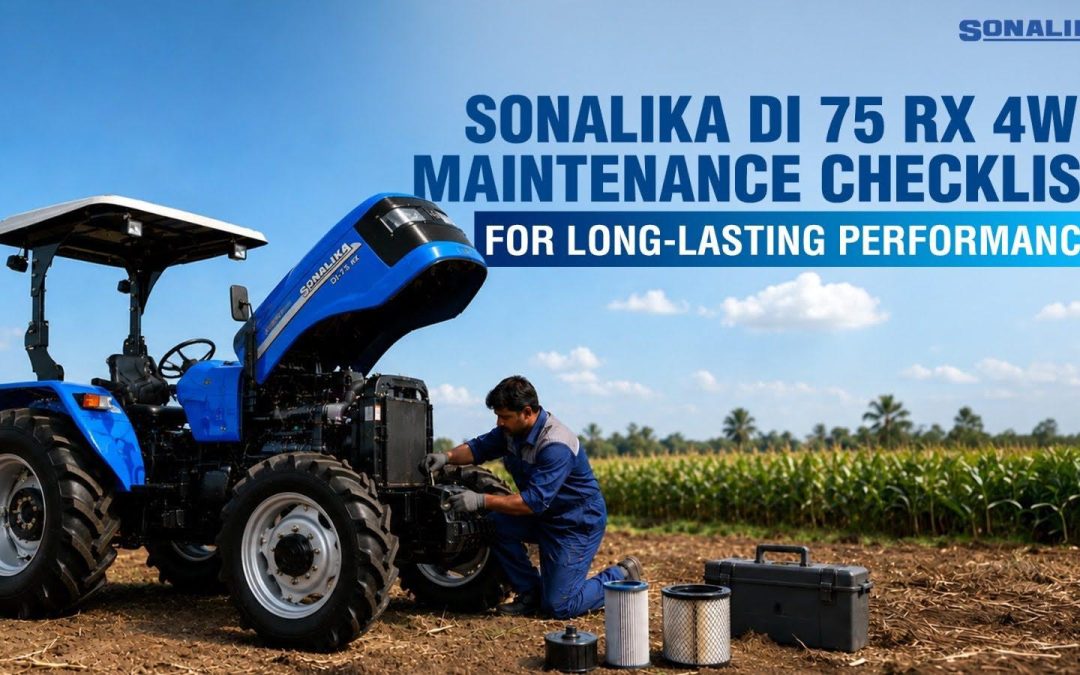
The Sonalika DI 75 RX 4WD is one of the best tractors in Ethiopia, fitted with a reliable turbocharged engine, durable 8F+2R transmission, impressive lifting capacity and a highly rugged build. However, even the best tractor can break down if you ignore its upkeep, so you must perform Sonalika DI 75 RX 4WD maintenance regularly.
Do you own this or any other tractor? Then this tractor maintenance checklist is for you. Whether you already own or are selecting new tractors for sale, these tractor servicing tips can increase machine lifespan and help you earn more.
Tractor Maintenance Checklist: Daily Inspections
- Engine oil level: Always check the dipstick before you start the tractor. Low engine oil levels can mess up the engine fast, especially if you’re working long shifts.
- Coolant level: Check the radiator and coolant reservoir. Overheating is one of the most common problems, but it’s often preventable.
- Fuel and leaks: Scan around the fuel lines, tank, and injectors for any leaks daily. A clean fuel system enables smoother combustion and fewer headaches.
- Air cleaner: Evaluate the dry-type air cleaner and clear out any dust buildup. If airflow gets restricted, performance and fuel economy will take a hit.
- Tyres: Closely check both the front and rear tyres for loss of pressure, cuts, or uneven tread wear. Worn-out tyres affect traction and balance.
- Brake response: Test the brakes and ensure they feel right before heading out. That oil-immersed braking system needs to respond properly, especially when you’re carrying loads.
- Lights and indicators: Make sure the tractor’s lights, gauges, and warning signals are working fine before you enter the field.
- Hydraulic Checks: Watch the hoses and couplers for signs of oil leaks. Small leaks turn into big problems when left unchecked.
Tractor Servicing Tips: Weekly & 100-Hour Maintenance Practices
- Engine oil check: Recheck the oil’s condition again, especially after repeated use. Dirty oil accelerates engine component wear and tear, plus reduces lubrication quality.
- Air filter cleaning: Perform a deep cleaning or service the air filter if you often work in dusty conditions. Here is a video explaining how to clean a tractor’s air filter.
- Battery terminals: Remove any corrosion and make sure terminals are tight. Weak battery connections cause all sorts of irritating electrical glitches.
- Radiator cleaning: Blow out grass, chaff, and dust from the cooling fins. A clean radiator keeps your engine temperature steady.
- Clutch and gear shift feel: If you notice any stiffness or slipping in the dual dry-friction clutch or the 8F+2R gearbox, don’t ignore it. Call the service centre for professional tractor maintenance immediately.
- PTO inspection: Run the PTO and listen for odd noises or vibrations when using implements. Malfunctions in the PTO system can cause problems while using attachments at work.
- Hydraulic system: Check how quickly the lift responds, and look at the hose condition and oil level. Slow lifting usually means maintenance is overdue.
- Wheel bolts and fasteners: Tighten any loose nuts, bolts, or hitch points before they get you into trouble.
- Cab or operator platform cleaning: Clean out dust, mud, and crop debris from your work area. It keeps things running smoothly and safely.
Tractor Servicing Tips: Long-Term & 500-Hour Service Milestones
- Front axle and 4WD components: Don’t forget to check the front axle, joints, and all drive components carefully if you work in tough terrain.
- Greasing points: Lubricate all pivot and moving fittings with quality lubricant regularly to eliminate friction and avoid too much wear and tear.
- Cooling system service: Flush the cooling system if it’s getting dirty, and check hoses, clamps, and cap condition to ensure the cooling system works efficiently.
- Safety switch and controls: Make sure the neutral safety switch and operator controls work as they should.
- Service log update: Write down every maintenance essential and update your tractor maintenance checklist. Tracking the needs now saves trouble later.
- Transmission fluid check: Check gearbox and transmission oil quality. Clean fluid to ensure smooth shifting and consistent power delivery.
- Hydraulic oil service: Check and replace hydraulic oil if it’s showing wear. Strong hydraulics are important for loaders and implements. This is one of the most common tractor engine maintenance tips.
- Steering inspection: Make sure the power steering feels right, and the fluid is in good condition. This is essential if you want full control, especially in rough or uneven ground.
- Full chassis inspection: Look for loose mounts, rust, or frame stress, especially after heavy use. Find signs of fatigue or cracks. Contact the service centre for any repairs.
Sonalika DI 75 RX 4WD Maintenance Tips For Increased Performance & Lifespan
- Use genuine parts: Always fit OEM filters, oils, and belts as they last longer and protect the machine better than aftermarket alternatives.
- Follow field discipline: Don’t ride the clutch, overload, or let the engine idle away for no reason.
- Clean after every heavy job: Wash off mud, chaff, and crop leftovers so they don’t wear your machine over time.
- Watch for early warning signs: Changes in noise, smoke, vibration, or lift speed often indicate a problem or that something is about to go wrong.
- Match implement load properly: Stay within recommended attachment limits so you’re not overworking your tractor.
- Schedule service before peak season: Perform tractor maintenance before sowing or harvest. That way, you minimise downtime when you need the tractor most.
Final Takeaway
Being on top of Sonalika DI 75 RX 4WD maintenance can be highly beneficial for farmers and owners in the long term. Incorporating regular tractor engine maintenance and forming a strong daily, weekly, monthly or hour-based tractor maintenance routine can help your tractor deliver better performance, consume less fuel, offer more durability and have a pleasant ownership experience.
If you intend to upgrade your tractor, visit Sonalika International Ethiopia and check out our vast lineup of new tractors for sale. For maintenance, visit your nearest service centre.
by admin | Jun 22, 2026 | Uncategorized
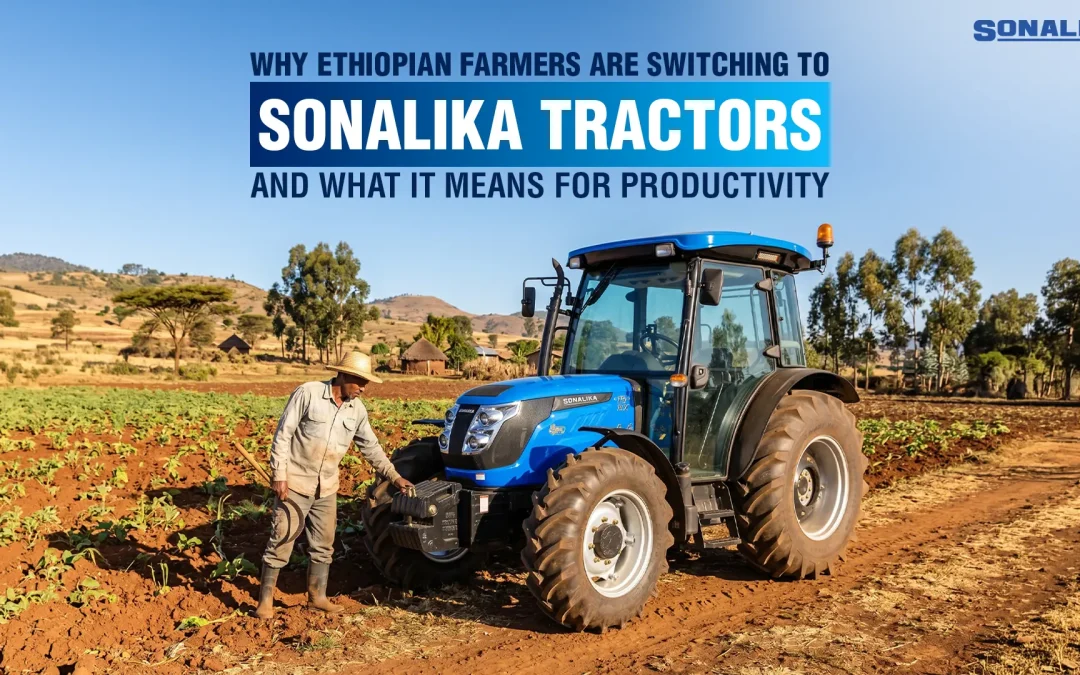
Preparing 2 to 3 acres of land manually used to take five days of hard labour. Today, completing the exact job takes 3 to 4 hours with a tractor. In places dependent on short, unpredictable and seasonal rain, speed determines productivity and survival. Missing the short planting window can ruin the entire farming season. Across farming regions in Ethiopia, something is changing.
Farmers who once primarily relied on manual labour and oxen are now using durable tractors in Ethiopia. So, what’s driving this major change? Well, the credit goes to powerful, durable and highly efficient tractors engineered to withstand the challenging conditions of Ethiopia. Sonalika is one of the leading tractor companies in the country, and farmers are increasingly choosing our equipment. So why are Sonalika tractors in Ethiopia so popular among farmers? Let’s discuss.
The Old Reality Of Ethiopian Farms
For generations, most Ethiopian farmers worked with ox-drawn ploughs, manual seeding machines and hired seasonal labourers. While this system functioned, it wasn’t efficient enough to last. A land that spanned across 3 to 4 acres required an entire week to prepare, and by the time the soil was ready, the ideal planting days were already gone.
Additionally, the hard, compacted soil made deep ploughing more challenging. Renting older equipment often resulted in breakdowns when seeds were planted. Farmers had to spend more time fixing broken parts than farming. This hard reality led to lower crop yields and restricted profits. Fertilisers spread by hand missed many sections of the field. Pest and disease outbreaks spread faster than farmers can respond to them.
Farmers weren’t falling because of lower effort, but a lack of equipment that couldn’t match the challenges on the farms. With times changing, however, modern and durable tractors in Ethiopia have been highly successful in solving most problems.
Here are the reasons why Ethiopian farmers often consider Sonalika Tractors as the best farm tractors for sale in Ethiopia:
1. Engineered For The Dynamic Challenges Of Ethiopian Farms
Ethiopia’s landscapes don’t treat farmers with flat & easy grounds. Instead, the country throws varied surface types towards farmers, from rocky highland plots of Amhara to the dry lowland plains in the Rift Valley. Here, soil types, slopes, and moisture levels shift dramatically from one region to another. Sonalika Tractors in Ethiopia are designed with reinforced chassis, durable tyres, high ground clearance, and strong hydraulics to withstand these conditions. This rugged design guarantees farming never stops in tough conditions.
Using tractors on dusty terrains & dry farming seasons can result in clogged air filters. Watch this DIY video to know how to clean your tractor’s air filter.
2. Affordable Pricing With A Wide Range Of Tractor Choices
Even after tractors existed, farmers delayed mechanisation, and the main reason was the high cost. European brands offered tractors that most Ethiopian farmers couldn’t afford. The best farm tractors for sale in Ethiopia were costly, and small farmers couldn’t realistically absorb the cost. Sonalika noticed this massive gap and introduced quality tractors that were priced affordably, without cutting corners on quality and performance. This ensured even small farmers
3. Wide HP Range For Every Farm Size & Application
Sonalika Tractors are highly popular among farmers for another reason: the wide range of horsepower ratings. A tractor model of the same type won’t be compatible with a 2-acre plot and a massive 100-acre farmland. That’s where Sonalika Tractors comes to the aid. Our tractor range is available with several engine horsepower ratings, ranging from 20 hp to 130 hp models, so you can match the horsepower based on your applications and plot size.
4. Fuel-Efficient & Low-Emission Engines
Fuel demands a major portion of total ownership costs (TCO) for farmers, and when you work on larger plots where a tractor runs for stretches, fuel costs climb quickly. Therefore, buying tractors with efficient engines is non-negotiable. Sonalika Tractors are fitted with highly efficient engines, designed to deliver superior fuel efficiency while ensuring strong outputs.
Additionally, Sonalika’s durable tractors in Ethiopia come with large fuel tanks. For farmers working in remote areas and on plots where the nearest filling station is far, fewer refuelling stops are highly beneficial. Lower fuel costs, fewer refuelling stops and lower emissions; all benefits you at the end of a season.
5. One Tractor = Multiple Jobs With Multiple Attachment Compatibility
A tractor that only performs ploughing returns only a fraction of its cost. Sonalika Tractors in Ethiopia can be fitted with implements like disc harrows, rotavators, sprayers, seed drills and various other equipment using a single machine. This means one tractor can cover land preparation, planting, fertilisation, and harvesting in every season. This reduces the need for specialised equipment and helps you earn more profits.
6. Simple Mechanics, Easy To Maintain & Excellent After-Sales Support
During the harvesting or planting season, tractor uptime is mandatory. A tractor sitting idle for two weeks, waiting for a technician, can lead to a loss in productivity and missed opportunities. Sonalika Tractors benefit from a simple mechanical system and quality components that a local mechanic can easily service without facing complexities. Additionally, we have a vast network of dealerships and service networks in Ethiopia, meaning you get genuine spare parts fast and your tractor keeps working.
How Are Sonalika Tractors in Ethiopia Improving Productivity?
1. Soil Gets Ready In Hours, Not Days
A plot that took 4 to 5 days for manual preparation now takes a few hours using a Sonalika tractor and a disc harrow. Deeper and more efficient tilling improves moisture retention and root spread. Both factors directly lead to stronger yields before growing begins.
2. No More Missed Planting Opportunities
Rain-fed farming is all about timing. Seed drill attachments on durable tractors in Ethiopia, ones offered by Sonalika, are highly capable of covering large plots quickly, at the correct depth with consistent spacing. When it rains, the seeds that were already planted on schedule germinate well and at the right time, not behind.
3. Machine Doesn’t Sit Idle Between Seasons
One of the best ways to stay profitable in the farming business is to leverage different crop seasons. Specialised farming equipment, however, largely struggles in this, since it is purpose-built. Durable tractors in Ethiopia, coming from Sonalika, are designed to be highly versatile. They can be fitted with various attachments/implements, allowing farmers to move from teff cultivation in the wet season to wheat in the dry season. You earn more with a modern tractor and get a high ROI.
4. Faster & Deeper Soil Preparation
Shallow ploughing limits root growth and water absorption. When farmers use tractors, they effortlessly break through hard layers to create beds that are deep and rich in nutrients. The best farm tractors for sale in Ethiopia significantly increase yields, and farmers earn more profits.
5. More Land Worked With Fewer Hands
Finding reliable farm labourers is very hard during peak seasons and gets more expensive every year. Farmers can expand their total cultivated acreage without having to invest in extra workers. This directly reduces labour costs and frees your budget for upcoming seasons.
Conclusion
The shift happening on Ethiopian farms isn’t about embracing new technologies; it’s primarily about getting more from the same plot, the same season, and fewer hours working in a day. Whether you’re managing small farms or plots above 300 acres, the best farm tractors for sale in Ethiopia are designed to match terrain, budget, scale, and applications.
Looking for the best tractors for your farming needs in Ethiopia? Explore the full range of Sonalika Tractors in Ethiopia or find a dealer near your location. Contact us for more information.
by admin | May 23, 2026 | Blog
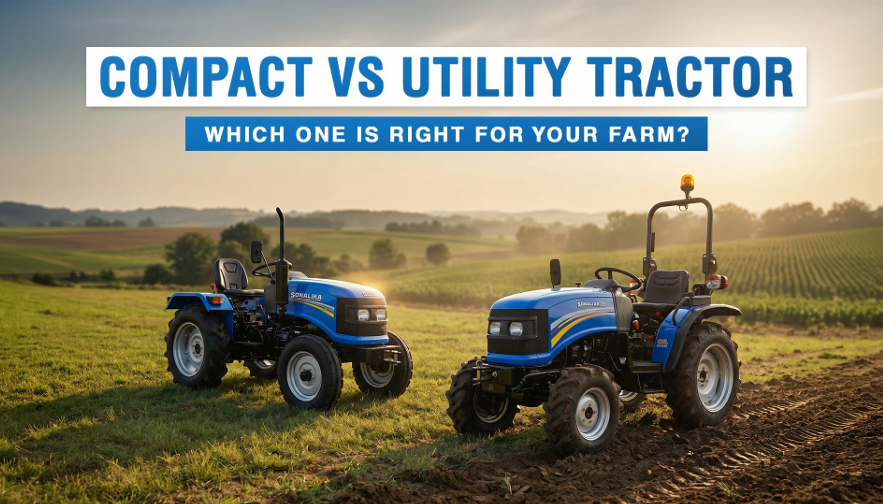
Owning the right tractor can make everyday farm work a lot easier, particularly when space, budget, & workload all matter. The Compact tractor vs utility tractor debate usually comes down to what you do most often & your power requirements. A smaller property may need a nimble machine for mowing, hauling, and light loader work, while a larger task may require something stronger & more capable.
If you are searching for the best tractor for small farm use, the real goal is to find the model that matches your land, your tasks, and your long-term plans without paying for more tractor than you need. On the contrary, if you’re searching for a utility tractor, it’s important to know where they work best. This guide will help you know the technical specs & operational costs to ensure you invest in a tractor that works best for you.
What Are Compact Tractors?
A compact tractor is a small-frame tractor designed for tasks that need control rather than brute force. Most models in this compact class offers engine at the 20 to 40 horsepower range, with lower operating weight, narrower widths, & shorter wheelbases than utility tractors. These details are essential because it improves manoeuvrability around barns, vines, trees, fence lines, & garden beds, ensuring you get high productivity without damaging crops or sensitive ground. Before choosing compact tractors, look at the PTO horsepower, three-point hitch category, hydraulic flow, loader lift height, & tire choice, since those determine what implements the tractor can really handle. Compact models often come with a 540 RPM rear PTO to run attachments efficiently, along with hydraulic flow rates between 4-8 GPM. This improves loader speed & steering response. For mowing, light grading, material handling, & small farms, these tractors pack enough capability without the size or fuel requirement of larger machines.
What Are Utility Tractors?
Utility tractors are mid-size to larger farm tractors engineered for heavier tasks, & their specifications tell you how capable a model really is. Many utility tractor models have engine horsepower ranges between 50 and 60 HP, with some models offering above 100 HP, depending on the series. The Sonalika 125 is an exceptional choice if you want power, sporting a 125-HP 6-cylinder engine. The PTO rpm range typically hovers from 540 to 1000 rpm, which matters because it determines what implements the tractor can power smoothly. The hydraulic flow rate can range from about 11 to 30+ gallons per minute. This determines loader response & implement performance. Most utility tractors commonly use manual gear or Synchromesh transmission, with many newer models packing Shuttle Shift or Hydrostatic units for convenience. The three-point hitch category & rear lift capacity vary by model, & heavy-duty machines like the Sonalika 125 offer up to 4500 kg lifting capacity. This is especially useful for larger implements and demanding field operations.
Compact Tractor Vs Utility Tractor: What Should You Choose?
Choose A Compact Tractor If:
- You work on small to mid-size plots.
- Applications include mowing, hauling, grading, landscaping & light tilling.
- You need easy manoeuvrability around trees, barns, vineyards, & narrow lanes.
- You want a tractor that’s easier to transport & store.
- Your implements are light-duty.
- You don’t need a high lifting capacity.
- You prioritise lower operating costs & simpler handling.
Choose A Utility Tractor If:
- You work on larger lands & manage heavier loads.
- Your tasks include loader work, ploughing, baling & pulling larger & heavier implements.
- You seek more powerful engines with higher horsepower & lifting capacity.
- You don’t have space constraints & work in open fields.
- You need a machine built for demanding operations.
Choosing The Right Tractor: Step-By-Step Guide
- List your most frequently done tasks before purchasing.
- Match the horsepower rating to the heaviest implement you want to use.
- Check turning space if you work around trees, vineyards, barns, etc.
- Evaluate the lifting capacity you need & the type of materials you want to lift.
- Factor in transportation & storage considerations before choosing a model.
- For lands under 20 acres, select compact tractors.
- For heavy-duty work on larger plots, utility tractors are a better fit.
Conclusion
The compact tractor vs utility tractor debate doesn’t have a clear winner. Instead, the right choice depends on how you work, applications, & how much power you need. The decision should include land size, job type, & long-term practicality. For many smaller farmers, compact tractors are the best choice for light operations because of their versatility & ease of use. For heavier tasks, utility tractors bring raw muscle at your disposal. If you want dependable tractors, Sonalika Ethiopia offers several compact & utility tractor models. Visit us today to buy the best tractor for small farm.


