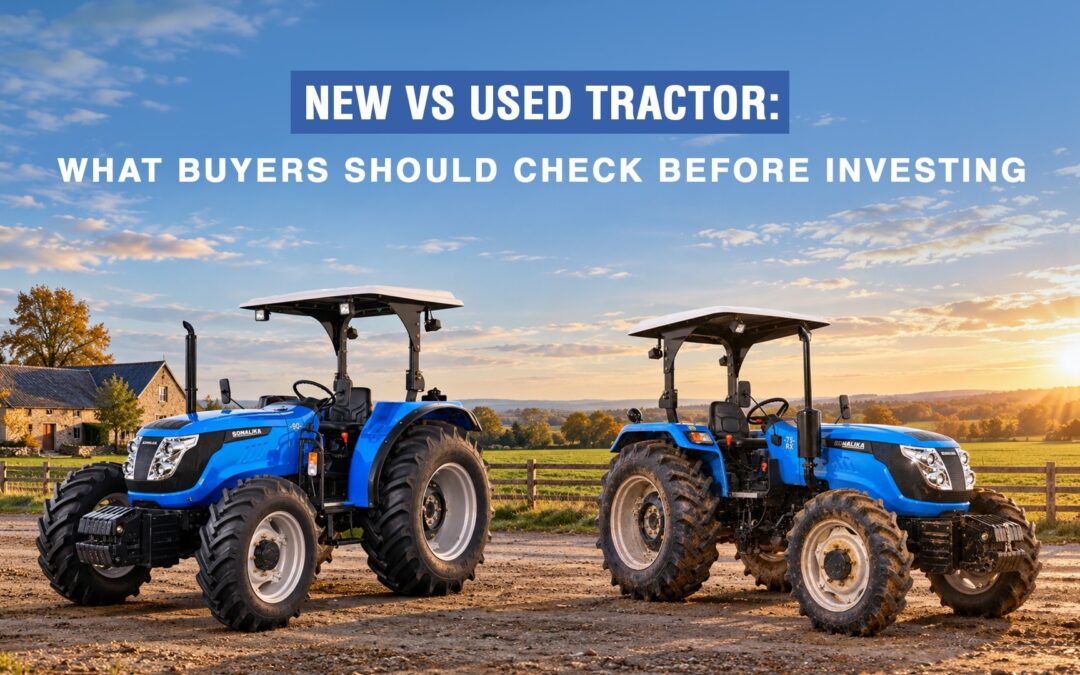
by admin | Oct 28, 2026 | Tractors
You visit a local tractor dealership and find a used tractor at an irresistible price. The seller hypes it up, saying the offer is for a limited time and promising you it’s in excellent condition. Two weeks down the road, the clutch fails, or the tractor struggles to keep up with tasks that a new tractor would easily handle. In the new vs. used tractor debate, a low price tag seems like an apparent win, but that’s not always the case.
The real choice shouldn’t be between new and used expensive. It’s about investing in quality, irrespective of new or used. Upfront price isn’t the only thing; you must factor in fuel expenses, maintenance costs, downtime and tractor resale values. Used tractors are a great option for farmers with a low budget. However, many used tractors are filled with issues that aren’t usually discussed. So, are they worth the risk?
Well, used equipment can be profitable if you buy machines that can serve you well without needing too much maintenance and running costs. In the case of new tractors, they serve well and have predictable ownership if you can match them well to applications.
Essential Advice: Whether it’s new or used tractors, it’s essential that you perform regular maintenance. Watch this video to learn how to open the bonnet.
The Case Of Buying New Tractors: Pros & Cons
Pros:
Warranty: New tractors come with warranties, meaning they cover early faults and your repair bills stay low. Terms vary by country, so discuss with your dealer.
Reliability: Since they are brand new, there aren’t any accidents or past owners. You’re the first person to own the machine.
Technology: New tractors come with the latest technologies, which often result in better fuel efficiency and cleaner operations than older models.
Support: You have access to parts and support from authorised dealerships.
Resale: When you maintain a tractor well, it helps you maintain good tractor resale value.
Predictable Ownership: Since new tractors use new parts, they offer significantly better reliability and predictable maintenance costs.
Cons:
Upfront Costs: New machines cost more, and many buyers with lower budgets find it difficult to procure one.
Depreciation: Buyers with new tractors have to undergo heavy depreciation in the initial years. However, different brands and tractor classes have different depreciation rates. Machines from reputed manufacturers and ones backed by extensive support hold better tractor resale values. Sonalika Tractors is one such example.
Complex Systems: Many newer models come with updated technologies, meaning they have more electronics on board. This leads to operational difficulties and lower reliability.
Pros & Cons Of Used Tractors
Pros:
Lower Prices: Since used tractors are pre-owned machines, they cost less. Their affordability makes them a better choice for farmers on a budget.
Slower Depreciation: Given the machine is older, it has undergone heavy depreciation in its early years. Used tractors depreciate slower, but only those from popular brands.
Simpler to Fix: Used tractors are built using older technologies, which makes them easier to fix. Spare part availability for popular models is another key advantage.
Known Models: Many used tractor models are popular in the market, so buyers can easily research a specific model before buying.
Cons:
Hidden Wear: In the New vs. used tractor debate, hidden wear & component damage are the biggest disadvantage of used tractors, which is a major con for many buyers.
Unpredictable Ownership: After buying a used tractor, repair bills are your responsibility unless the seller/dealer promises to cover them in writing.
Parts Unavailability: Buying used tractors (especially discontinued models) can result in long waits for critical parts and downtime.
Compliance Difficulties: Many used tractors run on older engines, leading to higher pollution levels. This can lead to fines or lack of compliance with the latest standards.
New Tractor Buying Checklist
Horsepower: Match the engine horsepower rating to your requirements and implements. Avoid undersizing or oversizing the horsepower rating, as it wastes fuel and stresses the engine.
Implement Compatibility: Match the hitch, PTO speed and hydraulic capacity to the implements you plan to use.
Warranty: Ask the manufacturer about the warranty period, what’s covered and for how many hours. Understand the terms and conditions properly.
Dealer Support: Buy from manufacturers with superior after-sales service and those that provide the best support in your area.
Test Drive: Choose models based on requirements, test drive, and put the tractor under load. Check the controls, brakes, comfort, and visibility.
Running & Maintenance Costs: Look for tractors with efficient engines and durable components. This ensures better tractor resale values and keeps your tractor total cost of ownership in check.
Buying A Used Tractor? Follow This Used Buying Checklist
Service Records: Always ask for the maintenance logs. If the owner fails to provide them, you’re settling for a machine with unknown history.
Hours Vs. Wear: Hours do show the actual age of a tractor, but they can be rolled back. Check if the amount of wear on the pedals, seat and steering wheel matches the hour meter.
Cold Start: Start the engine when it’s cold. Look for difficulty in starting, heavy smoke, or knocking from the engine.
Leaks: Check the tractor closely. Look under the engine, transmission, and hydraulic lines. Oil near seals and hoses indicates leaks, meaning repairs are on their way.
Gearbox & Clutch: While operating, use all gears. Look for slipping, grinding, or laggy responses from the clutch.
Hydraulic & PTO: Test the hydraulic functions. Lift a load and hold it for a short period. Signs like slow lifting or drifting need a mechanic’s attention.
Documents: Match the serial number of the tractor to the documents. Ensure that there are no loan or legal claims.
Parts Availability: Check that parts for a specific tractor model are available locally.
Independent Testing: Hire a mechanic to test the tractor in person. It can bring out hidden issues and help you negotiate prices.
Essential Advice: Keeping the cooling system & air cleaner maintained is essential if you want to get maximum performance. Watch this video to know how to maintain the cooling system & air cleaner system.
Final Thoughts
In the new vs. used tractor debate, both tractor types come with a fair share of pros and cons. New tractors provide you with peace of mind, predictability, fresh performance and better efficiency. Used tractors give you affordability, but sometimes they can turn into headaches if you skip past any step from the used tractor buying checklist we provided earlier.
Meanwhile, if you’re looking to buy new tractors, Sonalika tractors are among the best globally. Our machines have a lower tractor total cost of ownership and are among the best when it comes to tractor resale value. Browse our lineup of tractors and buy the best tractor. Contact us today to learn more.
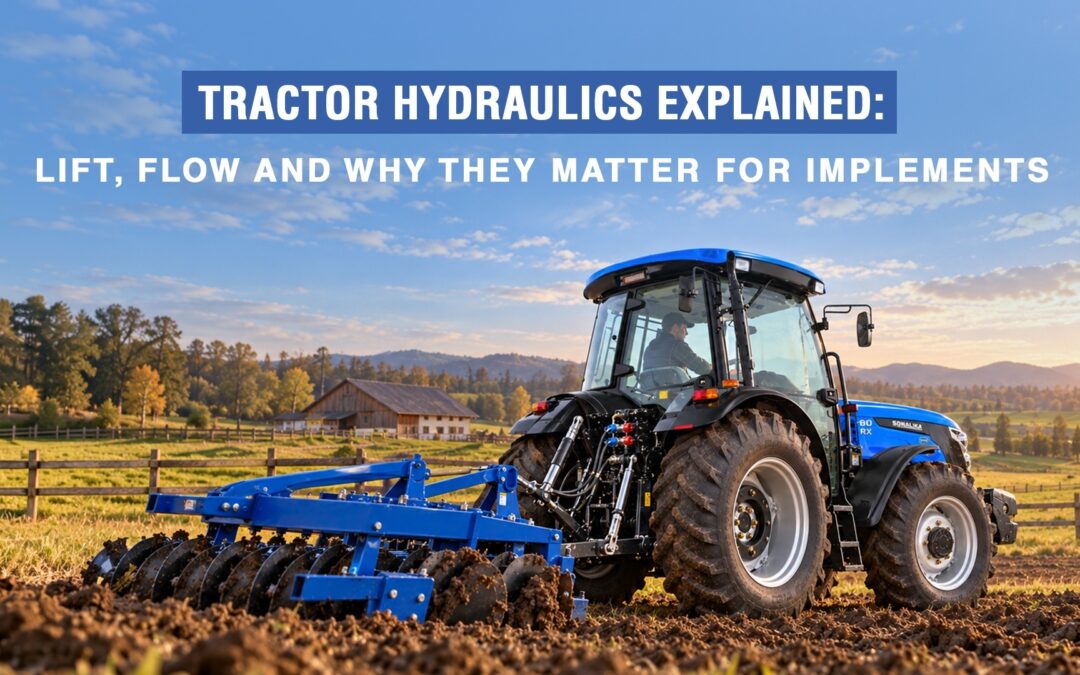
by admin | Oct 28, 2026 | Tractors
Have you ever wondered how your tractor runs its implements during tough applications like loading, cultivating, and tillage operations? Well, tractor hydraulics are responsible for running the implements, and they decide whether an implement works well or just hangs off the back. Pair a rotavator or a front loader to your tractor judging by only the horsepower, and the hydraulics may struggle to lift or slow down your operations on every cycle.
Tractor hydraulic lift capacity decides how much weight your machine can raise. Flow, however, sets the speed of the hydraulics. Both are different metrics, and more flow doesn’t provide you with more lifting capacity. If you confuse the two metrics, it shows up as a slower pace during work, strain on equipment, wasted fuel, or the implement failing to work properly.
In this guide, we’ll explore the tractor hydraulic system in detail and the difference between hydraulic flow, pressure, and lift capacity. We’ll also discuss how these factors affect implements and what to check before you buy a machine. Sonalika International is among the world’s leading tractor manufacturers, ranked 5th. Meanwhile, if you want to explore reliable and durable tractors, check out our range.
Tractor Hydraulic System & Three-Point Hitch Explained
The hydraulic pump in your tractor runs off the engine, and it pushes oil through the valves to the cylinders. The cylinders use the oil to pressurise and convert it into movement. Instead of using mechanical gears or belts to move heavy loads, tractor hydraulics use pressurised fluid, pumped through hoses, valves and cylinders to run implements.
Raising and lowering implements are the most visible jobs a tractor does. Here, a three-point hitch takes the stage. A three-point hitch explained simply, is when two lower links and one top link carry an implement and the hydraulics raise or lower them. Compact tractors usually use Category 1 hitches, while mid-range models come with Category 2. High HP tractors generally come with Category 3 hitches to run heavy implements.
Tractors like the Sonalika FP-18 and Sonalika 30 are packed with CAT-1 linkages. Higher models like the Sonalika 50, Sonalika 75 WT, Sonalika 110 WT and Sonalika 125 run on CAT-2.
The same oil also runs outside the work. Implements like loaders, tipping trailers and other tools that are remote-operated draw oil from auxiliary circuits present on a tractor. Two controls matter in the field. Position control holds an implement at a specific height, while draft control senses the load on an implement to adjust the depth, which helps on uneven soil.
Tractor Hydraulics: Lift Vs. Flow Vs. Pressure
These three metrics often get mixed up among farmers and owners. However, they have different functions:
Hydraulic lift capacity is the amount of weight the rear linkage can raise. It is quoted in kg or lbs. Lift capacity comes from the pressure acting on the lift cylinder’s piston area, so flow has no say over it.
The hydraulic flow rate is the amount of hydraulic fluid your tractor’s hydraulic pump moves. It is measured in litres per minute (LPM) and determines the speed of the tractor hydraulics. Higher flow raises an empty linkage more quickly and leads to a quicker cycle of a loader or tipper. But it doesn’t necessarily make your tractor stronger.
Hydraulic pressure sits in the middle. It is capped by the relief valve, and the cap and size decide the maximum force. When you want more, the valve opens and keeps the implements up. Here is one catch you must know about lift capacity: many tractor manufacturers quote it at a set point on the lower link, while the real load hangs further back.
Always ask where the figure was measured, about the tractor hydraulic lift capacity in kg/lbs and the flow rate (in LPM), before purchasing a tractor.
Why Lift, Flow & Pressure Matter For Implements
Every tractor implement comes with a different specification. For instance, a heavy cultivator needs lift, while a front loader requires flow. Here, a slow hydraulic flow rate results in slow cycle times and after a full day, it adds up as lost hours. Tippers also need a remote outlet before flow enters the conversation.
Numbers related to lift are not always the same. This is because they come from test conditions of the manufacturer, and a long implement sitting far behind on the hitch can feel heavier than its actual weight. So, leave a safety margin. Numbers related to pressure matter when your load is dense, like when you’re carrying a bucket full of wet soil.
Implement manufacturers and tractor manufacturers alike publish hydraulic demands of specific implements. Always check these numbers against tractor hydraulic lift capacity and oil flow rate before you pay.
How To Match Implements To Your Tractor
- Hitch Category: Match the implement’s category (1 or 2) to your tractor’s linkage. A mismatch can require adapters or simply no fit at all.
- Lift Rating: Compare the weight of the implement in kg/lbs with your tractor’s hydraulic lift capacity. Stay below the lift rating, as mounted tools hang behind the links and often feel heavier than they actually are.
- Remote Outlets: Count the total number of outlets your loader, tipper, or hydraulic plough requires. Your tractor should have at least that many.
- Oil Flow: Compare the LPM rating of the implement and your tractor’s hydraulic flow rate. Different implements have unique requirements.
- Control Mode: When you’re using ploughs and cultivators, use draft control. This helps the hydraulics adjust depth with changing soil resistance. Use position control for implements that need fixed working heights, for example, rotavators.
- Balance: A heavy implement mounted at the rear causes the front axle to lighten. In that case, add front weight until the tractor feels planted.
- Specification Format: As for the lifting capacity in kg/lbs, flow in LPM, and pressure in bars.
Common Mistakes Owners & Buyers Often Commit
- Buying solely on horsepower because engine power says nothing about what a linkage can lift or the speed at which the auxiliary circuits move.
- Considering flow and lift as one specification. They are separate, and more flow won’t fix a lower lift capacity.
- Ignoring hitch category is another common mistake. Cat-I & Cat-II are different, and each implement has a different requirement. One may not match the other.
- Skipping auxiliary circuit checks is common. Count the circuits and determine whether they are single-or double-acting. Implements like loaders need the right type.
- Ignoring oil conditions can lead to the use of the wrong grade or dirty oil, both of which wear the pump and affect the response. Follow the grade specified in the manual.
- Running past the tractor hydraulic lift capacity again and again puts strain on the cylinder, linkage and rear axle.
Closing
Horsepower ratings tell you how hard your tractor can pull. Lift, flow, and pressure determine what it can carry and how fast it works. Check numbers related to all three metrics before you select a model, not after the tractor arrives. Numbers related to tractor hydraulics must be carefully evaluated.
Whether you want a tractor for smallholdings or light tasks, or heavier tractors for large and commercial farming, Sonalika International offers a handful of choices. Contact us today to learn more.
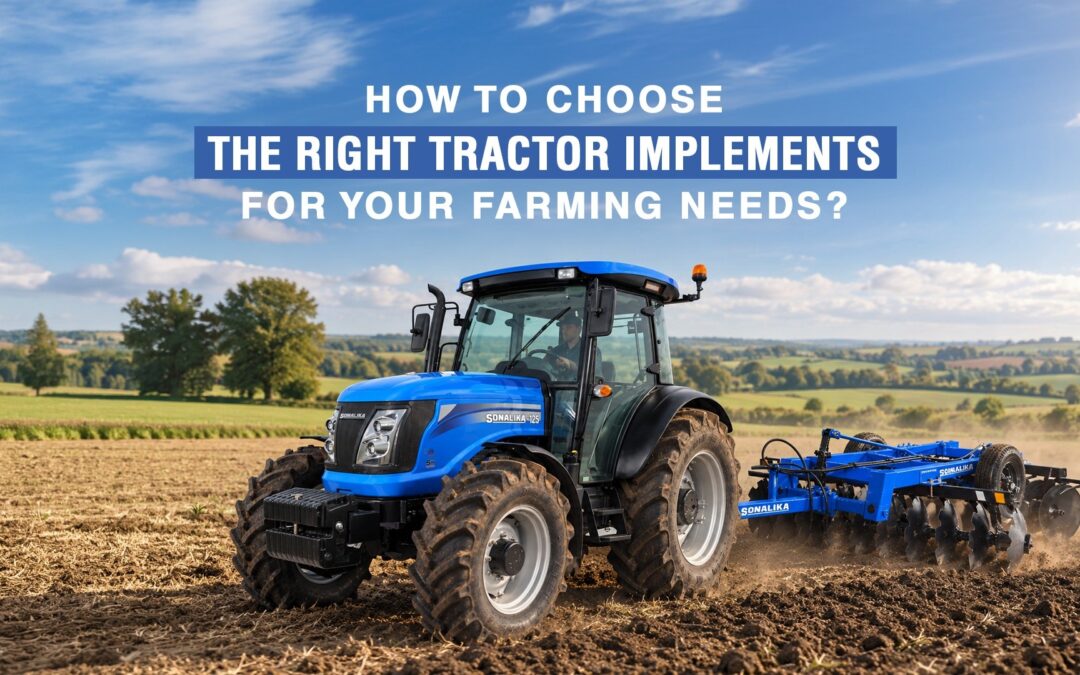
by admin | Oct 19, 2026 | Tractors
Have you ever equipped your tractor with new tractor implements, cranked it up, only to find the engine choking halfway through a task? Farm tractor implements surely make your equipment more versatile, but they can work against your workflow if you don’t match them to your requirements.
The right implement helps to finish your job faster and cleaner, and with less hassle. The wrong implements on hand burn more diesel, put more stress on your tractor engine, grind down the gearbox, and delay your work. Choosing the right agricultural implements isn’t a guess, which is something many farmers do till today. Instead, it involves several decisions.
This tractor implements guide helps you understand how to choose an implement for your farming needs. Choosing the right tractor is equally important as choosing appropriate implements; therefore, buying a tractor from a dealer or manufacturer is essential. Meanwhile, if you’re looking for new tractors, explore Sonalika International’s lineup of tractors.
Step 1: Know Your Farm’s Core Tasks
You must know the tasks you’ll perform like the back of your hand before looking at equipment catalogues. Are you breaking compacted clay or looking to prepare a fine seedbed or handle bales? There are a plethora of tasks that happen in farming, and buying the right implement is non-negotiable if you want to make tasks easier.
Primary tillage calls for heavy reversible ploughs to turn the earth with precision. Secondary tillage tasks need rotavators or harrows to disintegrate clods into manageable pieces. Buying general agricultural implements often results in mediocre results and lower profits. Find out your specific tasks (seasonal or year-round) first to prevent paying for implements you will never need.
Step 2: Match Implement(s) To Your Tractor’s HP & PTO
For many farmers, the engine size influences the buying decision. Get the wrong horsepower and everything on-field suffers. A massive harrow on a compact tractor puts heavy stress on the transmission, and it ultimately fails. On the other hand, equipping smaller tractor implements on a 90-hp machine leads to lost capabilities, fuel, and productivity, all hampering your ROI.
Always check the PTO (Power Take-Off) requirement. The PTO must comfortably drive the implement at the right RPM without running at maximum capacity. This habit helps you make the most out of a tractor implements guide and get higher ROI from your tractor.
Step 3: Check The Hitch, Hydraulic System & Weight Compatibility
Horsepower alone won’t save you. Linkage category (depicted as CAT-I or CAT-II), lift capacity, and hydraulic flow rate are factors that decide whether the tractor and the implement work as one unit. Force a Category III implement on a Category II hitch, and you’re inviting trouble, regardless of how powerful the engine is underneath.
Overload the lift arm, and it might fail sooner than you anticipate. Skip this check, and you may have to pay extra for a mechanic fixing your tractor, instead of working on a harvest. Hydraulic flow rate is equally important when choosing modern agricultural implements. If the hydraulic pump fails to deliver enough fluid/oil, the hydraulic motor will stall in the middle of a task. Always match the category pin sizes and lift capabilities to your machine’s specs.
Step 4: Match Implements To Soil & Crop Type
Black cotton soil and sandy loam respond differently to steel. A mouldboard plough turns soil deeply and evenly, making it great for standard tillage runs. A disc plough cuts and penetrates hard soil and root-choked ground without clogging surfaces. Crops matter too, since row crops need precision planters and cereal fields often run better with seed drills that are wide.
A standard cultivator might just fail to penetrate compacted earth. In that case, you need a chisel plough instead. Root crops call for completely different seedbed preparation compared to grains. Check your specific topography and moisture levels. Selecting the best implements for tractors means matching the implement directly to your soil’s unique conditions to protect its moisture.
Step 5: Think One Season; Not Just Today
Farming is a long game, and buying tractor implements just to solve today’s problems is a short-sighted decision. Look at and check your crop rotation plans for the next three years. Are you rotating crops next year or working on larger farms? A versatile implement covering two or three jobs saves you from buying multiple tools.
Resale values and spare parts availability count too, especially when you’re running a mixed fleet. Farmers should prioritise flexibility over specialisation, since idle equipment sitting between contracts is an investment doing nothing.
Conclusion
A tractor earns its value only through what it does and what it pulls behind. Wrong farm tractor attachments quietly consume diesel, damage soil quality and reduce machine life. Matching engine horsepower, hitch fit, and soil type isn’t extra work; it’s the line between a machine that earns its keep and equipment that just sits doing nothing.
Sonalika International offers various types of agricultural implements, designed to work with various HP ranges and field conditions globally. Our implements deliver high durability and precision, both of which improve your field operations and help you earn more in farming. Contact our team today for more information.
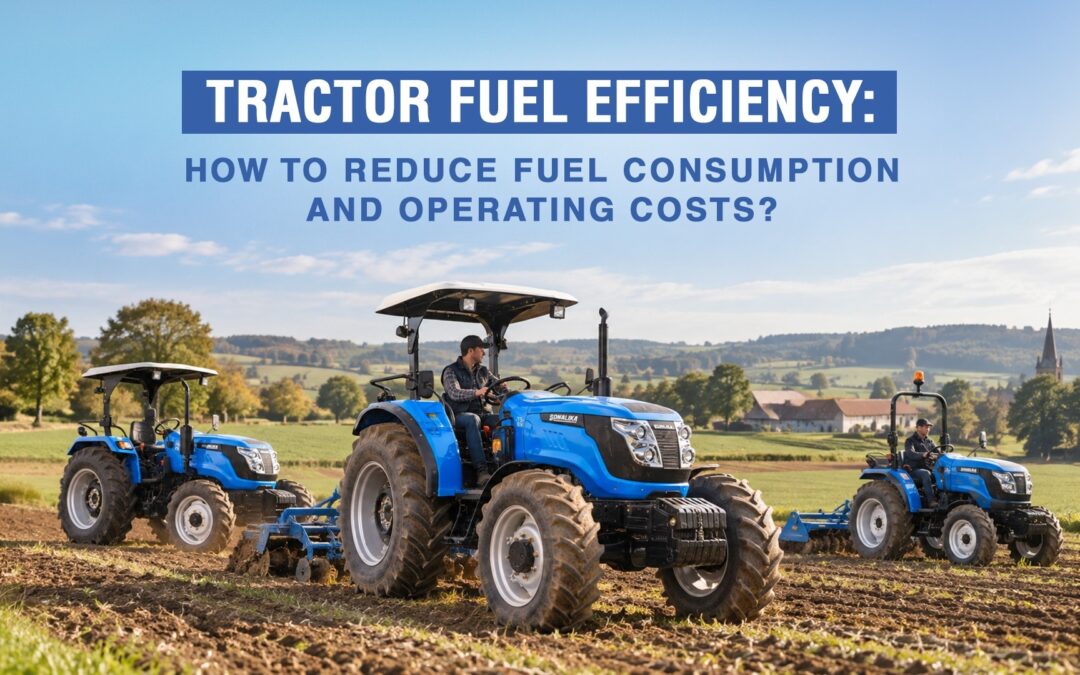
by admin | Oct 19, 2026 | Tractors
Diesel accounts for roughly 30-40% of a tractor’s total running cost in its working life. That number doesn’t change based on whether you had a good or a bad season. The consumption is determined by how the tractor runs, day after day, acre after acre, and year after year.
Weather is unpredictable, and it can either work for you or against you. Weather ruins yields. Similarly, prices of crops won’t either, and prices can crash overnight. Market rate shifts are not something a farmer can control. What you can control is fuel consumption. Tracking and maintaining tractor fuel efficiency is one factor that determines your profitability.
The decision is not about switching to a smaller engine or compromising on power. Instead, it’s about running and maintaining the machine you already own. Knowing which machines actually stay beside you in your journey and pay you back is the key. Here are some proven ways to reduce tractor fuel consumption and earn more profits from each task.
Why Tractor Fuel Efficiency Matters More Than Savings
Lower fuel consumption can not only lower diesel bills, but it also offers other benefits. When the engine runs efficiently, it also runs cooler and undergoes less stress. This results in fewer breakdowns and delivers longer service lives. As a result, it reduces the chances of expensive repairs and major overhauls.
Emission compliance is another benefit. It helps you operate with peace of mind across regions where norms are tight. The resale angle is another angle that many owners overlook. A tractor with a clean maintenance record and efficient fuel consumption history holds its value better in the used market. Used tractor buyers always look for high tractor fuel efficiency and lower tractor operating costs.
Fuel-Saving Tips For Tractors To Reduce Tractor Fuel Consumption
1. Match Tractor Size To The Job
Bigger always isn’t better. When you use a 90-HP tractor for a task that requires a 50-HP tractor leads to fuel wastage and a higher fuel bill. Match the horsepower rating to the actual load. Whether you’re involved in tillage, spraying or hauling tasks, matching power is very important. The sweet spot of an engine is when it is working at 70% of its load capacity.
Anything less, and you’re paying for horsepower you’re not using. Before buying or assigning a tractor to a task, match the load. It’s one of the most important fuel-saving tips for tractors that can lower your bills.
2. Maintain Correct Tyre Pressure & Ballast Weight
Underinflated tyres increase rolling resistance and burn extra diesel on every pass you make. On the other hand, overinflated tyres cause wheel slip, also affecting your tractor fuel efficiency. Check tyre pressure weekly, not once every season. Additionally, check inflation levels based on specific surface conditions and the weight of implements.
Ballast weight is equally important. Aim for around 90 to 140 pounds (40-63 kg) per horsepower. If you use too little ballast, your tractor may lose traction, and if you use too much, you’re putting extra weight for no reason, meaning higher consumption.
3. Cut Idling Time
Modern diesel engines don’t need long warm-up or cool-down periods. Running your machine while you check the equipment or do other work is burning fuel uselessly. An idling tractor still burns fuel, and for heavy-duty tractors, the amount of fuel burnt while idling can shock you. When you stack them across a full week of breaks and loading waits, fuel consumption from idling eats a decent chunk of your fuel bill.
Shut down the engine if your idle time exceeds more than 2 minutes. Cutting idle time is one of the most effective fuel-saving tips for tractors.
4. Be On Top Of Regular Maintenance
A clogged air filter compels your tractor’s engine to work harder for the same output. The more an engine works hard, the more it burns fuel. Dirty injectors, old lubricant, worn belts, and clogged filters quietly raise fuel consumption. Always follow the manufacturer’s recommended service schedule instead of waiting for problems to arise. A well-maintained, fuel-efficient tractor not only saves fuel, but also keeps you from being involved in breakdowns.
- 5.Reduce Tillage Passes & Plan Field Routes
Every extra pass you make in a field leads to unwanted fuel consumption. You’re basically burning fuel for no reason, and no productivity is a result of this. Look at your tillage plan and find out whether the pass can be dropped or combined. Route planning matters too. Straight and deliberate paths outperform backtracking and overlaps often. Fuel savings compound across a season faster than many farmers realise.
Conclusion
You cannot reduce tractor fuel consumption with one fix. Instead, you need to incorporate a set of habits, including load matching, maintaining tyre pressure, cutting idle times, maintenance, and route planning and tracking to get the best out of your fuel-efficient tractor. Use these fuel-saving tips while using your tractor, and you’ll see noticeable improvements.
Are you looking for tractors with low tractor operating costs and high durability? Sonalika International is popular globally for offering powerful, durable, highly efficient, and cost-effective tractors. Explore our range today and contact us for more information.
by admin | Oct 8, 2026 | Tractors
When you’re buying a tractor, you aren’t just paying for a machine, an engine, hydraulics, tyres, etc.; you’re also investing in how well a tractor manufacturer backs its machine once it leaves the dealership. This is why understanding Sonalika tractor warranty terms, tractor warranty coverage and the service network behind it is equally important as choosing the right machine.
Picture a scene in which you invested a heavy sum in a tractor, and while working in a peak harvest season, the so-called “highly reliable” tractor bogs down mid-work. Your operation takes a pause, and the part your local mechanic asked for will take 7 days to arrive. This is a truth that many tractor owners face, and when topped with an unclear warranty and a limited service network, the ownership experience gets far worse.
Sonalika International is one of the leading tractor manufacturers globally, present in 150+ countries. We offer competitive warranty periods and a robust after-sales network, with easy accessibility to spare parts, all summing up to deliver maximum uptime. Terms vary by country and distributor, so before you buy, it’s essential to know what the warranty actually covers and for how long.
Why Tractor Service Network & Buyer Support Matters More Than Buyers Think
- Downtime Cost: A tractor sitting idle during planting and harvest windows costs you working days and money you cannot recover.
- Dealer Eligibility: Regular and warranty-backed maintenance helps to avoid unexpected financial pitfalls.
- Better Resale Value: Tractors maintained by authorised dealers maintain better value in the market.
- Lower Idle Time: Quick access to essential spare parts and professional repairs ensures your tractors always stay strong during peak seasons.
Sonalika International Warranty Breakdown & What It Covers
- Sonalika warranty coverage follows a proper and consistent approach. However, exact terms vary by market and model.
- In applicable markets, Sonalika International sells its tractors with competitive warranty periods.
- Coverage is administered by local Sonalika distributors, not centrally from India.
- For accurate terms, conditions and periods, confirm directly with your local Sonalika dealer.
- Buyers receive protection for major mechanical systems, including the engine, transmission, hydraulic system, and other key components.
- Exact warranty coverage periods, including parts, and claim procedures vary by market. Always request a written warranty document from dealers before you buy.
- Warranty eligibility requires purchase from an authorised Sonalika distributor or dealer.
- Buying from an unauthorised dealer or reseller can leave you without access to official service networks and Sonalika support in your region.
Service Network Behind The Warranty
- Sonalika after-sales includes a strong chain of outlets and service centres, appointing one or more official distributors in each of its 150+ markets.
- Your local Sonalika is your first point of contact if you have service requests, repairs, or need technical troubleshooting.
- Sonalika’s service network, response times and service quality are top-notch, but they depend on the specific distributor covering your region.
- Sonalika’s online dealer locator helps you find and verify the nearest authorised service point before you buy
- Buying from an unauthorised dealer can leave you without access to the official service network in your region.
- Sonalika International’s Hoshiarpur plant is 225,000 square metres large, has a maximum capacity of 300,000 tractors per year and has a 2-minute roll-out time per tractor.
Spare Parts & Long-Term Ownership
Sonalika tractor warranty and easy access to spare parts ensure excellent tractor buyer support and ownership experience over the years. Sonalika International manufactures roughly 80% of the components in its Hoshiarpur plant and supports a strong global supply chain. Genuine parts are tested for quality, fit and finish before they reach dealer networks and are designed for maximum longevity.
Fake parts and unauthorised access affect your claim to warranty repairs and pose a safety risk for operators. Sonalika after-sales support provides trained technicians at authorised service centres who work with genuine Sonalika parts and repair procedures. Always use parts provided by an authorised Sonalika dealership, verified by serial number and dealer certification.
Conclusion
Your Sonalika tractor warranty and tractor service network are not merely add-ons; they are a part of what you’re actually paying for. Before you settle for a purchase, ask the dealer for the exact Sonalika tractor warranty period and after-sales support process in a documented form.
Protecting your investment and total cost of ownership starts with some important questions before purchasing, not after your tractor develops problems. Reach out to your nearest authorised dealer to get a clear understanding of tractor warranty coverage, important details and essential tractor buyer support.