by admin | Jul 31, 2026 | Customer Stories
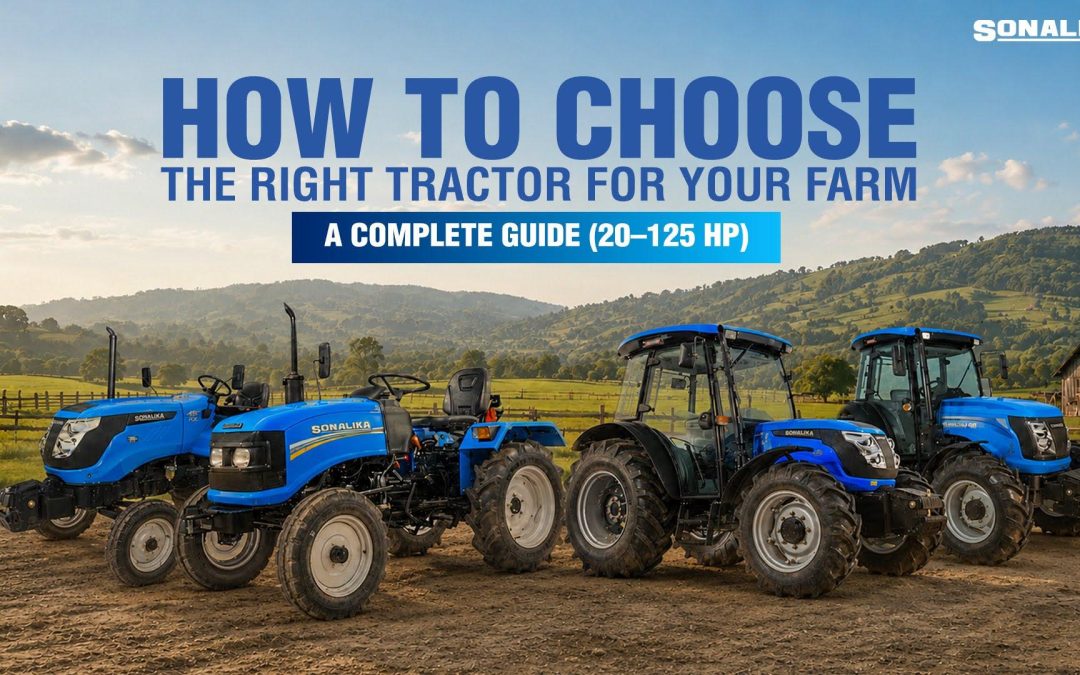
A farmer visits a dealership wanting the best tractor for farming on his 8-acre vegetable farm. He ends up buying a 75-hp tractor just because the salesman called it “powerful”. Fast-forward to 3 months, and he’s already annoyed with high diesel consumption and inflated fuel expenses, plus finding it difficult to work with it on his small farm. This is a trap most first-time buyers fall into in reality: chasing horsepower instead of matching the machine to a job.
This confusion is more common than you might think because tractor horsepower ranges from 20 to 125, usually, and nothing in the brochure tells you which machine suits your farm, soil, acreage and of course, the budget. These are things that are worth knowing before you invest in a tractor to get the maximum returns from your equipment and boost your productivity.
To help you better understand and buy the right tractor, we’re here with a tractor buying guide. By the end of this blog, you’ll know how to choose the right tractor for your requirements.
Check Your Farm’s Size & Soil Conditions
The acreage of your farm decides how agile or powerful your tractor needs to be. Farm sizes ranging from 5 to 20 acres generally call for models having a tight turning radius and compact dimensions. This helps you manoeuvre easily on small plots and work more on each pass. For 50+ acre farms, you might want to look for machines that focus more on speed, stability and wider wheelbases. This will help you work with heavier implements and cover more ground.
The type of soil is equally important as the size. Plots with heavy and wet clay result in serious drag on ploughs, so you need to buy tractors with higher torque to avoid stalling mid-work. Light, sandy and loamy soils have less resistance, meaning you can buy lower-horsepower machines without worrying about performance.
Terrain further changes the equation. Steep gradients and hilly farms require a 4WD system for grip and a machine with a lower centre of gravity to prevent rollovers. If you’re working on flat and dry land, 2WD tractors must do fine. Before you choose any model, measure your farm, orchard row width, vineyard canopy height, barn door clearance and the narrowest gate. If you stay in areas where floods are common, a 4WD system with a differential is essential.
Tractor Horsepower Guide: A Detailed Breakdown
The right farm tractor comparison always starts with understanding the difference between engine horsepower and PTO (Power Take-Off) power. Engine power is generally measured in horsepower, but in some regions it is also measured in kilowatt (kW). Engine horsepower propels the tractor forward, while PTO HP runs the attachments and determines how effectively it works.
If your baller needs 50 hp to work, the PTO rating must meet the requirement, not just the engine power rating. So, how to choose the right tractor with respect to horsepower requirements? Use this tractor horsepower guide to know your ideal horsepower requirements.
| Tractor Engine HP Range |
Typical Farm Size |
Best For |
Sonalika Models |
| Below 20 Hp |
Under 3 acres |
Orchards, nurseries, light mowing, & garden tasks |
Sonalika FP-18
|
| 20-30 Hp |
3-10 acres |
Small farms, light tillage tasks, orchards, vineyards and light hauling. |
Sonalika 20
Sonalika 26
Sonalika 30
|
| 30-50 Hp |
10-25 acres |
Mixed farming tasks, cultivation, seeding, rotavator work & general seedbed preparation. |
Sonalika 45
Sonalika 50
|
| 50-75 Hp |
25-50 acres |
Rowing crops, material hauling, moderate tilling, heavy utility, baling, & large field ploughing. |
Sonalika 55
Sonalika 60 (3 & 4 cylinder)
Sonalika 75 WT
Sonalika 75 RX
Sonalika 75N
|
| 75-125 Hp |
50+ acres |
Large-scale farming, commercial tasks, heavy tillage, & heavy implement usage. |
Sonalika 80
Sonalika 90 WT
Sonalika 90N
Sonalika 110 WT
Sonalika WT 110 RX
Sonalika 125
|
5 Factors To Consider Apart From Engine HP
When you’re looking for the best tractor for farming, look beyond the engine power. Consider these 5 critical specifications in mind.
1. PTO Output: The engine powers the wheels, while the PTO propels the attachments. A 50-hp engine may only offer 40 PTO hp. If your mower needs 45 hp to run, the tractor will stall.
2. Hydraulic Flow & Lift Capacity: Lifting heavy bales or ploughs requires capable lifting power, high hydraulic fluid flow (gallons per minute) and rear hitch capacity. High horsepower is useless if the hitch cannot extract the tool from dirt.
3. Transmission Type: Hydrostatic transmission offers dynamics like an automatic car and works great for constant loader work. A gear-driven manual transmission can hold steady speeds during field ploughing.
4. Dealership Proximity: Farm equipment undergoes heavy stress, and downtime results in losses. Buy from a brand with strong local after-sales support and spare part availability.
5. Operator Comfort & Safety: Long working days can cause physical strain and fatigue. Buy tractors with comfortable seats, enclosed cabs & AC for convenience. Also, pick ROPS for better safety.
Implements & Hydraulics
Every tractor buying guide covers the importance of implements and hydraulics. The engine powers the wheels and the hydraulic system of your tractor. The real work is done by the implements. Before you choose any implement, list every attachment you’ll need, like loaders, rotavators, mowers, seeders, etc. Check the lift capacity for each one because the right match matters.
If you’re running front-end loaders or heavy ploughs, you can’t compromise on hydraulics. The best engine in the world can’t save you from weak hydraulic flow; it will make your work more challenging.
Ergonomics & Total Cost Of Ownership (TCO)
Long days on the field exhaust you quickly. Always buy models offering power steering, an adjustable seat, and controls that are within easy reach. This directly affects your productivity and determines how much work gets done before fatigue enters.
Look beyond the sticker price and calculate the real TCO. Include diesel consumption per hour, ease of serviceability and whether spare parts are available nearby. Select brands with strong local service support and ones that have a presence near your farms, because reliability on paper is useless if you don’t receive support when you need it.
Final Thoughts
Figuring out how to choose the right tractor comes down to one simple principle: match the tractor to the job. Read this tractor horsepower guide and skip the habit of only assessing the horsepower, focusing more on your farm acreage, soil type and what implements you will use.
Sonalika International is one of the leading tractor manufacturers globally, offering a handful of models with every HP bracket covered in our farm tractor comparison. If you want to buy the best tractor for farming, visit our website to explore our lineup and contact us for more information.
by admin | Jul 31, 2026 | Customer Stories
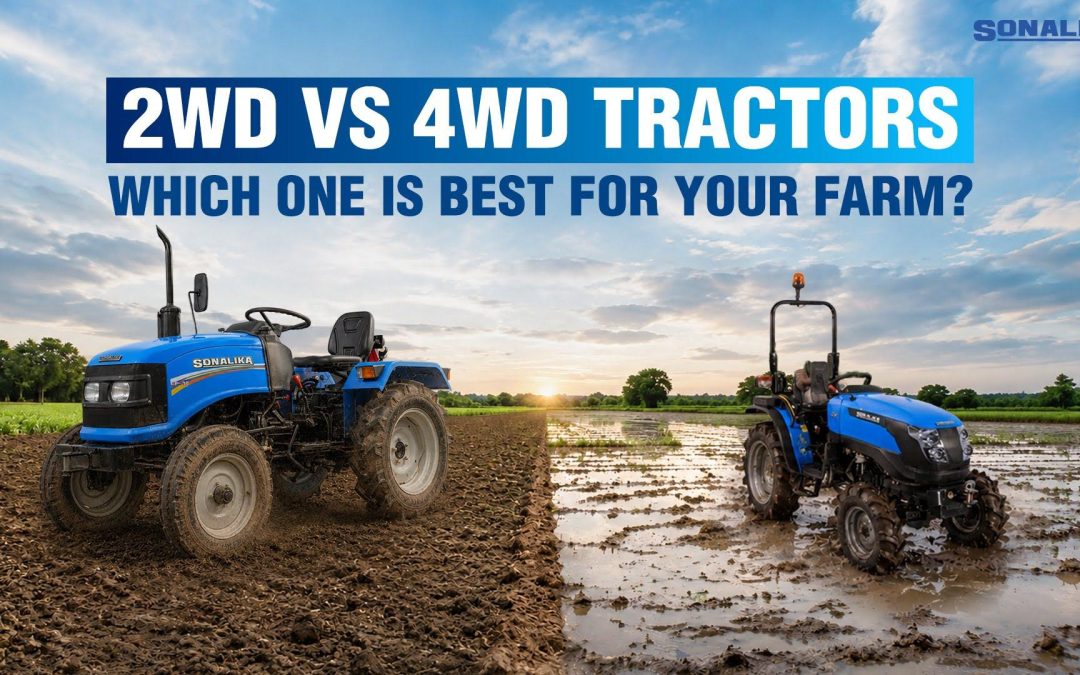
Buying the wrong tractor isn’t just costly; it can mess up your planting schedule, burn extra fuel doing the wrong jobs, and cause your tractor to stall on muddy or sandy surfaces. While a 2WD and a 4WD tractor look identical, they have key differences, and each behaves differently when you use them on dirt. One farmer working using a tractor on dry land may do just fine with a basic machine, but one working with clay or hills needs a machine with more grip.
That’s where the whole 2WD vs 4WD tractor debate steps in. Many first-time buyers think having more power or more wheels makes a tractor better, but that’s not always true. Each drivetrain is designed for specific needs, and if you mess up, your bottom line is compromised. In this farm tractor guide, we’ll discuss the differences between a 2WD and 4WD tractor, the benefits and help you find out which one suits you better.
What Is A 2WD Tractor?
A 2WD tractor sends all its engine power to the rear axle, which means your tractor’s grip heavily depends on the treads of the rear tyres, the weight of the ballast and the condition of the soil. That kind of setup shines on dry, hard fields where wheel slip barely happens, so you burn less fuel and put less wear on the machinery.
But things change fast if the ground gets loose, wet, or while using the terrain. In many cases, the rear wheels start to spin, and you lose that traction under load. That’s when weight distribution really matters, especially if you’re pulling a plough or towing a trailer. For small or medium-sized farms where the soil is consistent, a 2WD tractor makes sense. It keeps costs down and gets the job done.
What Is A 4WD Tractor?
A 4WD tractor sends engine power to both the front and rear axles, allowing all four wheels to pull together. This is possible through components like a transfer case, front differential, and drive shafts that balance out the torque, even when you’re turning. On the field, this results in way less wheel slip, so you’re not wasting engine power spinning tyres, you’re getting work done. This is critical if you’re operating on wet soil, deep tillage, or rough terrain.
4WD tractor benefits go beyond better grip. A 4WD stays steady under heavy loads, especially if you’re using a front loader or handling large implements. The extra stability matters when the balance shifts. Of course, you’re also dealing with more mechanical parts, which means more maintenance and higher fuel use, especially if you’re mostly doing lighter work.
If your farm has solid and predictable ground, you probably won’t need all that 4WD capability. But when things get tough, while operating on muddy and hilly terrain, or when you’re using heavy implements, the better performance and less downtime can easily make the bigger investment worthwhile.
4WD tractors undergo extreme stress. Watch this video to know how to inspect the oil level & fuel filter.
2WD vs 4WD tractor: Key Differences
| Factor |
2WD Tractor |
4WD Tractor |
| Traction/Grip |
Moderate, ideal for paved and firm surfaces |
Strong, best for loose, uneven and sticky ground |
| Power Distribution |
Rear wheels only |
Gets power on all wheels |
| Fuel Economy |
Higher and puts less load on the engine |
Lower, puts more load on the engine |
| Purchase Price |
Costs lower upfront |
Higher upfront costs |
| Turning Radius |
Tighter |
Wider |
| Maintenance Complexity |
Simpler to maintain |
More parts, more complex to maintain |
| Ideal For |
Light & medium-farming tasks |
Heavy-duty applications and work in terrain |
2WD vs 4WD tractor: Applications
| Farm Soil/Surface Type |
Recommended Drivetrain |
| Flat, dry land, tractor with light implements |
2WD |
| Wet, muddy, sandy & hilly farms |
4WD |
| Small to medium-acre farms |
2WD |
| Large-acre farms |
4WD |
| Heavy implements: rotavators, loaders, & tillers |
4WD |
| Budget-conscious & first-time buyers |
2WD |
Which Tractor Is Easier To Maintain?
A 2WD tractor is easier to maintain since it uses fewer moving parts. These tractors don’t have a front differential, no extra universal johns or additional hydraulic lines to service, meaning fewer parts can wear or leak. With 2WD tractors, maintenance stays limited to the engine, rear axle, hydraulic system, filters, and brakes, unless some other issue pops up.
On the other hand, a 4WD tractor needs more attention because of its front axle, transfer case and steering linkages. Parts for these systems usually cost more when you want to replace. If you don’t have access to parts, good after-sales service or mechanics, a maintenance gap can be a big headache in ownership.
It’s also one of the reasons why Sonalika tractors are so popular in the market. Our tractors not only come with highly durable tractors, but also after-sales service and quality OEM parts are widely available.
Watch How To Replace Your Tractor’s Engine Oil & Oil Filter
Resale Value: 2WD Vs 4WD Tractors
4WD tractor benefits also includes lower depreciation. They usually hold resale values better compared to 2WD machines in regions where buyers have to work in wet seasons or hilly areas. Since demand for the best tractor for agriculture is often higher year after year, 4WD tractors are generally preferred in this aspect.
Dealers also price used 4WD machines at a smaller depreciation gap compared to their original cost, especially if the 4WD system is well-maintained. 2WD machines depreciate faster, especially in areas where farmers want machines with all-terrain and all-season capabilities. However, they sell well in dry farming belts.
Want The Best Tractor For Agriculture? Common Mistakes To Avoid
- Horsepower Obsession: Focusing only on horsepower and torque without evaluating the type of soil, traction requirements and plot conditions.
- Skipping Field Testing: Relying solely on dealer demos instead of testing the tractor on your land.
- Underestimating Implement Load: Ignoring the weight of your implement and not knowing PTO requirements.
- Short-Term Thinking: Considering only the purchase price, not factoring in long-term fuel costs and maintenance expenses.
Expert Tips For First Time Tractor Buyers
- Implement Consideration: Choose a tractor based on the requirements of your implements. Don’t choose based on the heaviest implement; choose based on the hardware you commonly use.
- Real-World Testing: Always operate a tractor on wet, muddy, sandy, sloped surfaces and terrain to find how well it works.
- Parts Availability: Buy models from brands offering strong local spare part support.
- Brand Credibility: Buy tractors from reputed manufacturers to ensure your tractor maintains a good resale value.
- Fuel Efficiency: Select models offering higher fuel efficiency and evaluate fuel usage under real working conditions.
Final Thoughts
In the 2WD vs 4WD tractor debate, specs listed on a brochure only tell a part of the story. What really matters is the soil, terrain, and how much you want to spend. If your farm is small and mostly dry, a 2WD usually gets the job done without any issues. If you’re dealing with sloping fields or heavy, muddy soil, 4WD tractor benefits like better grip and more pulling power are definitely worth mentioning.
Sonalika International gets that farmers have different needs, so they offer a pretty wide selection of both 2WD and 4WD tractors. That way, you can actually pick a machine that fits the land you’re working, not just what sounds good on paper.
by admin | Jul 13, 2026 | Customer Stories
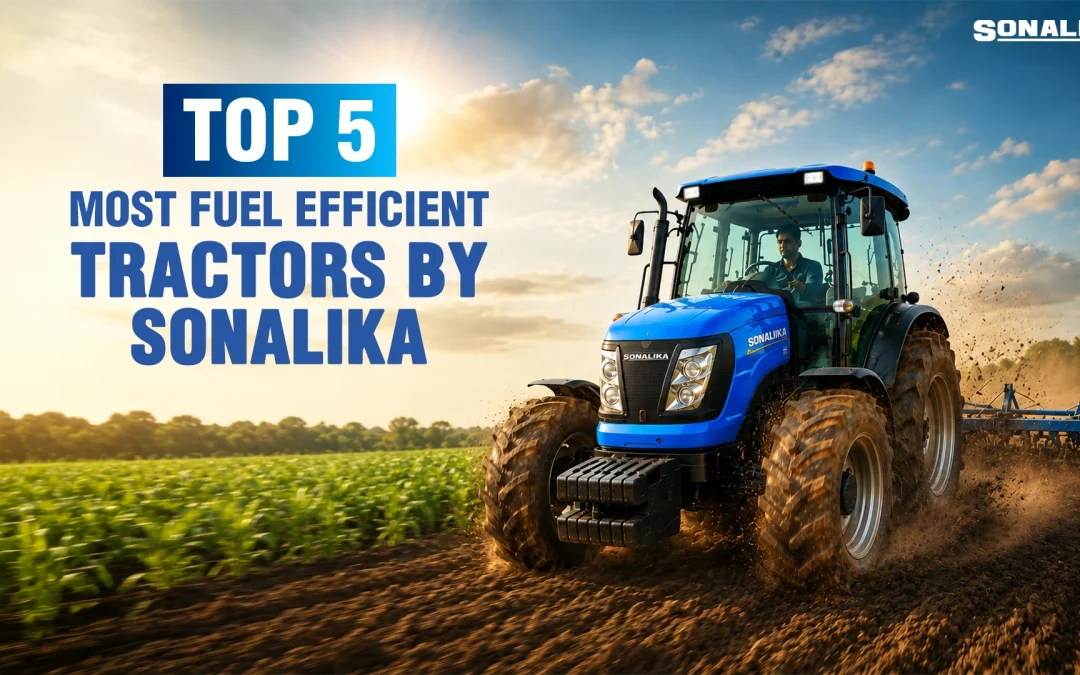
Fuel takes a major portion of your tractor’s operating costs & is very important to determine your operation’s overall profitability. Rising diesel prices directly impact your profit margins, and increased fuel consumption inflates your running costs. If you’re spending more time worrying about fuel costs, rather than farming, this is the best time to buy a fuel-efficient tractor, which can reduce your daily expenses.
When exploring tractors, choosing the most fuel-efficient tractor may sometimes require you to invest on slightly costlier model. However, the returns from high tractor fuel efficiency you get in the long-term are significant. You get more fuel savings, lower emissions and a durable engine, all combining to provide you the best ROI.
Sonalika tractor mileage is one of the best in the industry. Tractors available at Sonalika International are not only offered across diverse horsepower ratings, but they are also designed to return the best fuel efficiency. Whether you speak of engine design or incorporating modern technologies, our tractors are both efficient and low on emissions. Here are the 5 best Sonalika tractors offering the best fuel efficiency.
The Sonalika FP-18 is the most affordable tractor in Sonalika International’s lineup. This tractor is designed to be cost-effective, durable and powerful enough for light tasks and small acreage work. This fuel-efficient tractor uses a 863.5 CC 18-hp single-cylinder engine paired with a 6F+2R sliding mesh transmission, with power going to a 2WD system. Fewer cylinder results in lower internal friction and high tractor fuel efficiency on each cycle.
Key Features:
- 863.5 CC 1-cylinder engine with 18 hp & 54 Nm
- 6F+2R Sliding Mesh transmission with 2WD system
- Dry-type air cleaner
- Oil-immersed brakes with independent parking brakes
- 540 RPM PTO
- 700 kg lift capacity
- Optional front toe hook
Ideal for: Sugarcane plantations, inter-row operations, cotton cultivation, & small orchards.
2. Sonalika 26: A Step Above With More Capabilities & Efficiency
If you’re looking for a fuel-efficient tractor with more capabilities than the entry-level FP-18, the Sonalika 26 steps up the game with more power without draining your wallet from high fuel expenses. It packs a 26-hp 3-cylinder naturally aspirated Mitsubishi engine churning 76.3 Nm of torque at 2700 rpm, keeping things punchy without consuming too much diesel.
The engine is paired with a highly durable 6F+2R sliding mesh gearbox and 4WD system, offering excellent response on cultivation and haulage tasks.
Key Features:
- 26-hp Mitsubishi 3-cylinder engine with 76.3 Nm
- 6F+2R Sliding Mesh transmission with 4WD system
- Oil-immersed brakes with independent parking brakes
- Foot-operated differential lock
- 540 & 1000 RPM PTO
- CAT-I 3-point linkage system
- 600 kg lifting capacity/ 775 Optional
- Standard clutch safety, PTO safety and neutral safety switch
- 2.3 m turning radius (without brakes)
- Standard front tow hook
- Optional swinging draw bar
Ideal for: Mid to small farms, daily cultivation, tilling, and light haulage
3. Sonalika 60 3-Cylinder: A Sweet Spot Offering Fuel Savings & Notable Capabilities
Once you climb the ladder and deeply explore the lineup, there is the Sonalika 60 series, available in 3-cylinder and 4-cylinder models. For buyers looking for the most fuel-efficient tractor for agriculture at an affordable price, the Sonalika 60 3-Cylinder is often taken into consideration.
It packs a 60-hp turbocharged 3-cylinder engine providing 230 Nm of torque. Power is sent to a 4WD system via an 8F+2R Swift Shift (power shuttle) transmission. This model also offers a lifting capacity of 2,000 kg, meaning you can also perform light loading operations easily while enjoying high tractor fuel efficiency.
Key Specs & Features
- 60-hp turbocharged 3-cylinder engine with 230 Nm of torque
- 33.67 km/hr max speed with 2.52 km/hr minimum speed
- Power steering with a 4WD system
- CAT-II 3-point linkage system
- 2,000 kg lifting capacity
- Clutch, PTO & neutral safety switch
- 62L fuel tank
- Standard ROPS cabin
Ideal for: Mid-size farms between 15 and 50 acres, mixed crop operations, deep ploughing, rotavation tasks, & loader operations.
4. Sonalika 75: Capable, But More Fuel Friendly
The Sonalika 75 (also called RX 75) is the point where things get more serious in terms of performance and efficiency. This tractor has a 4100FLT 3707 CC turbocharged 4-cylinder engine, churning 75 horsepower and 278 Nm of torque. Underneath, the 8F+2R dual-clutch Swift Shift transmission provides smooth gear changes and improved fuel economy, making the Sonalika 75 an easy choice for tackling tough tasks.
In terms of utility, this tractor offers a maximum lifting capacity of 2,000 kg, which is decent for loading heavy materials. Additionally, the 540RPM PTO allows you to use heavy implements efficiently and add more versatility.
Key Specs & Features
- 4-cylinder turbocharged engine with 75 hp & 278 Nm
- 36.46 km/h maximum and 1.95 km/h minimum speed
- 8F+2R Swift Shift dual-clutch gearbox with 4WD system
- 540 RPM PTO
- CAT-II 3-point linkage with standard stay bars
- 2,000 kg lifting capacity with standard lift rods, 3,000 kg optional
- 64L fuel capacity
- Optional canopy
Ideal for: Large-scale field operations, mixed farming, haulage, tillage, rotavator usage, and implement-heavy applications.
5. Sonalika 90: Powerful, Fuel Saving & Highly Durable
The Sonalika 90 is one of the most powerful tractors in the lineup, yet it remains highly economical when it comes to fuel consumption. Sonalika tractor mileage and capabilities are the reasons why Sonalika is so preferred among farmers worldwide. At the 90-hp class, most tractors would instantly start burning diesel aggressively, but this model is built differently.
The Sonalika 90 comes with a 4087 CC 90-hp turbocharged 4-cylinder diesel engine, which also delivers a healthy 276.79 Nm of torque. A 12F+12R Synchromesh transmission with a 4WD system takes care of power delivery and traction. With up to 3,000 kg lifting capacity, this tractor can also perform loader operations and material handling tasks with ease.
Key Specs & Features:
- 4,087 CC turbocharged 4-cylinder engine with 90 hp & 276.79 Nm
- Dry air cleaner with clogging sensor
- 35.2 km/hr maximum & 0.57 km/hr minimum speed
- 540/540E RPM PTO
- 3,000 kg lifting capacity (optional)
- 78L fuel tank capacity
- Front tow hook
- ROPS cabin for safety
Ideal For: Large farms, heavy field work, demanding tilling, ploughing and land preparation operations, mixed-use commercial farming tasks and material handling applications.
Final Takeaway
Buying the right fuel-efficient tractor isn’t about buying the tractor with the lowest horsepower on the list. It’s about evaluating your operations carefully and matching the engine size. The FP-18 is ideal if you’re looking for the most fuel-efficient machine at an affordable price, but if you seek better Sonalika tractor mileage and power, the Sonalika 26 is better suited.
For buyers looking for the most fuel-efficient tractor for agriculture and grape cultivation, the N series is a strong choice. Tractor fuel efficiency in the N series is high alongside impressive capabilities.
If you’ve evaluated your needs carefully and are ready to buy a tractor, explore Sonalika’s lineup. Contact us for more information.
by admin | Jun 22, 2026 | Customer Stories
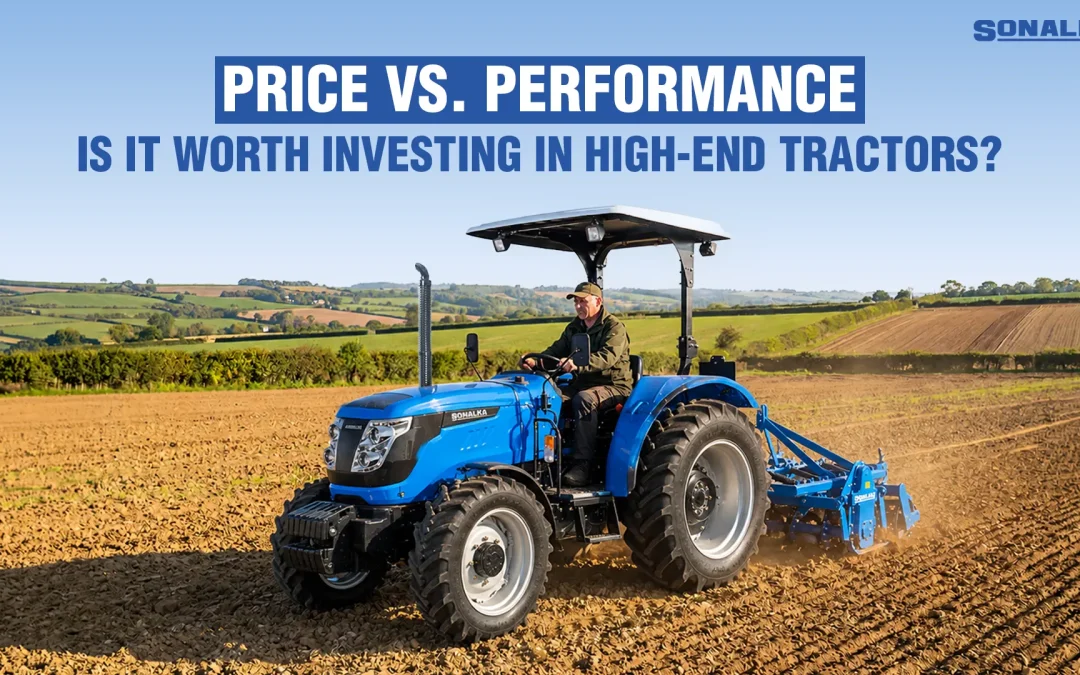
Buying new farming equipment for the approaching season isn’t a simple choice. Every farmer reaches a point where the question transforms from “Do I need a tractor?” to “Do I actually need a high-end tractor?” We know it’s not a simple question; it involves doing the correct maths, evaluating requirements and preparing a budget.
When you read a tractor buying guide, most guides only tell you specs and features, but rarely do they help you navigate through buying decisions: Is a high-end tractor really worth buying?
To address this dilemma among buyers, we have created an affordable vs. high-end tractor buying guide, which will help you conclude. If you’re working on large farms, running various implements, or trying to scale your operations, every decision matters. Choosing the wrong tier can either affect your operations or lead you towards spending more money.
What “High-End” Really Means In A Solid Tractor Buying Guide?
Premium tractors exist for a reason, and it isn’t just “more expensive” versions of affordable models. When you hear the term “premium”, it typically refers to a model that is built to deliver power, durability, comfort, safety, and reliability in a single package. In most cases, a heavy-duty tractor perfectly fits this explanation.
Heavy tractors typically come with powerful diesel engines, which are often fitted with turbochargers and technologies like CRDi and smart engine management. These tractors also feature advanced transmission systems, spacious cabs, comfort features, ROPS and FOPS rating and telematics to boost productivity and efficiency.
Build quality in high-end agricultural equipment is noticeably better than that of affordable tractors. From chassis durability to the quality and life-span of components, premium tractors are built to excel not only in terms of performance, but comfort too. These tractors are designed to maximise efficiency in every single pass you make on your farm.
Where Premium Or Heavy Tractors Justify The Cost?
The maths starts working in your favour once you’re in specific conditions. It’s worth being open about what the conditions are.
If you’re working on large plots, preferably ones above 20 acres, a high-horsepower tractor reduces the number of passes in the field, preserving fuel and time. Applications that rely on specialised equipment like heavy tractor attachments, like rotavators, cultivators, sprayers, and seeders, benefit from the high torque, high PTO and robust build quality of heavy tractors.
Terrain is another area where heavy tractors make sense. Many high-output tractors have switchable 4WD systems, which allow operators to switch from 2WD to 4WD for better traction on rough surfaces. Rocky, hilly, water-logged farmlands require better traction, stronger transmission and durable drivetrains, all available in performance tractors.
Precision is another key merit of high-end farming equipment. Many models come with GPS-guided planting and allow you to perform variable rate application, offering better practicality for farming operations. These tractors are also sold by established brands, meaning you get better resale value when it comes to selling.
When Should You Settle For “Affordable” Or “Mid-Range” Tractors?
Not every farmer needs a high-output tractor, and overspending on features you will never use is as bad as underspending. A mid-range tractor is ideal if you work on farms of less than 20 acres. Additionally, factors like straightforward crop cycles and predictable terrain further make a mid-range tractor ideal for use.
When doing a tractor comparison, evaluate if you’ll use the tractor for a season, versus if you’ll use it daily, plus what kind of work you’ll perform: light vs heavy. If the answer is “seasonal use” and “light tasks”, buying an expensive machine hardly makes any sense.
A reliable 50 to 75-HP tractor from a well-established brand like Sonalika is highly capable of handling most standard tasks. The key to a good purchase lies in following a proper tractor buying guide and matching a machine’s capability to actual operational demand.
The Real ROI Calculation
Not sure how ROI works for tractors? Well, this tractor buying guide puts this thing into perspective. Think of your tractor’s ROI in four different sectors, not just the purchase price.
First, productivity gains: a higher HP tractor is capable of completing more work per day. This reduces labour costs, time, and the unavailability of labourers in peak seasons.
Second, fuel savings: Much farming equipment comes with premium engines that are fitted with modern technologies like turbochargers and fuel-saving features. Over five seasons, the fuel savings compound.
Third, maintenance frequency: Many budget machines use low-quality components, meaning they require frequent servicing and part replacements, and downtime during harvest season can affect your workflow. In contrast, quality components and extended service intervals in high-end machines ensure better uptime and consistent performance during the harvest season.
Fourth, resale value: Agricultural equipment from reputable brands always holds value better, so you get higher resale value when you want to upgrade. Once you add these four factors, you’ll notice that a high-end tractor offers better return if you use it effectively in large-scale operations.
Conclusion
Buying the right agricultural equipment isn’t about choosing an affordable, mid-range, or high-range tractor or high-horsepower engines. Instead, it’s about smartly choosing the ideal tier for your work scale and goals.
If your operation requires consistent performance, multi-attachment versatility, and long-term reliability, a high-end tractor or a heavy-duty tractor is ideal. For smaller or seasonal tasks, a capable mid-range tractor from a reliable brand gets the job done at lower costs. The best tractor buying guide helps you match your real workload to the right machine type.
Sonalika International is among the leading tractor manufacturers globally. Our lineup includes low-horsepower tractors for light applications, mid-range tractors for medium acreage and heavy tractors for applications that demand raw power. Explore our lineup today and contact us if you have any queries.
by admin | Jun 1, 2026 | Customer Stories
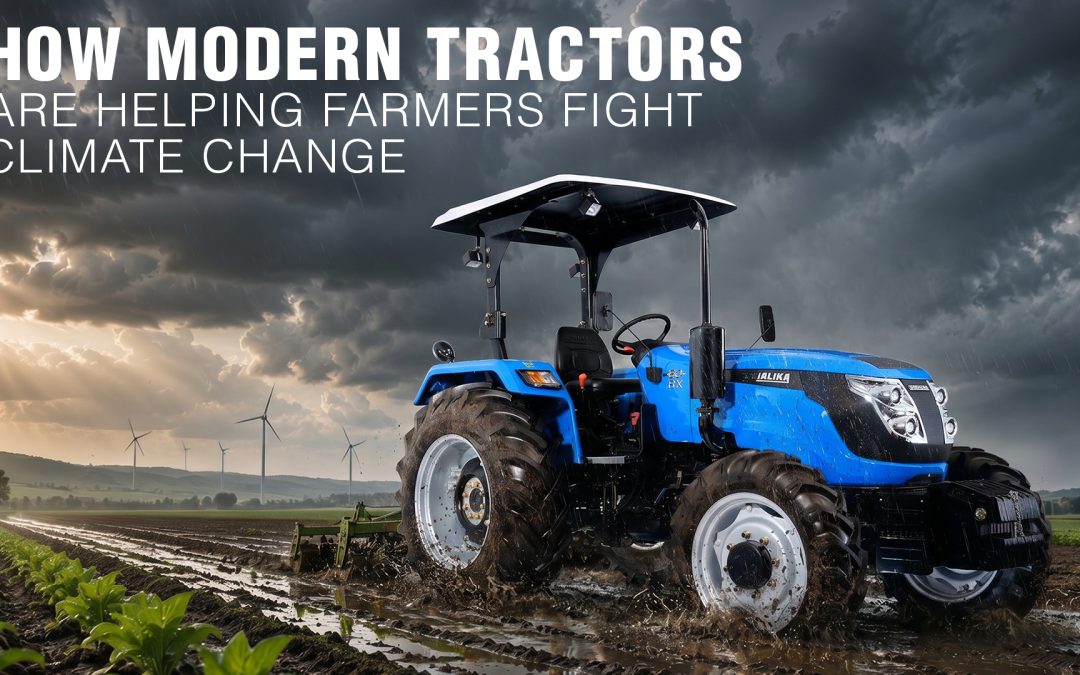
The climate emergency is a huge challenge for contemporary farming. Farmers face the challenge of balancing productivity and sustainability amid rising temperatures, variable rainfall, water scarcity, and soil erosion.
It is here that tractors for climate smart farming are helping to shape the future of farming. Today’s tractors aren’t just designed to be more powerful and productive; they’re also designed to be more fuel-efficient, less polluting, and more environmentally sustainable, and more intelligent in their field management.
Why Smarter Machinery Is Needed in Farming?
Traditional farming practices may involve excessive fuel use, too many passes over the fields, and soil that is not properly tilled. These practices will, over time, lead to higher operating costs, carbon emissions, and soil degradation.
To overcome these challenges, modern agricultural equipment is engineered with sophisticated designs, effective power transfer, and high accuracy. This transition to sustainable tractor technology is benefiting farmers to produce more with less.
Scientific research worldwide has shown that in cultivation and land preparation operations, the use of more efficient and precise machinery and farming techniques can help to lower fuel consumption and operational waste.
How Modern Tractor Engines Improve Fuel Efficiency?
Modern tractor engines are better at saving fuel in several ways. One of the biggest advancements in modern tractor technology is engine efficiency. Modern engines generate more torque at lower rpm, allowing the tractor to perform heavy work with less fuel.
Turbocharged and intercooled engines also enhance combustion quality, as the air is brought into the engine system at a cooler, denser state. This enables the fuel to burn more efficiently, whilst eliminating unnecessary exhaust emissions.
Proper cooling system and air cleaner maintenance play an important role in improving fuel efficiency, reducing engine stress, and maintaining long-term tractor performance. Watch this DIY video to understand how regular maintenance supports climate-smart farming operations.
Sonalika 75 RX is a fine demonstration of engineering for fuel efficiency in modern agriculture. It has a 4-cylinder engine of 3707 cc, 75 HP, and 278 Nm of maximum torque at 1300 ERPM.
Key Features Supporting Fuel-Efficient Farming
The following are key features supporting fuel-efficient farming:
- 12V 75 HP turbocharged engine for increased field productivity
- Achieves 278 Nm of torque at lower RPMs
- 8F plus 2R Swift Shift transmission
- 2500 kg lifting capacity (hydraulic).
- 4WD for low-slip drive conditions.
- Dry-type air cleaner with clogging sensor
- The machine delivers balanced power, helping farmers finish cultivation, haulage, and
- PTO-driven operations with better fuel efficiency over extended working time.
Precision Farming And New Technology In Tractors
In climate-smart farming, precision agriculture is becoming increasingly significant. Ensuring accurate field operations now helps farmers minimise losses of fertilisers, fuel, seed, and water resources.
This has helped advance the development of new technology in tractors, such as more sophisticated hydraulic systems, smoother transmission control, intelligent PTO management, and improved implement compatibility.
Sonalika 90 WT is designed for precision, heavy-duty farming operations. It comes equipped with a 90 HP turbocharged 4-cylinder engine producing 339 Nm maximum torque for demanding field applications.
Advanced Features Supporting Precision Farming
- 12F plus 12R synchromesh transmission
- Simplex clutch on the front and rear for smoother implement handling.
- The hydraulic’s lifting capacity is 3000 kg.
- Oil Immersed Brakes For Better Field Safety
- The 4WD system provides excellent stability in difficult terrain.
- Good ground clearance for off-road use on farms.
- The controlled gear operation and sophisticated hydraulics help ensure field accuracy for deep tillage, cultivation, and heavy implement use while eliminating unneeded field overlap.
- Protecting soil and applying technology to tractors.
Tractor Technology And Soil Protection
Climate-resilient agricultural systems depend heavily on healthy soil. Over-compaction will result in poor water uptake, impaired root growth and development, and decreased long-term crop productivity. Reducing unwarranted soil pressure is now a major concern, driven by advances in tractor technology, including better weight balance, tyres, and traction.
Sonalika 50 is intended for lighter field work, where achieving a balance between weight distribution and reduced ground pressure is critical. It has a compact design and is well-suited for power delivery, making it easy to reduce excess soil compaction during cultivation and transportation operations.
Features Supporting Better Soil Health
- Distributed weight-load for controlled field movement
- Necessary passes are avoided due to a compact turning radius.
- Reduce fuel consumption and engine performance.
- A smooth transmission for easier operation.
- It is offered in 2WD and 4WD models.
- Less soil disturbance will lead to less water loss, a stronger root system, and improved long-term field productivity.
Sustainable Tractor Technology And Reduced Emissions
Engine manufacturers are increasingly focusing on cleaner engine systems and lower-emission technologies, which are becoming increasingly important in modern agricultural machinery. This shift to sustainable tractor technology is becoming increasingly critical for the future of sustainable farming.
Fuel efficiency, accuracy, and optimised transmission layouts are now helping reduce overall fuel consumption and engine stress during heavy agricultural work. Sonalika 125 showcases the power and efficiency of high-horsepower tractors. It has a turbocharged, intercooled 6-cylinder engine with high torque, delivering 475 Nm at peak for heavy-duty field applications.
Heavy Duty Features Supporting Sustainable Farming
- A synchromesh transmission that uses both 24 gears and reverse.
- Electronic Hydraulic Response System
- Lifting capacity of 4500kg in one lift.
- Wet disc hydraulically actuated brakes
- Advanced 4WD drivetrain for improved traction
- The turbocharged intercooled engine technology.
- It is equipped with a highly tuned transmission and torque management system that minimises engine load during challenging land preparation and cultivation tasks.
Conclusion
Climate change is putting more pressure on farmers to generate more food with fewer natural resources. Efficient machinery has become the heart of enhancing agricultural productivity, accuracy, and sustainability.
Industrialised tractors for climate smart farming reduce fuel consumption, improve soil health, lower emissions, and enhance precision across various farming scenarios. Farming is evolving, and advanced machinery will continue to play a vital role in helping farmers adapt to ever-changing environmental challenges and ensure their farms remain productive and profitable in the long term.
Visit Sonalika International to learn about the latest in tractor innovation and technology and how they contribute to creating a more sustainable future in agriculture.
by admin | May 8, 2026 | Customer Stories
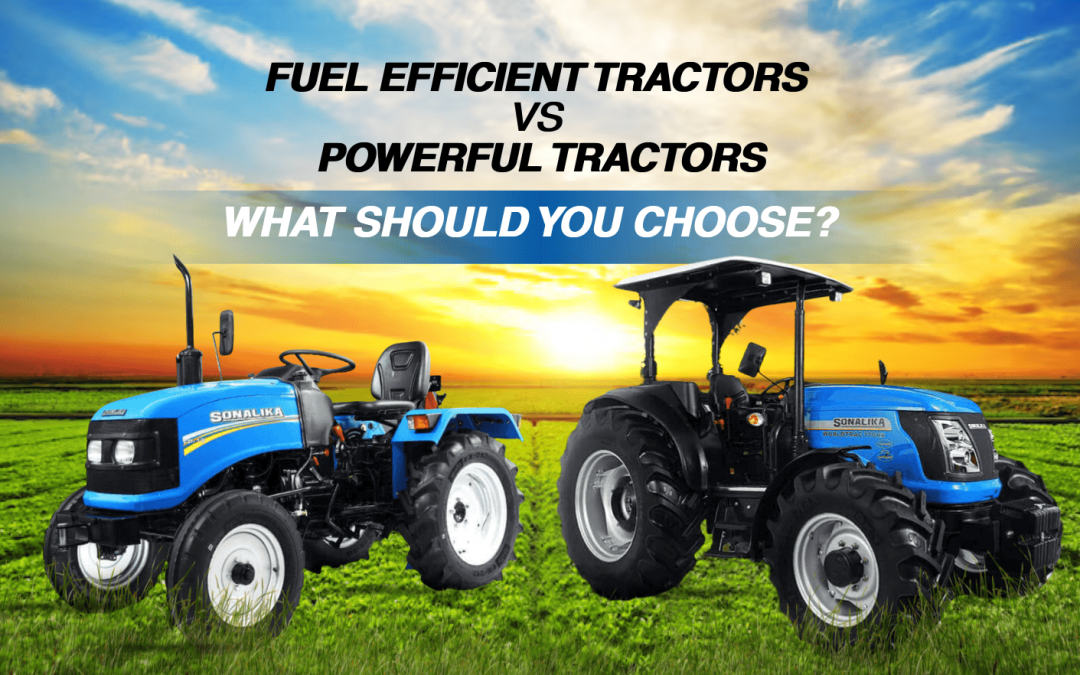
Farmers globally are facing this reality deeply amid rising diesel prices. For farmers in France, Algeria, India, South Africa, Latin America & so on, every drop of diesel burnt eats their hard-earned profits, making the high power vs fuel efficiency tractor debate more important than before.
Farmers in many countries today are facing the good-old dilemma: choosing the best mileage tractor or a powerful one. Powerful tractors can quickly finish a challenging task, at the expense of high fuel consumption. Conversely, a fuel-efficient tractor can do light to medium tasks easily while keeping running costs in check. Therefore, deciding the right one is non-negotiable.
In this blog, we’ll discuss what exactly a fuel-efficient & powerful tractor stands for, plus when you should consider each type of tractor.
What Makes A Fuel-Efficient Tractor?
Fuel efficiency in the best mileage tractor isn’t just about the amount of fuel (in litres/gallons) consumed per hour. It’s about how much work your tractor’s engine has done per litre of fuel. This also covers combustion quality, RPM calibration & range, plus drivetrain design. A tractor designed to offer high efficiency provides lower operating costs per acre, not just fuel expenses.
The real breakthrough in the world of low-fuel consumption tractors is precision fuel injection technology. It delivers optimised fuel atomisation & precise combustion compared to older direct injection diesel engines. This feature delivers roughly 8-10% superior economy over older engines in the same category, meaning less diesel is burned per acre in your farms.
Modern low-fuel consumption tractors, from Sonalika International includes:
- 12F+12R Multi-Speed Transmission: Engine maintains efficiency under every load.
- Modern 5G Hydraulics: Reduced engine resistance during implement usage
- Oil-Immersed Brakes: Lower drivetrain drag & energy loss to provide better fuel economy.
- Water-Cooled Engines: Highly instrumental in maintaining optimal operating temperature during long working hours.
- Low RPM Engines: Engines tuned to deliver high torque at 2000-2500 RPM prevent over-revving & optimise overall fuel efficiency.
The Case Of “Powerful Tractors”
Horsepower is only one face of power! A truly powerful tractor only earns its name when horsepower, torque, hydraulic lift capacity, PTO output & transmission range work in tandem under challenging farming conditions. When one of these specs is high & another is average, a tractor can underperform when you need capabilities.
Torque is the most important specification in your tractor, acting as the pulling force that drags a plough through compacted grounds or clay without stalling the engine. The Sonalika 75 RX delivers a chunky 278 Nm of peak torque at just 1,300 rpm with its turbo-diesel 4-cylinder engine. The ability to deliver peak torque at lower revs not only enhances your operations but also leads to lower fuel usage.
Hydraulic lift capacity equally matters, determining how much your machine can lift with its front loader or rear three-point hitch. Sonalika International Tractors offer a capacity of 2,500 kg on the Sonalika 75 RX & 4,500 kg on the Sonalika 110 WT model.
A wide gear range also makes sure you have the right speed while using heavy implements. The Sonalika 110 WT comes with a 12F+12R Synchromesh transmission with a minimum creeping speed of 0.5 kmph.
Ground clearance is also an important specification in high-performance tractors, as it prevents crop damage during farming & makes tractor articulation easier on terrains. The Sonalika 110 WT comes with 470 mm of ground clearance, making it ideal for challenging terrain & heavy-duty farming applications.
High Power Vs Fuel Efficiency Tractor: When To Choose Each?
Choose A Fuel-Efficient Tractor For:
- Farms under 15 acres & light to medium soil types
- Primary tasks like sowing, spraying & light to medium-scale cultivation.
- If you use a tractor for occasional transport vehicle
- Lower running costs & reducing overall profitability
- Fuel stations are far from your farms or region.
Choose A High-Performance Tractor For:
- Farming on plots of more than 15 acres
- Soil types include hard surfaces, clay, or terrain.
- Operations include deep ploughing, subsoiling, tillage, etc.
- Using heavy implements like balers or power harrows
- Getting a higher hydraulic lift capacity to use heavy-mounted equipment
- Commercial farming & heavy output
- Plots, terrains, waterlogged surfaces where draft force & high ground clearance are essential
Are you looking for a fuel-efficient tractor or a high-performance tractor? Sonalika International offers a wide range of choices, with each tractor offering exceptional performance, superb reliability & choices that cater to a wide range of farmers. Explore our line-up today.
