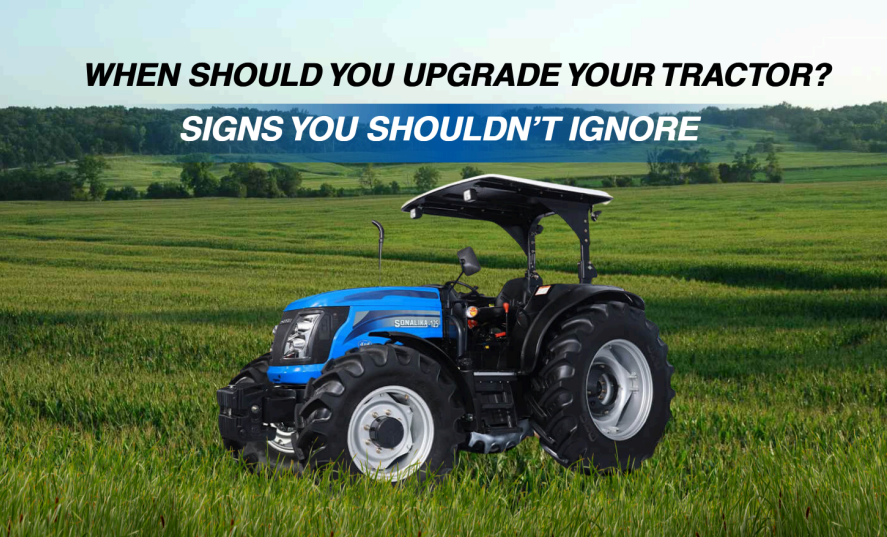
The global agriculture sector is experiencing a massive shift as farms are growing exponentially. Today, farming operations are highly time-sensitive, given the demand for grains & agricultural produce. This keeps mechanisation and tractor upgrade a major necessity in the farming world.
Industry reports are constantly highlighting a steady shift in the demand for higher-horsepower tractors and multipurpose machines, especially across emerging farming economies. A recent report estimated that the tractor market is expected to grow from USD 64.81 billion to USD 116.30 billion by 2034 at a CAGR of 6.8%.
This scenario makes it clear that there is no question of if, but definitely when to upgrade tractor performance if it needs to stay competitive. A well-timed upgrade ensures that your farm remains efficient, responsive, and ready to meet modern agricultural demands without compromise.
The Reality of Modern Farm Operations
Today’s farming landscape demands precision, speed, and consistency. Whether it is land preparation, sowing or haulage, every operation is closely tied to timing.
A delayed task can impact the entire crop cycle. This is where a strategic tractor upgrade becomes critical. It is not just about replacing ageing equipment, but about enabling your farm to operate at its full potential.
Farmers who proactively evaluate when to upgrade tractor capability often experience smoother workflows, reduced downtime and better output per acre. Those who delay this decision frequently encounter rising inefficiencies that are harder to recover from during peak seasons.
Key Signs to Replace Tractor Before It Impacts Productivity
Recognising the early signs to replace tractors is essential for maintaining operational continuity.
Gradual Drop in Performance: The tasks that once required less time to start now take longer, especially during heavy workloads. It is an alarming answer to when to upgrade tractor capacity.
Frequency of Breakdowns: The increased dependency on repair work not only adds up to higher costs but also disrupts the schedules. Even a short delay can result in huge losses in time-sensitive farming.
Fuel Efficiency: Older machines consume more fuel with lower output delivery, which is why a tractor upgrade becomes a cost-effective decision.
Limited Adaptability: If the tractor is not great at supporting a wide range of implements or evolving farming practices, then your operational flexibility is affected. These are clear signs to replace tractor capability before it alters overall productivity.
Tractor Maintenance vs Replacement
The decision between tractor maintenance vs replacement often comes down to long-term value. While maintenance may seem practical in the short term, recurring repairs can become both costly and unreliable.
Over time, the balance shifts. When maintenance cycles become frequent, and performance continues to decline, the cost of holding on outweighs the investment in a new machine.
Understanding tractor maintenance vs replacement from a long-term operational perspective allows farmers to make informed decisions that prioritise efficiency, reliability and consistent output.
Aligning Your Upgrade with Farming Scenarios
A successful tractor upgrade is not only dependent on superior engine specs on paper, but also on how well the machine goes with the working environment. To maintain the traction and operational efficiency, your tractor should deliver strong torque and stability in moisture-heavy soil conditions.
Additionally, balanced and controlled power output is necessary in uneven terrains. Similarly, durability and easy maintenance are essential features in demanding land conditions.
Tractors having greater horsepower need to manage large implements and cover large spaces within limited timeframes in high-capacity operations.
By understanding all these factors, you can finalise when to upgrade tractor performance on the basis of actual field requirements rather than mere assumptions.
Choosing the Right Upgrade with Sonalika
Compact Operations and Light Applications: Sonalika 20 and Sonalika 26 are designed for easy and efficient usage. Their compact design & efficient engines make them perfect for routine light agricultural tasks and small plots.
Balanced and Multi-Purpose Usage: Sonalika 45, 50 and 55 offer a dependable combination of power and fuel efficiency, supporting both fieldwork and transport requirements.
Higher Workload Demands: Sonalika 60 and Sonalika 75 RX are built to deliver consistent torque and performance, particularly when operating heavier implements.
Large-scale and Intensive Operations: Sonalika 90, 110, and 125 provide the horsepower and durability required for commercial farming, ensuring higher productivity across extensive fields.
How Often Should You Upgrade a Tractor
The question of how often you should upgrade a tractor does not have a single answer. It varies based on usage intensity, working conditions and maintenance history.
Rather than relying on a fixed timeframe, it is more effective to evaluate performance indicators. Increase in repair frequency, declining fuel efficiency, and reduced output are all major signs to replace tractor.
A proactive approach ensures that your operations remain uninterrupted and efficient, even during peak agricultural cycles.
Final Thoughts
A tractor upgrade is not simply a replacement decision; it is a forward-looking investment for your farm’s performance and resilience. Ignoring the early signs to replace tractors can gradually impact efficiency, increase operational costs and limit your ability to scale. By carefully assessing tractor maintenance vs replacement and understanding how typically you should upgrade a tractor, you can make a decision that supports long-term productivity.
If your current tractor is no longer aligned with your operational needs, this is the right time to take your decision. Explore our top tractor models that are designed for diverse farming conditions and find out the right upgrade for your farm.