by admin | Jun 22, 2026 | Customer Stories
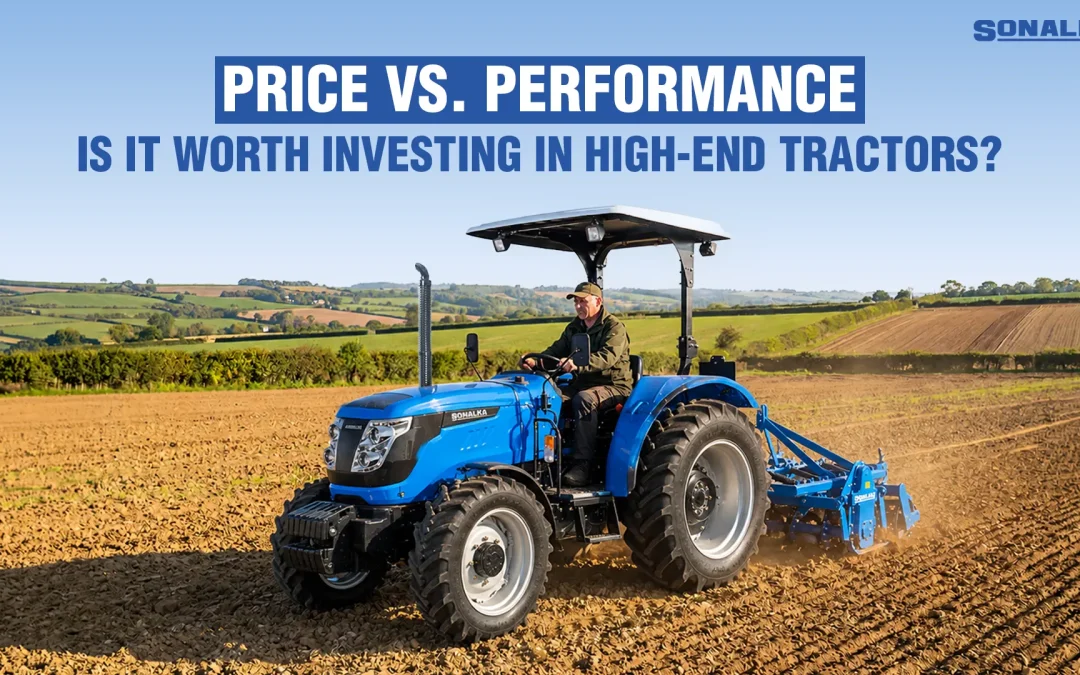
Buying new farming equipment for the approaching season isn’t a simple choice. Every farmer reaches a point where the question transforms from “Do I need a tractor?” to “Do I actually need a high-end tractor?” We know it’s not a simple question; it involves doing the correct maths, evaluating requirements and preparing a budget.
When you read a tractor buying guide, most guides only tell you specs and features, but rarely do they help you navigate through buying decisions: Is a high-end tractor really worth buying?
To address this dilemma among buyers, we have created an affordable vs. high-end tractor buying guide, which will help you conclude. If you’re working on large farms, running various implements, or trying to scale your operations, every decision matters. Choosing the wrong tier can either affect your operations or lead you towards spending more money.
What “High-End” Really Means In A Solid Tractor Buying Guide?
Premium tractors exist for a reason, and it isn’t just “more expensive” versions of affordable models. When you hear the term “premium”, it typically refers to a model that is built to deliver power, durability, comfort, safety, and reliability in a single package. In most cases, a heavy-duty tractor perfectly fits this explanation.
Heavy tractors typically come with powerful diesel engines, which are often fitted with turbochargers and technologies like CRDi and smart engine management. These tractors also feature advanced transmission systems, spacious cabs, comfort features, ROPS and FOPS rating and telematics to boost productivity and efficiency.
Build quality in high-end agricultural equipment is noticeably better than that of affordable tractors. From chassis durability to the quality and life-span of components, premium tractors are built to excel not only in terms of performance, but comfort too. These tractors are designed to maximise efficiency in every single pass you make on your farm.
Where Premium Or Heavy Tractors Justify The Cost?
The maths starts working in your favour once you’re in specific conditions. It’s worth being open about what the conditions are.
If you’re working on large plots, preferably ones above 20 acres, a high-horsepower tractor reduces the number of passes in the field, preserving fuel and time. Applications that rely on specialised equipment like heavy tractor attachments, like rotavators, cultivators, sprayers, and seeders, benefit from the high torque, high PTO and robust build quality of heavy tractors.
Terrain is another area where heavy tractors make sense. Many high-output tractors have switchable 4WD systems, which allow operators to switch from 2WD to 4WD for better traction on rough surfaces. Rocky, hilly, water-logged farmlands require better traction, stronger transmission and durable drivetrains, all available in performance tractors.
Precision is another key merit of high-end farming equipment. Many models come with GPS-guided planting and allow you to perform variable rate application, offering better practicality for farming operations. These tractors are also sold by established brands, meaning you get better resale value when it comes to selling.
When Should You Settle For “Affordable” Or “Mid-Range” Tractors?
Not every farmer needs a high-output tractor, and overspending on features you will never use is as bad as underspending. A mid-range tractor is ideal if you work on farms of less than 20 acres. Additionally, factors like straightforward crop cycles and predictable terrain further make a mid-range tractor ideal for use.
When doing a tractor comparison, evaluate if you’ll use the tractor for a season, versus if you’ll use it daily, plus what kind of work you’ll perform: light vs heavy. If the answer is “seasonal use” and “light tasks”, buying an expensive machine hardly makes any sense.
A reliable 50 to 75-HP tractor from a well-established brand like Sonalika is highly capable of handling most standard tasks. The key to a good purchase lies in following a proper tractor buying guide and matching a machine’s capability to actual operational demand.
The Real ROI Calculation
Not sure how ROI works for tractors? Well, this tractor buying guide puts this thing into perspective. Think of your tractor’s ROI in four different sectors, not just the purchase price.
First, productivity gains: a higher HP tractor is capable of completing more work per day. This reduces labour costs, time, and the unavailability of labourers in peak seasons.
Second, fuel savings: Much farming equipment comes with premium engines that are fitted with modern technologies like turbochargers and fuel-saving features. Over five seasons, the fuel savings compound.
Third, maintenance frequency: Many budget machines use low-quality components, meaning they require frequent servicing and part replacements, and downtime during harvest season can affect your workflow. In contrast, quality components and extended service intervals in high-end machines ensure better uptime and consistent performance during the harvest season.
Fourth, resale value: Agricultural equipment from reputable brands always holds value better, so you get higher resale value when you want to upgrade. Once you add these four factors, you’ll notice that a high-end tractor offers better return if you use it effectively in large-scale operations.
Conclusion
Buying the right agricultural equipment isn’t about choosing an affordable, mid-range, or high-range tractor or high-horsepower engines. Instead, it’s about smartly choosing the ideal tier for your work scale and goals.
If your operation requires consistent performance, multi-attachment versatility, and long-term reliability, a high-end tractor or a heavy-duty tractor is ideal. For smaller or seasonal tasks, a capable mid-range tractor from a reliable brand gets the job done at lower costs. The best tractor buying guide helps you match your real workload to the right machine type.
Sonalika International is among the leading tractor manufacturers globally. Our lineup includes low-horsepower tractors for light applications, mid-range tractors for medium acreage and heavy tractors for applications that demand raw power. Explore our lineup today and contact us if you have any queries.
by admin | Jun 1, 2026 | Customer Stories
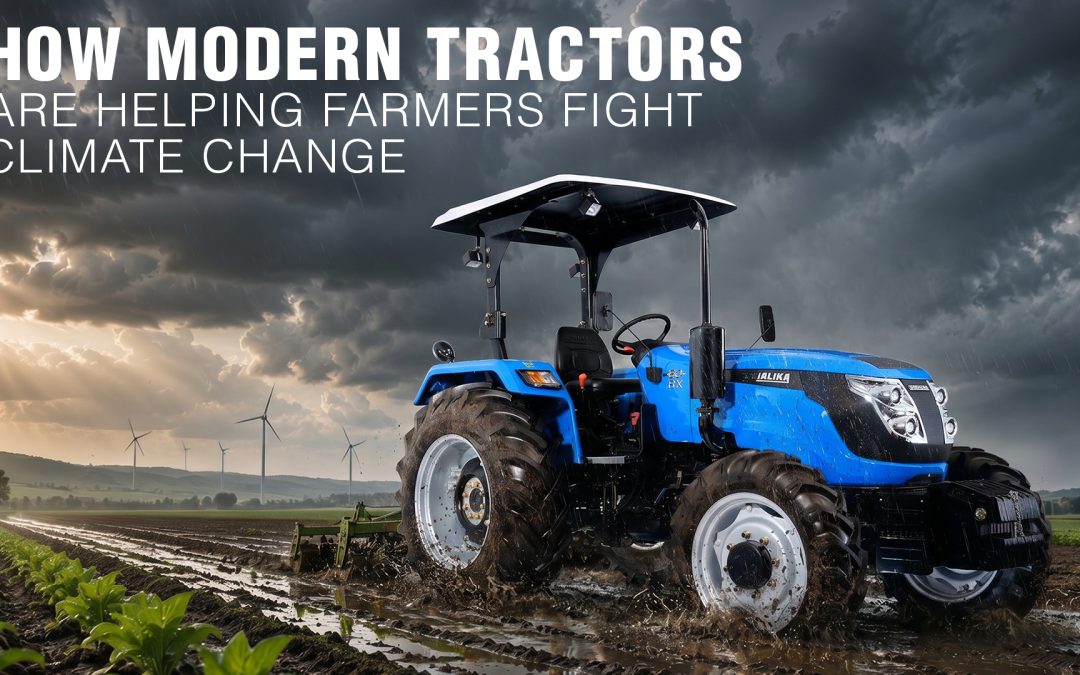
The climate emergency is a huge challenge for contemporary farming. Farmers face the challenge of balancing productivity and sustainability amid rising temperatures, variable rainfall, water scarcity, and soil erosion.
It is here that tractors for climate smart farming are helping to shape the future of farming. Today’s tractors aren’t just designed to be more powerful and productive; they’re also designed to be more fuel-efficient, less polluting, and more environmentally sustainable, and more intelligent in their field management.
Why Smarter Machinery Is Needed in Farming?
Traditional farming practices may involve excessive fuel use, too many passes over the fields, and soil that is not properly tilled. These practices will, over time, lead to higher operating costs, carbon emissions, and soil degradation.
To overcome these challenges, modern agricultural equipment is engineered with sophisticated designs, effective power transfer, and high accuracy. This transition to sustainable tractor technology is benefiting farmers to produce more with less.
Scientific research worldwide has shown that in cultivation and land preparation operations, the use of more efficient and precise machinery and farming techniques can help to lower fuel consumption and operational waste.
How Modern Tractor Engines Improve Fuel Efficiency?
Modern tractor engines are better at saving fuel in several ways. One of the biggest advancements in modern tractor technology is engine efficiency. Modern engines generate more torque at lower rpm, allowing the tractor to perform heavy work with less fuel.
Turbocharged and intercooled engines also enhance combustion quality, as the air is brought into the engine system at a cooler, denser state. This enables the fuel to burn more efficiently, whilst eliminating unnecessary exhaust emissions.
Proper cooling system and air cleaner maintenance play an important role in improving fuel efficiency, reducing engine stress, and maintaining long-term tractor performance. Watch this DIY video to understand how regular maintenance supports climate-smart farming operations.
Sonalika 75 RX is a fine demonstration of engineering for fuel efficiency in modern agriculture. It has a 4-cylinder engine of 3707 cc, 75 HP, and 278 Nm of maximum torque at 1300 ERPM.
Key Features Supporting Fuel-Efficient Farming
The following are key features supporting fuel-efficient farming:
- 12V 75 HP turbocharged engine for increased field productivity
- Achieves 278 Nm of torque at lower RPMs
- 8F plus 2R Swift Shift transmission
- 2500 kg lifting capacity (hydraulic).
- 4WD for low-slip drive conditions.
- Dry-type air cleaner with clogging sensor
- The machine delivers balanced power, helping farmers finish cultivation, haulage, and
- PTO-driven operations with better fuel efficiency over extended working time.
Precision Farming And New Technology In Tractors
In climate-smart farming, precision agriculture is becoming increasingly significant. Ensuring accurate field operations now helps farmers minimise losses of fertilisers, fuel, seed, and water resources.
This has helped advance the development of new technology in tractors, such as more sophisticated hydraulic systems, smoother transmission control, intelligent PTO management, and improved implement compatibility.
Sonalika 90 WT is designed for precision, heavy-duty farming operations. It comes equipped with a 90 HP turbocharged 4-cylinder engine producing 339 Nm maximum torque for demanding field applications.
Advanced Features Supporting Precision Farming
- 12F plus 12R synchromesh transmission
- Simplex clutch on the front and rear for smoother implement handling.
- The hydraulic’s lifting capacity is 3000 kg.
- Oil Immersed Brakes For Better Field Safety
- The 4WD system provides excellent stability in difficult terrain.
- Good ground clearance for off-road use on farms.
- The controlled gear operation and sophisticated hydraulics help ensure field accuracy for deep tillage, cultivation, and heavy implement use while eliminating unneeded field overlap.
- Protecting soil and applying technology to tractors.
Tractor Technology And Soil Protection
Climate-resilient agricultural systems depend heavily on healthy soil. Over-compaction will result in poor water uptake, impaired root growth and development, and decreased long-term crop productivity. Reducing unwarranted soil pressure is now a major concern, driven by advances in tractor technology, including better weight balance, tyres, and traction.
Sonalika 50 is intended for lighter field work, where achieving a balance between weight distribution and reduced ground pressure is critical. It has a compact design and is well-suited for power delivery, making it easy to reduce excess soil compaction during cultivation and transportation operations.
Features Supporting Better Soil Health
- Distributed weight-load for controlled field movement
- Necessary passes are avoided due to a compact turning radius.
- Reduce fuel consumption and engine performance.
- A smooth transmission for easier operation.
- It is offered in 2WD and 4WD models.
- Less soil disturbance will lead to less water loss, a stronger root system, and improved long-term field productivity.
Sustainable Tractor Technology And Reduced Emissions
Engine manufacturers are increasingly focusing on cleaner engine systems and lower-emission technologies, which are becoming increasingly important in modern agricultural machinery. This shift to sustainable tractor technology is becoming increasingly critical for the future of sustainable farming.
Fuel efficiency, accuracy, and optimised transmission layouts are now helping reduce overall fuel consumption and engine stress during heavy agricultural work. Sonalika 125 showcases the power and efficiency of high-horsepower tractors. It has a turbocharged, intercooled 6-cylinder engine with high torque, delivering 475 Nm at peak for heavy-duty field applications.
Heavy Duty Features Supporting Sustainable Farming
- A synchromesh transmission that uses both 24 gears and reverse.
- Electronic Hydraulic Response System
- Lifting capacity of 4500kg in one lift.
- Wet disc hydraulically actuated brakes
- Advanced 4WD drivetrain for improved traction
- The turbocharged intercooled engine technology.
- It is equipped with a highly tuned transmission and torque management system that minimises engine load during challenging land preparation and cultivation tasks.
Conclusion
Climate change is putting more pressure on farmers to generate more food with fewer natural resources. Efficient machinery has become the heart of enhancing agricultural productivity, accuracy, and sustainability.
Industrialised tractors for climate smart farming reduce fuel consumption, improve soil health, lower emissions, and enhance precision across various farming scenarios. Farming is evolving, and advanced machinery will continue to play a vital role in helping farmers adapt to ever-changing environmental challenges and ensure their farms remain productive and profitable in the long term.
Visit Sonalika International to learn about the latest in tractor innovation and technology and how they contribute to creating a more sustainable future in agriculture.