by admin | Jun 22, 2026 | Customer Stories
Buying new farming equipment for the approaching season isn’t a simple choice. Every farmer reaches a point where the question transforms from “Do I need a tractor?” to “Do I actually need a high-end tractor?” We know it’s not a simple question; it involves doing the correct maths, evaluating requirements and preparing a budget.
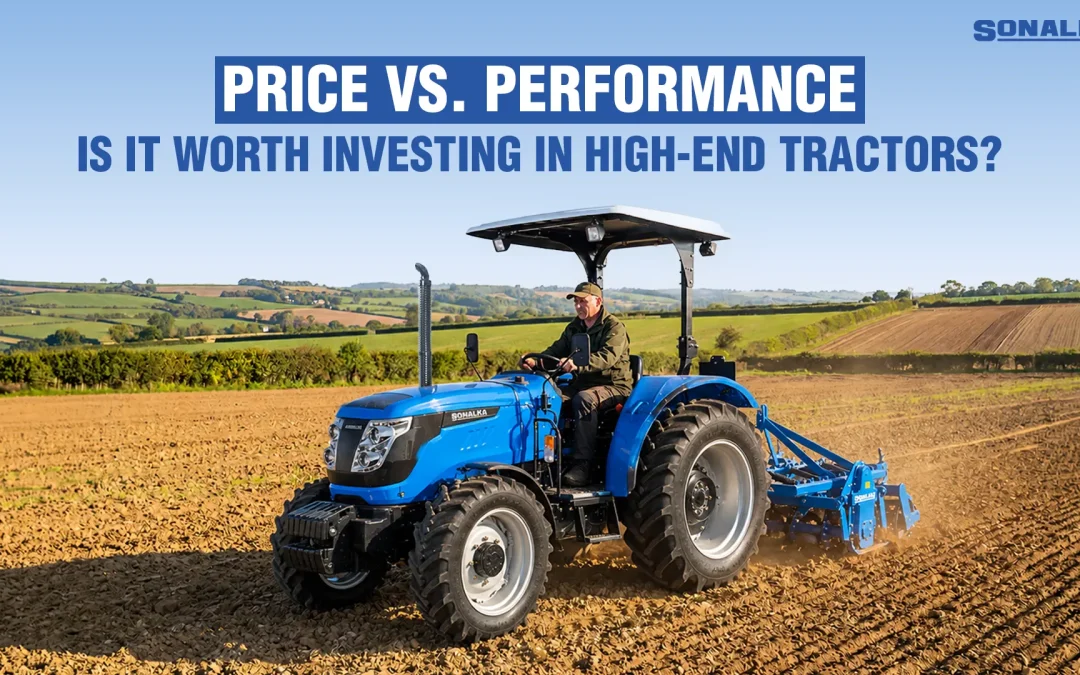
When you read a tractor buying guide, most guides only tell you specs and features, but rarely do they help you navigate through buying decisions: Is a high-end tractor really worth buying?
To address this dilemma among buyers, we have created an affordable vs. high-end tractor buying guide, which will help you conclude. If you’re working on large farms, running various implements, or trying to scale your operations, every decision matters. Choosing the wrong tier can either affect your operations or lead you towards spending more money.
What “High-End” Really Means In A Solid Tractor Buying Guide?
Premium tractors exist for a reason, and it isn’t just “more expensive” versions of affordable models. When you hear the term “premium”, it typically refers to a model that is built to deliver power, durability, comfort, safety, and reliability in a single package. In most cases, a heavy-duty tractor perfectly fits this explanation.
Heavy tractors typically come with powerful diesel engines, which are often fitted with turbochargers and technologies like CRDi and smart engine management. These tractors also feature advanced transmission systems, spacious cabs, comfort features, ROPS and FOPS rating and telematics to boost productivity and efficiency.
Build quality in high-end agricultural equipment is noticeably better than that of affordable tractors. From chassis durability to the quality and life-span of components, premium tractors are built to excel not only in terms of performance, but comfort too. These tractors are designed to maximise efficiency in every single pass you make on your farm.
Where Premium Or Heavy Tractors Justify The Cost?
The maths starts working in your favour once you’re in specific conditions. It’s worth being open about what the conditions are.
If you’re working on large plots, preferably ones above 20 acres, a high-horsepower tractor reduces the number of passes in the field, preserving fuel and time. Applications that rely on specialised equipment like heavy tractor attachments, like rotavators, cultivators, sprayers, and seeders, benefit from the high torque, high PTO and robust build quality of heavy tractors.
Terrain is another area where heavy tractors make sense. Many high-output tractors have switchable 4WD systems, which allow operators to switch from 2WD to 4WD for better traction on rough surfaces. Rocky, hilly, water-logged farmlands require better traction, stronger transmission and durable drivetrains, all available in performance tractors.
Precision is another key merit of high-end farming equipment. Many models come with GPS-guided planting and allow you to perform variable rate application, offering better practicality for farming operations. These tractors are also sold by established brands, meaning you get better resale value when it comes to selling.
When Should You Settle For “Affordable” Or “Mid-Range” Tractors?
Not every farmer needs a high-output tractor, and overspending on features you will never use is as bad as underspending. A mid-range tractor is ideal if you work on farms of less than 20 acres. Additionally, factors like straightforward crop cycles and predictable terrain further make a mid-range tractor ideal for use.
When doing a tractor comparison, evaluate if you’ll use the tractor for a season, versus if you’ll use it daily, plus what kind of work you’ll perform: light vs heavy. If the answer is “seasonal use” and “light tasks”, buying an expensive machine hardly makes any sense.
A reliable 50 to 75-HP tractor from a well-established brand like Sonalika is highly capable of handling most standard tasks. The key to a good purchase lies in following a proper tractor buying guide and matching a machine’s capability to actual operational demand.
The Real ROI Calculation
Not sure how ROI works for tractors? Well, this tractor buying guide puts this thing into perspective. Think of your tractor’s ROI in four different sectors, not just the purchase price.
First, productivity gains: a higher HP tractor is capable of completing more work per day. This reduces labour costs, time, and the unavailability of labourers in peak seasons.
Second, fuel savings: Much farming equipment comes with premium engines that are fitted with modern technologies like turbochargers and fuel-saving features. Over five seasons, the fuel savings compound.
Third, maintenance frequency: Many budget machines use low-quality components, meaning they require frequent servicing and part replacements, and downtime during harvest season can affect your workflow. In contrast, quality components and extended service intervals in high-end machines ensure better uptime and consistent performance during the harvest season.
Fourth, resale value: Agricultural equipment from reputable brands always holds value better, so you get higher resale value when you want to upgrade. Once you add these four factors, you’ll notice that a high-end tractor offers better return if you use it effectively in large-scale operations.
Conclusion
Buying the right agricultural equipment isn’t about choosing an affordable, mid-range, or high-range tractor or high-horsepower engines. Instead, it’s about smartly choosing the ideal tier for your work scale and goals.
If your operation requires consistent performance, multi-attachment versatility, and long-term reliability, a high-end tractor or a heavy-duty tractor is ideal. For smaller or seasonal tasks, a capable mid-range tractor from a reliable brand gets the job done at lower costs. The best tractor buying guide helps you match your real workload to the right machine type.
Sonalika International is among the leading tractor manufacturers globally. Our lineup includes low-horsepower tractors for light applications, mid-range tractors for medium acreage and heavy tractors for applications that demand raw power. Explore our lineup today and contact us if you have any queries.
by admin | Jun 1, 2026 | Customer Stories
The climate emergency is a huge challenge for contemporary farming. Farmers face the challenge of balancing productivity and sustainability amid rising temperatures, variable rainfall, water scarcity, and soil erosion.
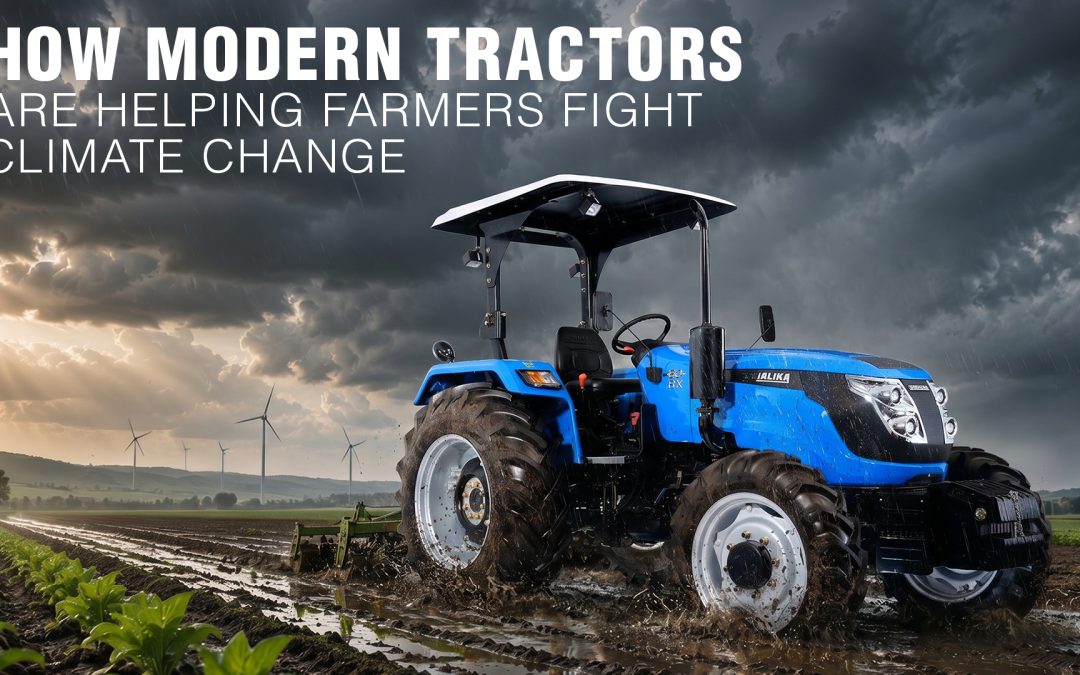
It is here that tractors for climate smart farming are helping to shape the future of farming. Today’s tractors aren’t just designed to be more powerful and productive; they’re also designed to be more fuel-efficient, less polluting, and more environmentally sustainable, and more intelligent in their field management.
Why Smarter Machinery Is Needed in Farming?
Traditional farming practices may involve excessive fuel use, too many passes over the fields, and soil that is not properly tilled. These practices will, over time, lead to higher operating costs, carbon emissions, and soil degradation.
To overcome these challenges, modern agricultural equipment is engineered with sophisticated designs, effective power transfer, and high accuracy. This transition to sustainable tractor technology is benefiting farmers to produce more with less.
Scientific research worldwide has shown that in cultivation and land preparation operations, the use of more efficient and precise machinery and farming techniques can help to lower fuel consumption and operational waste.
How Modern Tractor Engines Improve Fuel Efficiency?
Modern tractor engines are better at saving fuel in several ways. One of the biggest advancements in modern tractor technology is engine efficiency. Modern engines generate more torque at lower rpm, allowing the tractor to perform heavy work with less fuel.
Turbocharged and intercooled engines also enhance combustion quality, as the air is brought into the engine system at a cooler, denser state. This enables the fuel to burn more efficiently, whilst eliminating unnecessary exhaust emissions.
Proper cooling system and air cleaner maintenance play an important role in improving fuel efficiency, reducing engine stress, and maintaining long-term tractor performance. Watch this DIY video to understand how regular maintenance supports climate-smart farming operations.
Sonalika 75 RX is a fine demonstration of engineering for fuel efficiency in modern agriculture. It has a 4-cylinder engine of 3707 cc, 75 HP, and 278 Nm of maximum torque at 1300 ERPM.
Key Features Supporting Fuel-Efficient Farming
The following are key features supporting fuel-efficient farming:
- 12V 75 HP turbocharged engine for increased field productivity
- Achieves 278 Nm of torque at lower RPMs
- 8F plus 2R Swift Shift transmission
- 2500 kg lifting capacity (hydraulic).
- 4WD for low-slip drive conditions.
- Dry-type air cleaner with clogging sensor
- The machine delivers balanced power, helping farmers finish cultivation, haulage, and
- PTO-driven operations with better fuel efficiency over extended working time.
Precision Farming And New Technology In Tractors
In climate-smart farming, precision agriculture is becoming increasingly significant. Ensuring accurate field operations now helps farmers minimise losses of fertilisers, fuel, seed, and water resources.
This has helped advance the development of new technology in tractors, such as more sophisticated hydraulic systems, smoother transmission control, intelligent PTO management, and improved implement compatibility.
Sonalika 90 WT is designed for precision, heavy-duty farming operations. It comes equipped with a 90 HP turbocharged 4-cylinder engine producing 339 Nm maximum torque for demanding field applications.
Advanced Features Supporting Precision Farming
- 12F plus 12R synchromesh transmission
- Simplex clutch on the front and rear for smoother implement handling.
- The hydraulic’s lifting capacity is 3000 kg.
- Oil Immersed Brakes For Better Field Safety
- The 4WD system provides excellent stability in difficult terrain.
- Good ground clearance for off-road use on farms.
- The controlled gear operation and sophisticated hydraulics help ensure field accuracy for deep tillage, cultivation, and heavy implement use while eliminating unneeded field overlap.
- Protecting soil and applying technology to tractors.
Tractor Technology And Soil Protection
Climate-resilient agricultural systems depend heavily on healthy soil. Over-compaction will result in poor water uptake, impaired root growth and development, and decreased long-term crop productivity. Reducing unwarranted soil pressure is now a major concern, driven by advances in tractor technology, including better weight balance, tyres, and traction.
Sonalika 50 is intended for lighter field work, where achieving a balance between weight distribution and reduced ground pressure is critical. It has a compact design and is well-suited for power delivery, making it easy to reduce excess soil compaction during cultivation and transportation operations.
Features Supporting Better Soil Health
- Distributed weight-load for controlled field movement
- Necessary passes are avoided due to a compact turning radius.
- Reduce fuel consumption and engine performance.
- A smooth transmission for easier operation.
- It is offered in 2WD and 4WD models.
- Less soil disturbance will lead to less water loss, a stronger root system, and improved long-term field productivity.
Sustainable Tractor Technology And Reduced Emissions
Engine manufacturers are increasingly focusing on cleaner engine systems and lower-emission technologies, which are becoming increasingly important in modern agricultural machinery. This shift to sustainable tractor technology is becoming increasingly critical for the future of sustainable farming.
Fuel efficiency, accuracy, and optimised transmission layouts are now helping reduce overall fuel consumption and engine stress during heavy agricultural work. Sonalika 125 showcases the power and efficiency of high-horsepower tractors. It has a turbocharged, intercooled 6-cylinder engine with high torque, delivering 475 Nm at peak for heavy-duty field applications.
Heavy Duty Features Supporting Sustainable Farming
- A synchromesh transmission that uses both 24 gears and reverse.
- Electronic Hydraulic Response System
- Lifting capacity of 4500kg in one lift.
- Wet disc hydraulically actuated brakes
- Advanced 4WD drivetrain for improved traction
- The turbocharged intercooled engine technology.
- It is equipped with a highly tuned transmission and torque management system that minimises engine load during challenging land preparation and cultivation tasks.
Conclusion
Climate change is putting more pressure on farmers to generate more food with fewer natural resources. Efficient machinery has become the heart of enhancing agricultural productivity, accuracy, and sustainability.
Industrialised tractors for climate smart farming reduce fuel consumption, improve soil health, lower emissions, and enhance precision across various farming scenarios. Farming is evolving, and advanced machinery will continue to play a vital role in helping farmers adapt to ever-changing environmental challenges and ensure their farms remain productive and profitable in the long term.
Visit Sonalika International to learn about the latest in tractor innovation and technology and how they contribute to creating a more sustainable future in agriculture.

by admin | May 23, 2026 | Customer Stories
The tractor’s horsepower is not the only factor to consider. Soil condition directly impacts soil performance, traction, fuel consumption, implement performance, and equipment durability. An efficient tractor operation on sandy soil does not necessarily translate into efficiency when working on rocky or clay soils.
To be productive in the changing field conditions, a reliable soil tractor is required to deliver operational benefits to modern farming. Sonalika is a manufacturer of a range of high-performance tractors designed to meet the toughest agricultural demands worldwide.
Importance of Soil Type In Tractor Selection
The operational problems will vary depending on soil type. Sandy land will reduce tyre grip and increase the strain on pulling power, while heavy clay will increase drag and the power required. The driveline systems and hydraulic components are under continual stress in rocky environments.
Selecting the wrong tractor for a particular field condition can result in higher fuel consumption, wheel slip, tyre wear, and increased engine load. Therefore, choosing the right soil tractor can help you be more efficient, reduce downtime, and maintain optimal long-term machine performance.
Sonalika 90 WT – Engineered For Heavy Clay Soil Farming
One of the most difficult agricultural surfaces for tractors to work is heavy clay soil. If clay is wet, wheel slip is severe, and if it is dry and compact, more torque is required for tillage and cultivation. Farmers need a tractor with good traction and sufficient hydraulic power to work on clay soils.
Sonalika 90 WT is designed especially for heavy-duty agricultural work. It has a 4087 cc displacement, a 90 HP turbocharged 4-cylinder engine, and a maximum torque of 339 Nm at low RPMs, which benefits strong field performance.
Proper hydraulic control plays a major role in deep tillage, implement stability, and smoother field operations. Watch this DIY guide to understand how Sonalika hydraulic controls and auto lift systems improve operational efficiency in demanding farming conditions.
Key Specifications
In the years that followed, this engine was turbocharged, becoming a 90 HP 4-cylinder unit.
- 4087 cc engine displacement
- Achieves a maximum torque of 339 Nm in its operation.
- A 12F + 12R synchromesh transmission.
- A 4WD drivetrain with a dual clutch will be used.
- Hydraulic lifting force of up to 3000 kg
- 400 mm ground clearance
- The oil-immersed brakes on the wet field are extremely stable
Top Reasons Why It Performs Well in Heavy Clay Soil Farming
- The benefits of high torque include efficient deep tillage.
- To avoid wheel slip in muddy fields, the 4WD system will be engaged.
- Larger implements are easy to operate with heavy hydraulics.
- When it comes to gear control under load, synchromesh transmission takes the lead.
- It is suitable for rotavators, cultivators, and heavy disc plows.
Sonalika 50 – Smart Choice For Sandy Soil Conditions
Sandy soil is less resistant and has less traction. The uneven stability of wheels on loose field surfaces can often cause heavy tractors to experience wheel sinkage. For farmers looking for the best tractor for sandy soil, look for one that distributes weight evenly and offers smoother manoeuvrability.
Sonalika 50 has a fuel efficiency and controlled field performance. It is equipped with a naturally aspirated 3-cylinder engine with around 205 Nm of torque for lighter agricultural tasks.
Key Specifications
- This is a 50 HP natural gas-powered engine.
- RPM Rating: 1000 RPM @ 205 Nm torque output
- 8F+2R Swift Shift gearbox.
- Both 2WD and 4WD models are available.
- Tight manoeuvrability in small areas
- Four-wheel drive chassis for off-road operations.
- The 2014 Chevrolet Silverado offers power steering with enhanced field handling.
Top Reasons Why It Performs Well in Sandy Soil
- With a lightweight design, soil sinkage is reduced.
- Improved control on soft ground and slopes.
- Improved handling of loose material and slopes.
- Reduce fuel consumption during extended flights.
- Increased soil moisture and decreased soil compaction during cultivation.
- Good transmission ensures better riding quality.
- A smooth transmission enhances riding comfort.
Sonalika 75 RX – Versatile Tractor For Loamy Soil Farming
Loamy soil supports a variety of crop cultivation activities throughout the growing season. Under such circumstances, tractors need to perform all operations efficiently whilst maintaining good fuel efficiency; that is, they need to cultivate, sow, spray, and transport without compromising fuel economy.
Sonalika 75 RX is a medium to heavy-duty tractor for clay soil farming, which is suitable for all types of agricultural operations. It has a 75 HP turbocharged 4 cylinder engine (3707 cc) and produces a maximum torque of 278 Nm.
Key Specifications
- 75-horsepower 4-cylinder turbocharged engine
- 3707 cc engine displacement
- 300 Nm (278 Nm) maximum torque at 1300 ERPM (1300 rpm of the engine)
- The 8F-2R transmission is available
- 4WD for all seasons
- 3000 kg lifting capacity with the hydraulic lifting system
- It has a highest speed of 36.46 kmph
- Aerodynamic-type air cleaner with a clogging sensor
Top Reasons Why It Performs Well in Loamy Soil
- Uses various implements effectively
- Smooth PTO & haulage performance
- Moderate to heavy implements have strong hydraulics.
- Fuel-efficient operation with mixed applications
- Appropriate for planting, spraying, seeding, and shipping.
Sonalika 125 – Heavy Duty Performance For Rocky Terrain Farming
Tires, suspension systems, hydraulic assemblies, and transmission components are constantly subjected to stress from rocky terrain. In these conditions, tractors need to be built to withstand impact, have robust tyres, and have a lifting capacity.
A tractor for rocky terrain farming should be rugged and capable of handling heavy loads, and farmers don’t want to be left with a tractor that doesn’t work when they need it. Sonalika 125 is a symbol of Sonalika’s advanced technology in heavy-duty engineering. It has a turbocharged, intercooled 6-cylinder engine that delivers 475 Nm of peak torque and 125 HP, making it suitable for tough jobs.
Key Specifications
- Intercooled and turbocharged 125HP engine
- The term ” 6-cylinder high-performance configuration” refers to a 6-cylinder engine with high performance.
- Power = 475 Nm (peak)
- A 24-speed, 24-reverse gearbox. A transmission with 24 forward and 24 reverse gears.
- The 4500 kg capacity means that it has a very large lifting capacity.
- EHR “Electronic Hydraulic Response system.”
- Brakes that are actuated using hydraulic fluid discs.
- Tight control of torque distribution between front and rear axles when operating on tight surfaces.
Top Reasons Why It Performs Well in Rocky Terrain
- Reinforced chassis which copes well with rough ground.
- Strong lift power is best suited for heavy implements
- An advanced transmission system enhances terrain control.
- The 4WD system helps to grip the rough surfaces.
- Appropriate for land preparation machines, such as subsoilers.
Conclusion
The primary importance of selecting the right tractor is boosting productivity. Now, let us summarise these reasons why the right tractor can enhance productivity. An appropriate soil tractor increases the efficient use of implements during cultivation, provides better traction, and decreases wheel slip.
Good tractor selection will also help to reduce unnecessary wear on engine and transmission systems and decrease fuel consumption. Today, Sonalika tractors are available in over 150 countries and are designed to cater to a range of farming conditions, from small-scale utility farming to large-scale heavy-duty operations.
Visit our website to get all the details on high-performance tractors and choose the perfect tractor to meet your farming requirements and soil needs.
by admin | May 8, 2026 | Customer Stories
Farmers globally are facing this reality deeply amid rising diesel prices. For farmers in France, Algeria, India, South Africa, Latin America & so on, every drop of diesel burnt eats their hard-earned profits, making the high power vs fuel efficiency tractor debate more important than before.
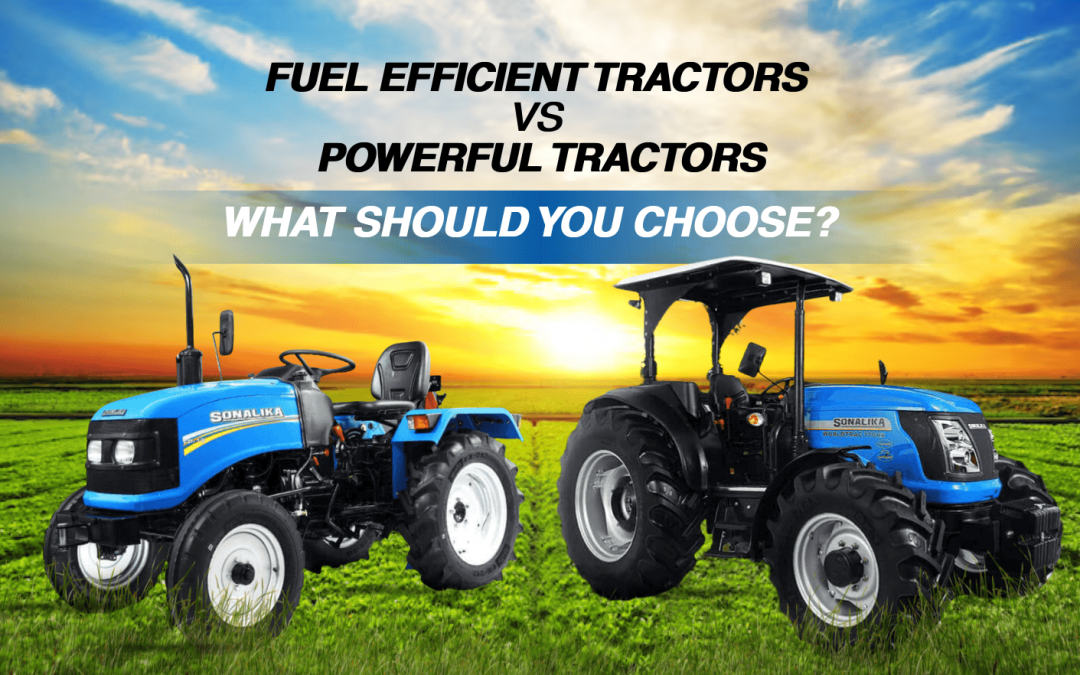
Farmers in many countries today are facing the good-old dilemma: choosing the best mileage tractor or a powerful one. Powerful tractors can quickly finish a challenging task, at the expense of high fuel consumption. Conversely, a fuel-efficient tractor can do light to medium tasks easily while keeping running costs in check. Therefore, deciding the right one is non-negotiable.
In this blog, we’ll discuss what exactly a fuel-efficient & powerful tractor stands for, plus when you should consider each type of tractor.
What Makes A Fuel-Efficient Tractor?
Fuel efficiency in the best mileage tractor isn’t just about the amount of fuel (in litres/gallons) consumed per hour. It’s about how much work your tractor’s engine has done per litre of fuel. This also covers combustion quality, RPM calibration & range, plus drivetrain design. A tractor designed to offer high efficiency provides lower operating costs per acre, not just fuel expenses.
The real breakthrough in the world of low-fuel consumption tractors is precision fuel injection technology. It delivers optimised fuel atomisation & precise combustion compared to older direct injection diesel engines. This feature delivers roughly 8-10% superior economy over older engines in the same category, meaning less diesel is burned per acre in your farms.
Modern low-fuel consumption tractors, from Sonalika International includes:
- 12F+12R Multi-Speed Transmission: Engine maintains efficiency under every load.
- Modern 5G Hydraulics: Reduced engine resistance during implement usage
- Oil-Immersed Brakes: Lower drivetrain drag & energy loss to provide better fuel economy.
- Water-Cooled Engines: Highly instrumental in maintaining optimal operating temperature during long working hours.
- Low RPM Engines: Engines tuned to deliver high torque at 2000-2500 RPM prevent over-revving & optimise overall fuel efficiency.
The Case Of “Powerful Tractors”
Horsepower is only one face of power! A truly powerful tractor only earns its name when horsepower, torque, hydraulic lift capacity, PTO output & transmission range work in tandem under challenging farming conditions. When one of these specs is high & another is average, a tractor can underperform when you need capabilities.
Torque is the most important specification in your tractor, acting as the pulling force that drags a plough through compacted grounds or clay without stalling the engine. The Sonalika 75 RX delivers a chunky 278 Nm of peak torque at just 1,300 rpm with its turbo-diesel 4-cylinder engine. The ability to deliver peak torque at lower revs not only enhances your operations but also leads to lower fuel usage.
Hydraulic lift capacity equally matters, determining how much your machine can lift with its front loader or rear three-point hitch. Sonalika International Tractors offer a capacity of 2,500 kg on the Sonalika 75 RX & 4,500 kg on the Sonalika 110 WT model.
A wide gear range also makes sure you have the right speed while using heavy implements. The Sonalika 110 WT comes with a 12F+12R Synchromesh transmission with a minimum creeping speed of 0.5 kmph.
Ground clearance is also an important specification in high-performance tractors, as it prevents crop damage during farming & makes tractor articulation easier on terrains. The Sonalika 110 WT comes with 470 mm of ground clearance, making it ideal for challenging terrain & heavy-duty farming applications.
High Power Vs Fuel Efficiency Tractor: When To Choose Each?
Choose A Fuel-Efficient Tractor For:
- Farms under 15 acres & light to medium soil types
- Primary tasks like sowing, spraying & light to medium-scale cultivation.
- If you use a tractor for occasional transport vehicle
- Lower running costs & reducing overall profitability
- Fuel stations are far from your farms or region.
Choose A High-Performance Tractor For:
- Farming on plots of more than 15 acres
- Soil types include hard surfaces, clay, or terrain.
- Operations include deep ploughing, subsoiling, tillage, etc.
- Using heavy implements like balers or power harrows
- Getting a higher hydraulic lift capacity to use heavy-mounted equipment
- Commercial farming & heavy output
- Plots, terrains, waterlogged surfaces where draft force & high ground clearance are essential
Are you looking for a fuel-efficient tractor or a high-performance tractor? Sonalika International offers a wide range of choices, with each tractor offering exceptional performance, superb reliability & choices that cater to a wide range of farmers. Explore our line-up today.
by admin | Apr 28, 2026 | Customer Stories
The global agriculture sector is experiencing a massive shift as farms are growing exponentially. Today, farming operations are highly time-sensitive, given the demand for grains & agricultural produce. This keeps mechanisation and tractor upgrade a major necessity in the farming world.
Industry reports are constantly highlighting a steady shift in the demand for higher-horsepower tractors and multipurpose machines, especially across emerging farming economies. A recent report estimated that the tractor market is expected to grow from USD 64.81 billion to USD 116.30 billion by 2034 at a CAGR of 6.8%.
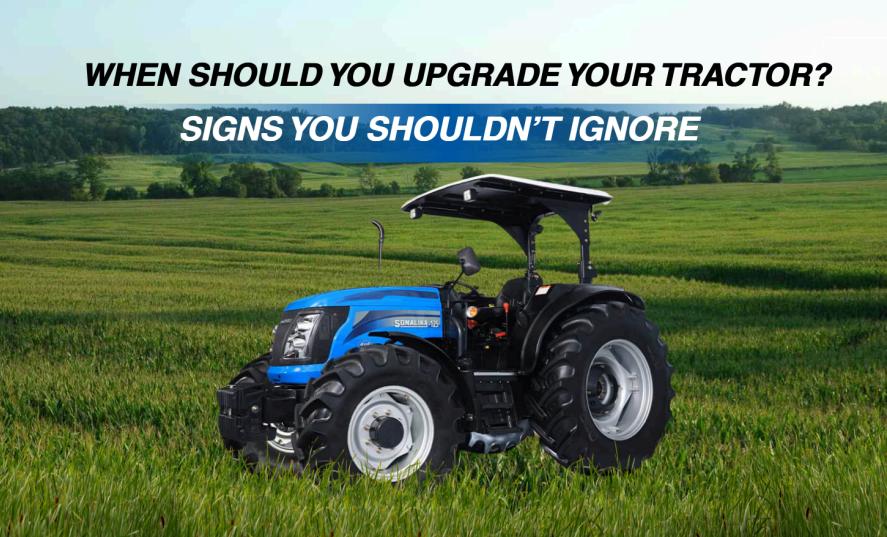
This scenario makes it clear that there is no question of if, but definitely when to upgrade tractor performance if it needs to stay competitive. A well-timed upgrade ensures that your farm remains efficient, responsive, and ready to meet modern agricultural demands without compromise.
The Reality of Modern Farm Operations
Today’s farming landscape demands precision, speed, and consistency. Whether it is land preparation, sowing or haulage, every operation is closely tied to timing.
A delayed task can impact the entire crop cycle. This is where a strategic tractor upgrade becomes critical. It is not just about replacing ageing equipment, but about enabling your farm to operate at its full potential.
Farmers who proactively evaluate when to upgrade tractor capability often experience smoother workflows, reduced downtime and better output per acre. Those who delay this decision frequently encounter rising inefficiencies that are harder to recover from during peak seasons.
Key Signs to Replace Tractor Before It Impacts Productivity
Recognising the early signs to replace tractors is essential for maintaining operational continuity.
Gradual Drop in Performance: The tasks that once required less time to start now take longer, especially during heavy workloads. It is an alarming answer to when to upgrade tractor capacity.
Frequency of Breakdowns: The increased dependency on repair work not only adds up to higher costs but also disrupts the schedules. Even a short delay can result in huge losses in time-sensitive farming.
Fuel Efficiency: Older machines consume more fuel with lower output delivery, which is why a tractor upgrade becomes a cost-effective decision.
Limited Adaptability: If the tractor is not great at supporting a wide range of implements or evolving farming practices, then your operational flexibility is affected. These are clear signs to replace tractor capability before it alters overall productivity.
Tractor Maintenance vs Replacement
The decision between tractor maintenance vs replacement often comes down to long-term value. While maintenance may seem practical in the short term, recurring repairs can become both costly and unreliable.
Over time, the balance shifts. When maintenance cycles become frequent, and performance continues to decline, the cost of holding on outweighs the investment in a new machine.
Understanding tractor maintenance vs replacement from a long-term operational perspective allows farmers to make informed decisions that prioritise efficiency, reliability and consistent output.
Aligning Your Upgrade with Farming Scenarios
A successful tractor upgrade is not only dependent on superior engine specs on paper, but also on how well the machine goes with the working environment. To maintain the traction and operational efficiency, your tractor should deliver strong torque and stability in moisture-heavy soil conditions.
Additionally, balanced and controlled power output is necessary in uneven terrains. Similarly, durability and easy maintenance are essential features in demanding land conditions.
Tractors having greater horsepower need to manage large implements and cover large spaces within limited timeframes in high-capacity operations.
By understanding all these factors, you can finalise when to upgrade tractor performance on the basis of actual field requirements rather than mere assumptions.
Choosing the Right Upgrade with Sonalika
Compact Operations and Light Applications: Sonalika 20 and Sonalika 26 are designed for easy and efficient usage. Their compact design & efficient engines make them perfect for routine light agricultural tasks and small plots.
Balanced and Multi-Purpose Usage: Sonalika 45, 50 and 55 offer a dependable combination of power and fuel efficiency, supporting both fieldwork and transport requirements.
Higher Workload Demands: Sonalika 60 and Sonalika 75 RX are built to deliver consistent torque and performance, particularly when operating heavier implements.
Large-scale and Intensive Operations: Sonalika 90, 110, and 125 provide the horsepower and durability required for commercial farming, ensuring higher productivity across extensive fields.
How Often Should You Upgrade a Tractor
The question of how often you should upgrade a tractor does not have a single answer. It varies based on usage intensity, working conditions and maintenance history.
Rather than relying on a fixed timeframe, it is more effective to evaluate performance indicators. Increase in repair frequency, declining fuel efficiency, and reduced output are all major signs to replace tractor.
A proactive approach ensures that your operations remain uninterrupted and efficient, even during peak agricultural cycles.
Final Thoughts
A tractor upgrade is not simply a replacement decision; it is a forward-looking investment for your farm’s performance and resilience. Ignoring the early signs to replace tractors can gradually impact efficiency, increase operational costs and limit your ability to scale. By carefully assessing tractor maintenance vs replacement and understanding how typically you should upgrade a tractor, you can make a decision that supports long-term productivity.
If your current tractor is no longer aligned with your operational needs, this is the right time to take your decision. Explore our top tractor models that are designed for diverse farming conditions and find out the right upgrade for your farm.
by admin | Apr 8, 2026 | Customer Stories
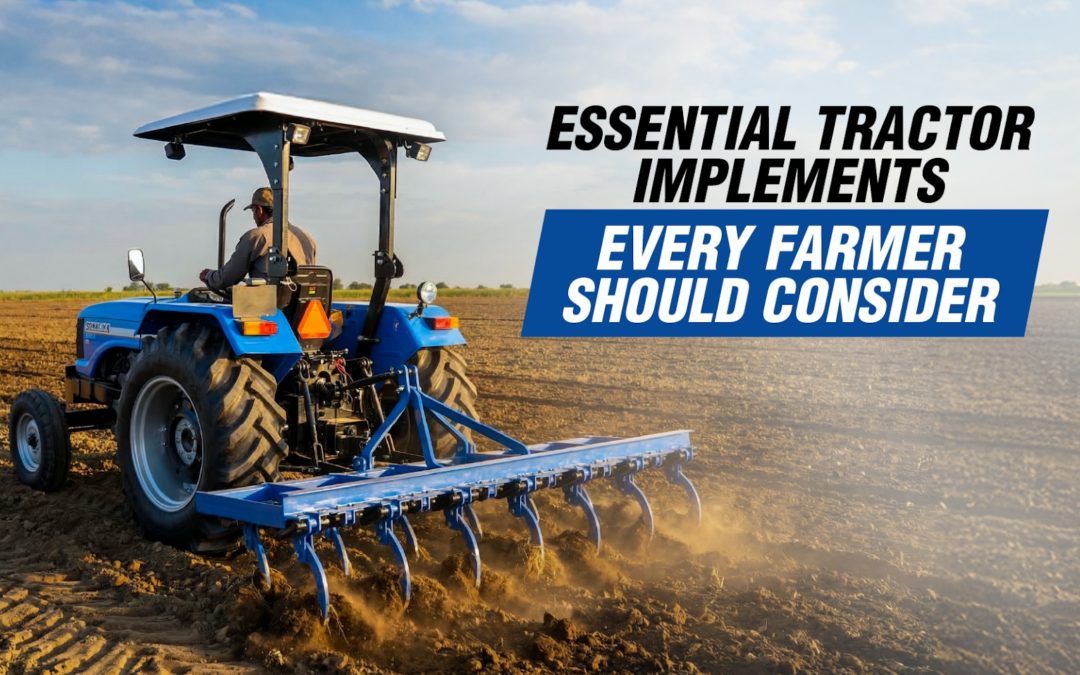
Precision & efficiency are essential in modern farming & today’s farmers depend on technology apart from hard work. A single tractor can do dozens of different tasks if you couple them with the right tools. Tractors have gradually evolved into multipurpose modern farming equipment, helping farmers perform laborious tasks like digging, sowing, spraying & hauling.
However, many farmers, including those with Sonalika Tractors, fail to unlock a tractor’s full potential. The main reason behind this is the fact that they aren’t using agricultural tractor implements. In this guide, we’ll discuss the role of agricultural tractor attachments, the most popular types of tractor implements & how to choose one.
The Role Of Farm Tractor Implements
Increase Functionality: Tractor implements transforms a tractor into a multipurpose field tool & making it capable of handling year-round tasks.
Enhanced Efficiency: They save time & fuel by performing more work in a single pass, meaning faster job completion & lower fuel consumption.
Reduce Labour Dependency: Implements help in reducing manual labour drastically & save time, especially during peak farming seasons.
Improve Soil Health: Farm tractor attachments promote better soil structure, moisture retention, & helps in breaking soil clods to create a perfect seedbed.
Boosts Productivity: Implements are also designed to improve output per acre of land while keeping operational costs in control.
Prevents Soil Degradation: Heavy-duty essential farm implements prevent soil degradation by helping farmers perform multiple operations & reduce unnecessary passes over the land.
Prepare Land For Next Season: Agricultural tractor implements help in managing crop residue & prepare plots faster for the next farming season.
Essential Tractor Implements Every Farmer Should Use
Rotavator
A Rotavator uses spinning blades to chop & churn the soil to create a fine seedbed in a single pass.
The result is saved fuel & time. Rotavators are perfect for mixing crop residue back into the soil,
which promotes fertility.
Cultivators
Cultivators are among the most popular farm tractor implements used to stir & grind soil before planting.
This implement digs deep to uproot weeds & aerate the ground, making them crucial for warming the soil
& ensuring water properly penetrates the soil.
Plough
Ploughs enter through compacted & dense soil to turn it over. A mouldboard plough buries weed deep underground,
while a disc plough slices through sticky & rocky fields with ease. Both are tillage tools used to prepare
farmlands for fresh crop planting.
Harrow
Harrows are used after ploughs to disintegrate large soil clods. They are used to smooth out the field surface
& create even textures. These implements ensure seeds maintain good contact with the soil & achieve better germination.
Seeder
Also known as planters, it is one of the most popular types of tractor implements. They help by automating the
sowing process to maintain exact depth & spacing. This implement drops seeds precisely into the furrows & covers
them instantly, prevents seed waste & provides the crops room to grow.
Front Loader
Among the most widely used tractor implements, front loaders are used for lifting & scooping heavy materials.
You can use it to move dirt, gravel & manure. Adding this implement transforms your tractor into a light-duty
earthmover & helps you avoid exhausting manual shovelling.
Trailer
One of the most essential farm implements, trailers are used to transport harvested crops, fertilisers &
construction materials with precision & safety. This is one of the crucial implements to consider.
Sprayer
Sprayers are popular attachments that are used to distribute liquid fertilisers & pest control products evenly
across farming plots. Boom sprayers can cover large farms quickly & reduce exhausting manual labour. Using this
attachment protects your crops from diseases & helps to get adequate nutrients required to grow.
Baler
If you want to gather hay, straw or stalks & compress them into tight blocks or rolls, balers are the farm tractor
implements to consider. This implementation helps in clearing farmlands easily after every harvest & makes storing
and transporting animal feed easier.
Seed-cum-Fertiliser Drill
These dual-purpose agricultural tractor implements are used to drop seeds & fertilisers simultaneously in separate bands.
The result is lower fuel consumption & saved time by doing two jobs in a single pass. This implementation helps in placing
nutrients precisely where young roots need them the most for healthy growth.
How To Choose The Right Agricultural Tractor Attachments?
Evaluate Your Needs: Match tractor implements to your requirements, crop types, & soil conditions.
Check Tractor Horsepower: Every tractor attachment requires a certain HP range. So always check for compatibility before you purchase.
Check Farm Size: Most small farms benefit from lightweight or multipurpose tools, while specialised & large-scale farms require heavy-duty attachments.
Consider Quality & Certification: Always purchase implements from trusted tractor companies & choose ones with warranties & after-sales support.
Look For Versatility: Choose multipurpose modern farming equipment designed to handle several attachments. This will save you money & time during farming.
Consider Efficiency: Choose implements that help you save time, effort, & lowers fuel usage during sowing or harvesting tasks.
Think Long Term: Always go for durable & low-maintenance tractor attachments. Apart from choosing among various types of attachments, you must also look for ones that offer reliability.
by admin | Apr 1, 2026 | Customer Stories
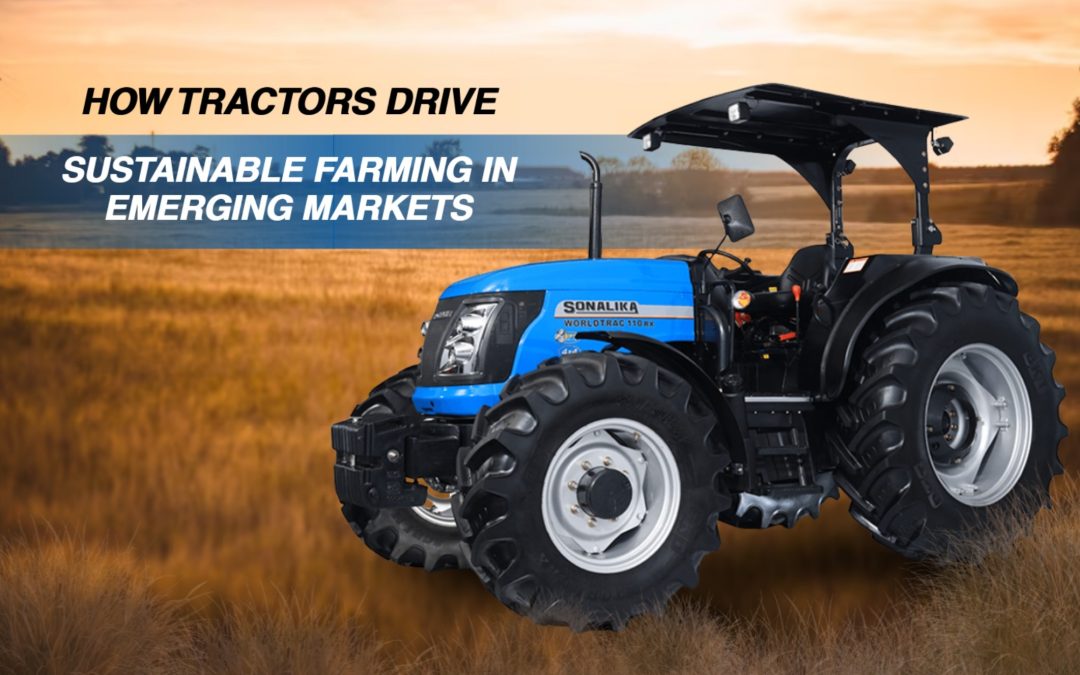
The contemporary era of farming is in a transitional phase. As the demand for food and supply of natural resources increase, the application of farm tractors for sustainable agriculture is no longer a choice, but has become a necessity. Farmers are increasingly moving towards smart and sustainable practices where modern agricultural tractors play a transformative role.
These machines are not restricted to the field activity anymore, as they have been redesigned into intelligent machines that help in waste reduction, resource, and yield maximisation. With technological advancement, Sonalika International is enabling farmers in switching into agricultural machinery for sustainable farming.
Tractor Range for Sustainable Agriculture
Sonalika offers a broad range of tractors and implements for farmers:
- Compact Tractors (18-30 HP):
Models like the Sonalika FP18, Sonalika 20, Sonalika 26, and Sonalika 30 are most suitable for orchards, vineyards, and small farms. These tractors facilitate accurate operations and use minimal resources.
- Utility Tractors (45-55 HP):
Sonalika 45, Sonalika 50 and Sonalika 55 models provide optimal power for efficient handling. They are most suitable in seeders and rotavators, and hence they are major contributors to farm equipment sustainability benefits.
- Heavy-Duty Tractors (63-75 HP):
Sonalika 63, Sonalika 64, Sonalika 75 RX, Sonalika 75 N, and Sonalika 75 WT are manufactured for high performance and durability, especially in large fields where intensive operations are required.
- Advanced Tractors (90-125 HP):
Sonalika models such as Sonalika 90 WT, Sonalika 90 N, Sonalika 110 WT, Sonalika WT 110 RX and Sonalika 125 are commercial and heavy-duty models. These are the tractors that are at the centre of scaling tractor-based precision agriculture solutions.
Sustainability Features of Modern Tractors
- Fuel Efficiency: Our tractors are equipped with low-consumption and high-torque engines, which reduce the running costs.
- Precision Agriculture: The GPS control and smart tools ensure that the seeding, spraying, and monitoring are done correctly in the soil.
- Reduced Soil Disturbance: Also, there is less and no tillage to reduce soil erosion.
- Flexibility in Usage: Sonalika tractors are versatile and fit a wide range of farming requirements. The output is always maximised with minimal inputs, whether the tractors are operated on small or large farms.
These inventions highlight the sustainability benefits of modern farm machinery.
Tractor‑Based Precision Agriculture Solutions
Sonalika tractors are aggressively marching towards the limelight as agriculture is evolving & transforming towards precision farming.
- Smart Sowing: The use of advanced sowing techniques has visibly reduced the seed wastage and improved planting efficiency.
- Targeted Spraying: Precise spraying of chemicals minimises the environmental impact.
- Soil Monitoring: Maintains appropriate moisture and fertility levels of various kinds of soil.
With the synergistic use of tractor-based precision agriculture systems, Sonalika ensures larger harvests on the same land.
Role of Tractors in Emerging Markets
The availability of agricultural machinery for sustainable farming is causing a significant change in the emerging markets:
- This mechanisation saves reliance on manual labour.
- Enhanced productivity results in better efficiency.
- Sustainability practices aid in the conservation of water, soil, and fuel.
- Better precision in the farming operations assist in optimal seed placement and fertiliser usage.
- The time saving operations enable the farmers to manage different agricultural activities during short crop cycles.
- The better land utilisation allows the farmers to cultivate large spaces with constant output quality.
Sonalika’s tractors guarantee that all farmers, big or small, can experience the advantages of farm tractors for sustainable agriculture, irrespective of the size of their land or the type of crops.
Innovation Driving Sustainability
The future of farming is being driven by constant innovation. Sonalika integrates:
- Modern engine design for more efficiency.
- Smart farming interoperability to make data-driven decisions.
- Long-lasting designs for better machine lifespan and lower wastage.
The development of these technologies affirms the increased role of modern tractors for agriculture in creating a sustainable ecosystem.
Conclusion
Today, modern tractors aren’t just mere machinery. They have made sustainable growth possible. Sonalika International, with its power, efficiency, and precision, is helping farmers in their transition into responsible farming practices.
With the changing dynamics of the industry, farm tractors for sustainable agriculture will be instrumental to the future of food systems globally. Explore the complete tractor range to learn more about driving sustainable farming.